Selecting the correct grow bag ensures robust tomato yields. This technical guide covers precise container capacities for every variety.
Key Takeaway:
Always use a minimum 10-gallon capacity for indeterminate tomatoes and 5-gallon bags for compact determinate varieties to prevent root crowding.
Quick-Reference Guide
| Factor / Scenario | Recommended Target | Why It Matters |
|---|---|---|
| Determinate Varieties | 5-Gallon Grow Bag | Balances bush canopy weight with adequate soil moisture. |
| Indeterminate Varieties | 10 to 15-Gallon Bag | Prevents root binding and sustains heavy vining fruit loads. |
| Micro-Dwarf Cultivars | 3-Gallon Container | Fits compact root systems without excessive wet soil mass. |
| Fabric Thickness | 260 to 300 GSM | Ensures structural strength and long-term UV resistance. |
| Soil Medium | Soilless Potting Mix | Provides essential aeration and prevents heavy compaction. |
| Watering Frequency | Daily Check in Summer | Compensates for rapid moisture loss through fabric walls. |
Understanding Tomato Root Systems and Container Growth
Tomatoes possess extensive, deep-reaching root systems that demand ample space for optimal nutrient uptake. Confining these vigorous roots stunts overall plant development and reduces fruit yield drastically.
Fabric containers offer unique air-pruning properties that naturally prevent root circling. When roots reach the breathable fabric walls, air exposure halts tip growth and stimulates branching lateral roots.
Choosing the right grow bag size directly dictates the volume of potting mix available for water storage. Larger volumes buffer against rapid drying cycles during intense summer heatwaves.
Tomato plants develop extensive root networks that demand adequate physical space for optimal nutrient uptake. Taproots can reach depths exceeding 3 feet when unrestricted, while lateral feeder roots spread outward to gather essential moisture.
Fabric containers alter traditional root architecture through natural air pruning. When root tips reach the breathable container fabric, ambient air prunes them, triggering the plant to branch out dense networks of feeder roots instead.
Selecting an undersized container restricts root expansion, leading rapidly to root circling and nutrient lockout. Providing sufficient volume ensures stable anchorage and prevents premature wilting during peak summer temperatures and high transpiration periods.
- Provide adequate vertical and horizontal space for robust root development.
- Utilize breathable fabric to encourage healthy lateral root branching.
- Match container volume to the specific growth habit of your cultivar.
- Avoid undersized pots that restrict water uptake and nutrient absorption.
Root Architecture Mechanics
Primary taproots dive deep into the soil profile while secondary networks spread widely. Container dimensions must accommodate this natural architecture without forcing unnatural root bends.
Fabric walls allow heat to dissipate more evenly than rigid plastic pots. This thermal regulation protects delicate root hairs from extreme soil temperatures during peak daylight hours.
- Accommodate deep taproots and wide secondary root networks.
- Maintain stable soil temperatures through efficient fabric heat dissipation.
Selecting the Correct Grow Bag Capacity for Determinate Varieties
Determinate tomato plants grow to a predetermined bush-like height and set fruit all at once. Because their overall canopy remains smaller, they require less root volume overall.
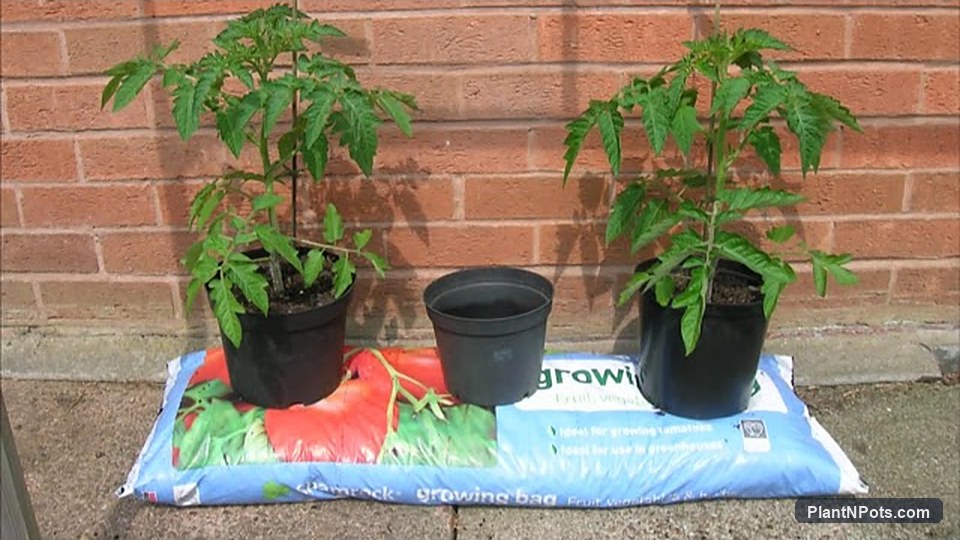
A 5-gallon grow bag provides sufficient space for standard bush tomatoes like Roma or Celebrity. This size balances weight management with adequate moisture retention for smaller root zones.
Dwarf container varieties thrive in even more compact settings such as 3-gallon fabric containers. However, growers must monitor moisture levels daily since smaller volumes dry out much faster.
Determinate tomato varieties maintain a bush-like growth habit, typically stopping at 3 to 4 feet tall. Because their root zones are more compact, a 5-gallon grow bag provides adequate volume for a healthy harvest.
When comparing gear and setup options, our [best tomato grow bag holders:](https://plantnpots.com/?p=3005) breaks down key materials, sizing, and durability trade-offs.
When planting dwarf or patio determinate cultivars, a 3-gallon container can suffice if you maintain diligent watering schedules. However, standard patio bush varieties perform best when given at least 5 to 7 gallons of soil.
Ensure your chosen bag measures at least 12 inches in diameter and depth. This dimension guarantees enough substrate weight to prevent tipping once the bush becomes heavy with ripening fruit and summer foliage.
- Opt for 5-gallon bags for standard bush and patio determinant varieties.
- Use 3-gallon containers exclusively for true micro-dwarf tomato selections.
- Ensure bush canopies do not overhang tiny bases, risking container tipping.
- Water frequently when growing determinates in restricted soil volumes.
Managing Bushy Canopies
Compact tomato varieties produce dense foliage that creates significant shade at the base. Adequate container spacing ensures good air circulation through these heavy leaf clusters.
Stake determinant plants securely even when utilizing smaller 5-gallon fabric pots. Heavy fruit clusters can easily leverage a lightweight bag sideways if left unsupported.
- Space bush containers to maximize internal canopy airflow.
- Install sturdy stakes to prevent top-heavy bag tipping.
Video Walkthrough: Best Grow Bags For Tomatoes
Indeterminate Tomato Requirements in Large Grow Bags
Indeterminate tomatoes climb continuously and produce fruit throughout the entire growing season until frost. Their massive, sprawling root systems demand significantly larger containers for sustained longevity.
A 10-gallon grow bag represents the absolute baseline standard for healthy indeterminate tomato production. Upgrading to a 15-gallon container provides superior results for vigorous heirloom cultivars.
Providing ample root space prevents premature nutrient depletion and mid-season plant decline. Large fabric reservoirs sustain the heavy water demands of expansive vines loaded with ripening fruit.
Indeterminate tomato vines grow continuously, often exceeding 8 feet in height throughout a single growing season. These vigorous climbers demand a minimum 10-gallon grow bag to support their massive root mass and heavy yields.
For exceptionally large heirloom or beefsteak cultivars, upgrading to a 15-gallon or 20-gallon container yields significantly better results. The extra soil volume buffers against rapid moisture loss and provides essential heavy-base stability outdoors.
Never crowd indeterminate plants inside smaller bags thinking you can prune the roots. Adequate soil volume directly correlates to fruit flavor and total seasonal yield by sustaining steady calcium uptake throughout hot weather.
- Select 10 to 15-gallon bags for all indeterminate vining varieties.
- Prevent mid-season nutrient exhaustion by maximizing available potting soil.
- Support massive vine weights using heavy-duty structural cages or trellises.
- Ensure sufficient patio clearance for large, wide container footprints.
Vining Vigor Management
Continuous vine growth requires constant pruning of lower suckers to maintain plant energy. Proper container sizing supports this high metabolic rate without inducing chronic stress.
Larger soil masses harbor beneficial microorganisms that aid continuous nutrient conversion. This biological activity is essential for sustaining long-term fruit production in vining tomatoes.
- Prune lower suckers regularly to balance vining energy demands.
- Maintain rich microbial life within expansive soil volumes.
Material Choices and Aeration Dynamics in Fabric Containers
High-density non-woven polypropylene fabric represents the industry gold standard for durable grow bags. This porous material promotes exceptional gas exchange between the root zone and ambient air.
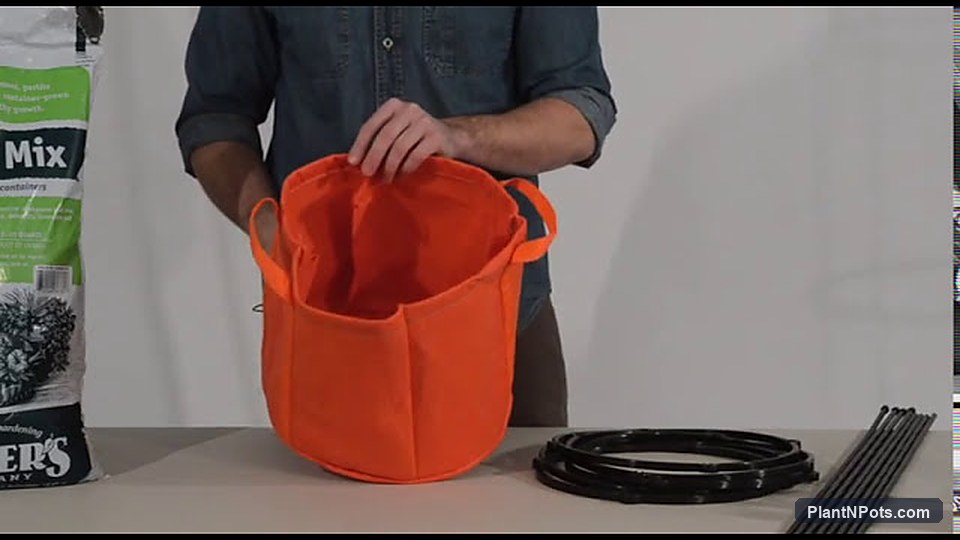
Unlike impermeable plastic pots, fabric walls eliminate root circling entirely through natural air-pruning. Roots encounter dry air at the periphery, triggering branching rather than circular strangulation.
Select fabric weights between 260 to 300 GSM to ensure structural longevity. Thicker materials resist UV degradation and mechanical wear across multiple consecutive growing seasons outdoors.
Non-woven geotextile fabric and heavy-duty canvas are the gold standards for modern fabric grow bags. These breathable materials promote superior oxygen exchange, preventing the stagnant conditions common in traditional plastic nursery pots.
Fabric thickness, typically measured in grams per square meter, dictates durability and moisture retention. Opt for bags rated between 300 and 400 GSM to ensure structural integrity that lasts multiple consecutive growing seasons.
The porous walls allow excess water to drain instantly, virtually eliminating the risk of root rot from overwatering. This continuous airflow also keeps root zones cooler during intense midsummer heatwave conditions.
- Choose breathable polypropylene fabrics for optimal root aeration.
- Prevent root circling permanently via natural outdoor air-pruning.
- Look for heavy-duty 260-300 GSM material ratings for durability.
- Inspect reinforced stitching along handles and side seams annually.
Fabric Thickness and UV Resistance
Premium fabric pots feature marine-grade stitching that withstands heavy wet soil pressures. Inferior thread will rot quickly under continuous moisture and intense ultraviolet sun exposure.
Dark-colored fabrics absorb solar heat, warming root zones rapidly in early spring. Conversely, light-colored beige bags reflect harsh sunlight, protecting roots from overheating during summer heatwaves.
- Verify marine-grade UV-resistant stitching along all load-bearing seams.
- Select fabric colors based on regional seasonal temperature profiles.
Soil Blends, Moisture Retention, and Nutrient Management
Standard garden soil compacts severely inside containers, suffocating roots and halting drainage completely. Always use a loose, well-aerated potting mix formulated specifically for container vegetable gardening.
Incorporate compost and peat moss to boost moisture retention without sacrificing drainage. Perlite or vermiculite additions create microscopic air pockets essential for healthy tomato respiration.
Fabric pots leach water and soluble nutrients faster than traditional glazed ceramic planters. Implement a consistent fertilization schedule using balanced organic amendments throughout the fruiting cycle.
Container tomatoes require a specialized, well-draining potting mix rather than dense garden soil. Combine equal parts high-grade compost, peat moss, and perlite or vermiculite to create an ideal structural matrix for roots.
Because fabric pots drain rapidly, adding water-retentive amendments like coco coir helps maintain consistent moisture levels. Incorporate slow-release organic fertilizers to ensure steady macronutrient availability over the course of the long growing season.
Flush the growing medium every four weeks to prevent harmful salt buildups from synthetic fertilizers. Top-dress with fresh compost midway through summer to rejuvenate microbial life and sustain fruit production.
- Avoid heavy native garden soil in all fabric containers.
- Mix compost, peat, and perlite for ideal container tilth.
- Supplement nutrients regularly due to rapid leaching through fabric walls.
- Monitor soil pH levels closely to ensure optimal mineral availability.
Organic Amendments for Containers
Mix slow-release organic fertilizers directly into the potting medium during initial filling. This ensures a steady baseline supply of nitrogen, phosphorus, and potassium for young transplants.
Top-dress containers with worm castings mid-season to revitalize exhausted potting mix. Earthworm castings provide vital micronutrients and improve the biological resilience of containerized root zones.
- Blend slow-release organic fertilizers into soil at planting.
- Apply worm castings as a mid-season nutrient top-dressing.
Video Walkthrough: Gardening In GROW BAGS Is So EASY It's Like Cheating!
Watering Frequency and Hydration Strategies for Fabric Pots
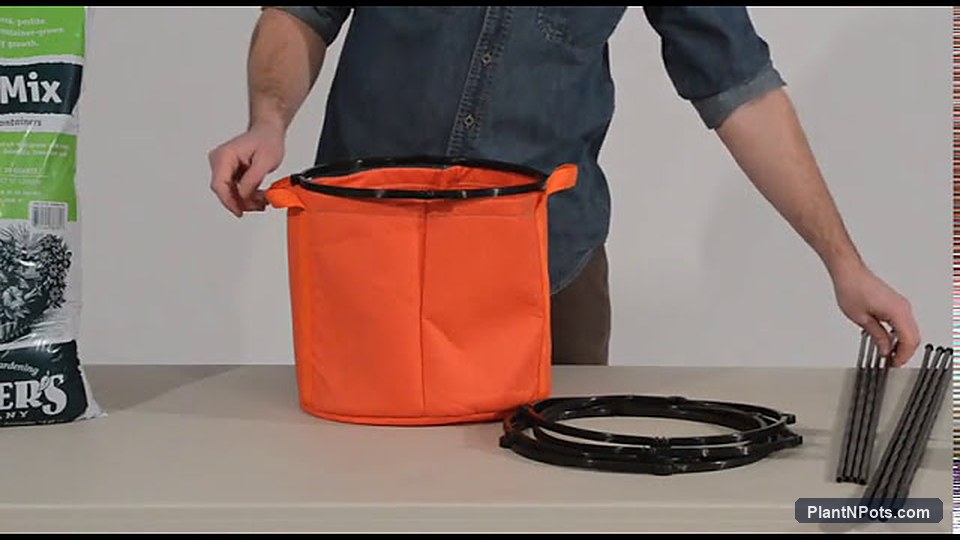
Porous fabric walls allow moisture to evaporate from all sides of the container. Consequently, container tomatoes require significantly more frequent irrigation than plants grown in traditional pots.
During peak summer heat, large grow bags may need thorough daily or twice-daily watering. Always check soil moisture several inches deep before applying water to prevent over-saturation.
Slow, deep watering ensures the entire root ball hydrates evenly without dry channels. Avoid quick splashes that only wet the surface while leaving lower root zones completely parched.
Fabric grow bags dry out significantly faster than plastic pots due to continuous evaporation through the sides. During peak summer, large plants may require daily deep watering or even twice-daily hydration sessions.
Always water slowly until liquid drains freely from the bottom of the container. This ensures the entire root ball is saturated and prevents dry pockets from forming inside the dense potting mix.
Consider installing drip irrigation emitters or sub-irrigation trays underneath large bags to maintain consistent moisture. Consistent watering is critical for preventing blossom end rot and fruit cracking issues.
- Water fabric containers more frequently due to side evaporation.
- Check internal soil moisture depth before every irrigation cycle.
- Deliver slow, deep watering sessions for complete root hydration.
- Catch excess runoff safely using appropriate outdoor saucers or trays.
Preventing Hydrophobic Soil Conditions
Extremely dry potting mix can become hydrophobic, causing water to channel down edges. Submerge dry bags in a shallow water basin to rehydrate severely parched soil media.
Apply natural mulch layers across the top of the container soil. Mulching significantly reduces surface evaporation rates and protects root zones from sudden temperature fluctuations.
- Rehydrate hydrophobic soil via temporary basin soaking methods.
- Apply organic mulch to minimize surface evaporation losses.
Structural Support, Staking, and Trellising in Grow Bags
Tall tomato plants laden with ripening fruit require robust vertical support structures. Because fabric pots lack rigid anchor points, staking methods require careful planning and execution.
Push sturdy tomato cages deep into the potting mix before planting young seedlings. Alternatively, secure trellis lines to external structures rather than relying solely on the flexible bag.
Center plants precisely within the grow bag to distribute weight evenly across the base. Off-center planting increases the risk of the container tipping over during heavy windstorms.
Heavy fruit loads require robust structural support inserted securely into the container soil. Place tomato cages or stakes into the bag before planting to avoid damaging established root systems later on.
For large indeterminate vines, use sturdy steel stakes or overhead trellising secured to external frames. Fabric bags lack the rigidity of heavy ceramic pots, so wind resistance must be managed carefully outdoors.
Tie main stems loosely to your support structure using soft garden twine every 12 inches. Proper tying prevents branch breakage and promotes optimal airflow through the foliage canopy to deter fungal pathogens.
- Install support cages early to prevent later root damage.
- Center tomato plants carefully to maintain stable weight distribution.
- Tie heavy branches securely to prevent snap-offs during high winds.
- Anchor external trellis systems independently of flexible fabric pots.
Wind Resistance and Ballasting
Lightweight fabric containers can easily blow over on windy balconies or exposed patios. Place heavy stones or gravel at the very bottom layer to increase stability.
Grouping multiple grow bags closely together provides mutual wind protection and shade. This communal arrangement reduces individual container stress during severe weather events and intense storms.
- Add heavy bottom ballast materials to improve wind resistance.
- Group containers together to create a protective microclimate.
Seasonal Maintenance, Overwintering, and Post-Harvest Cleanup
At the end of the growing season, harvest all remaining fruit and pull spent vines. Empty the used potting mix into a wheelbarrow and break up compacted root masses.
Empty fabric grow bags should be scrubbed clean with mild soap and water. Allow them to dry completely in direct sunlight before folding them for winter storage.
Proper cleaning eliminates overwintering fungal spores, bacterial pathogens, and destructive insect pests. Storing bags in a dry, frost-free location preserves fabric integrity for multiple upcoming seasons.
At the end of the growing season, remove spent tomato vines and shake out all residual soil. Empty fabric bags thoroughly and inspect the seams for any signs of structural wear or tearing.
Clean used fabric containers by scrubbing them with a mild horticultural soap and warm water solution. Soak the clean bags in a diluted bleach solution for ten minutes to eliminate overwintering pathogens.
Allow the washed grow bags to dry completely in direct sunlight before folding them flat for storage. Storing them in a dry, frost-free location protects the fabric fibers and extends product lifespan.
- Clear spent vines and root systems after final harvest.
- Wash fabric containers thoroughly with mild soap and water.
- Dry bags completely in sunlight before winter storage indoors.
- Inspect seams annually for signs of thread wear or tearing.
Soil Rejuvenation Techniques
Spent container soil loses vital nutrients and beneficial microbial populations over a single season. Rejuvenate the mix by blending in fresh compost, organic amendments, and trace minerals.
Rotate vegetable families annually to prevent soil-borne disease accumulation in reused potting mix. Never plant tomatoes in identical soil without proper solarization or thorough nutrient replenishment.
- Recondition old container soil with fresh compost and minerals.
- Rotate plant families to prevent persistent soil-borne diseases.
Frequently Asked Questions
Can I grow two tomato plants in one large grow bag?
Planting two tomatoes in a single bag causes severe root competition and nutrient depletion. Always restrict one tomato plant per container to ensure maximum fruit yield and health.
Do grow bags need drainage holes drilled into them?
Fabric grow bags do not require extra drainage holes because the material itself is porous. Excess water drains freely through the breathable fabric walls, preventing root rot.
How many years do fabric grow bags typically last?
High-quality fabric pots constructed from heavy-duty UV-resistant materials last between three to five seasons. Storing them indoors during winter significantly extends their overall operational lifespan.
Should I put gravel at the bottom of a tomato grow bag?
Placing gravel at the bottom actually raises the perched water table and impedes drainage. Fill your entire grow bag with a uniform potting mix for optimal root health.
How do I prevent my tomato grow bag from drying out too fast?
Apply an organic mulch layer over the soil surface to drastically reduce evaporation rates. Choosing a light-colored fabric bag also reflects solar heat and retains vital soil moisture.

