Master the essential techniques for transferring your Tradescantia into a fresh container. Promote vigorous trailing growth with proper soil and drainage.
Key Takeaway:
Repot your wandering jew every 12 to 18 months during spring using a well-draining potting mix and a container that is only one to two inches larger than the previous one.
Quick-Reference Guide for Tradescantia Repotting
| Factor / Scenario | Recommended Target | Why It Matters |
|---|---|---|
| Repotting Frequency | Every 12 to 18 months | Refreshes nutrient-depleted soil and prevents root crowding. |
| Ideal Season | Early Spring | Aligns with natural active growth phases and reduces stress. |
| Container Size Increase | 1 to 2 inches wider | Prevents excess soil moisture retention and root rot. |
| Soil pH Range | 6.1 to 6.5 | Optimizes nutrient absorption for vibrant foliage coloration. |
| Watering After Repotting | Thorough initial soak | Settles soil around roots and eliminates large air pockets. |
| Light Requirements | Bright indirect light | Supports rapid recovery without scorching delicate stems. |
Understanding When Your Tradescantia Needs Fresh Soil
Recognizing the right time to refresh your wandering jew prevents severe nutrient deficiencies. Healthy Tradescantia varieties rapidly exhaust limited potting minerals within one to two years of continuous indoor growth.
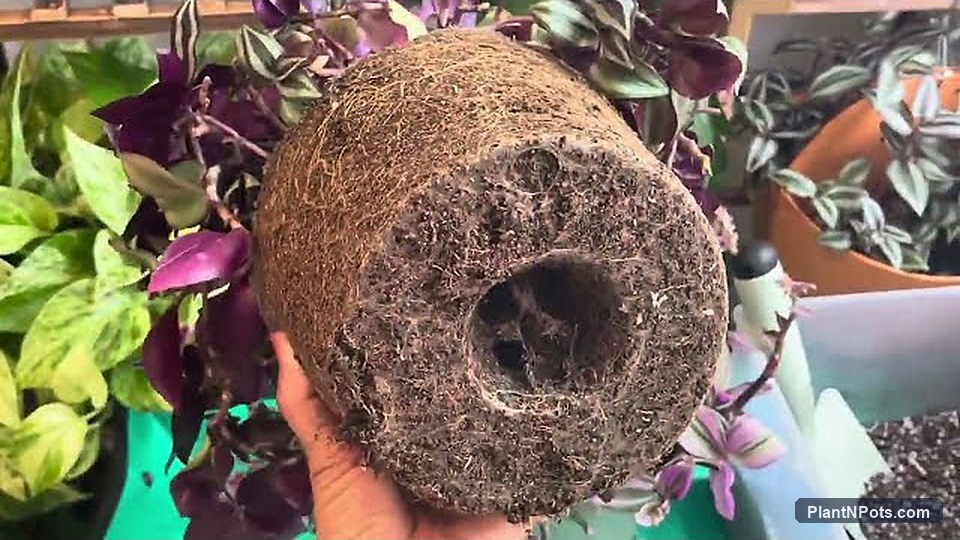
Inspect the base of your container to check for visible roots emerging from drainage holes. When roots circle densely around the interior, your plant is severely root-bound and requires immediate spatial expansion.
Stagnant growth and smaller leaf formations often signal depleted organic matter. Upgrading your potting medium provides essential elements necessary for lush, cascading stems and vibrant purple or green coloration.
- Watch for roots emerging from the bottom drainage holes.
- Note slowed vine growth during peak spring seasons.
- Check for water immediately running through without retention.
- Observe soil surface hardening and mineral crust buildup.
Recognizing Environmental Stress Indicators
Crowded root systems struggle to absorb adequate moisture during routine watering sessions. This imbalance frequently causes lower leaves to yellow, dry out, and drop off prematurely from the main stems.
Evaluating overall plant vigor helps determine if poor nutrition or inadequate space is the primary culprit. Addressing these limitations promptly restores structural integrity and encourages vigorous new runner development.
- Monitor lower foliage for unexplained yellowing.
- Feel the weight of the pot to gauge root mass density.
Selecting the Proper Container and Drainage Setup
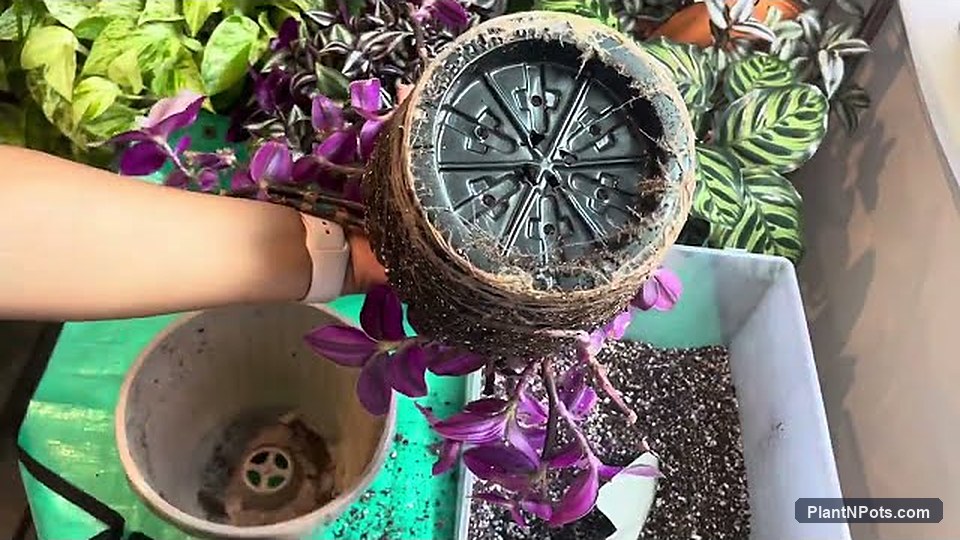
Choosing an appropriate vessel protects your wandering jew from fatal moisture retention issues. Always select a planter featuring at least one functional drainage hole at the base to expel excess water.
Utilizing [small clay flower pots](https://plantnpots.com/?p=1087) offers breathable walls that allow moisture to evaporate quickly. Alternative plastic or glazed ceramic containers retain humidity longer, requiring careful adjustments to your watering routine.
Avoid upsizing to excessively large decorative containers that trap surplus moisture around delicate roots. Stick strictly to a container diameter that exceeds the current root ball by one to two inches maximum.
- Verify unobstructed drainage holes before adding any soil.
- Match pot material to your typical indoor watering habits.
- Discard containers lacking reliable water escape pathways.
- Sanitize older used pots with a mild bleach solution.
Managing Drainage Layers and Filtration
Placing a small mesh screen over the drainage hole prevents soil from washing away during watering. This simple step keeps your indoor workspace clean while maintaining optimal aeration for roots.
Avoid filling the bottom with heavy rocks, as this raises the perched water table closer to roots. Modern horticulture confirms that uniform soil profiles promote superior downward moisture movement.
- Use fiberglass window screen scraps for hole covers.
- Keep soil depths consistent throughout the container.
Video Walkthrough: Wandering Jew Plant Care: Growing Tradescantia Zebrina
Gathering Necessary Tools and Soil Amendments
Assembling your supplies beforehand ensures a smooth, stress-free repotting experience for both you and your plant. Gather a fresh bag of all-purpose potting mix, perlite, gardening shears, and your new container.
Tradescantia species thrive in loose, nutrient-rich soil that retains moderate moisture without becoming soggy. Mix standard potting soil with perlite or coarse sand to drastically improve internal aeration and drainage.
Spread old newspapers or a durable plastic tarp across your work surface for easy cleanup. Having a clean trowel and a watering can nearby completes your essential preparation checklist for the task.
- Keep fresh standard potting soil within easy reach.
- Measure out perlite to amend heavy commercial blends.
- Sharpen and sanitize pruning shears for clean stem cuts.
- Fill a watering can with tepid water for post-care.
Formulating the Ideal Soil Blend
Creating a custom substrate guarantees superior aeration for your wandering jew root system. Combine two parts potting soil with one part perlite for optimal textural balance and drainage performance.
Incorporating small amounts of organic compost provides a slow-release nutritional boost. This balanced environment encourages rapid root establishment and sustained stem elongation throughout the growing season.
- Blend components thoroughly in a large bucket.
- Check texture to ensure it feels light and crumbly.
Safely Extracting and Inspecting the Root System
Gently tilt your current container sideways while supporting the base of the wandering jew stems. Tap the exterior rim firmly to loosen compacted soil and allow the root ball to slide out safely.
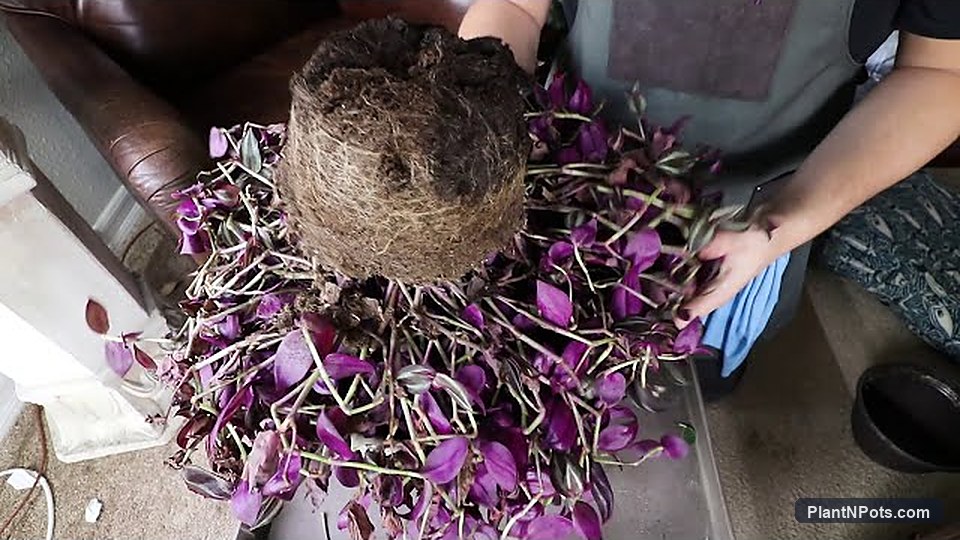
Avoid pulling forcefully on delicate trailing vines, as this can snap stems at the soil line. If the plant resists, run a dull butter knife carefully around the interior pot perimeter to break suction.
Inspect the exposed roots closely for signs of disease or rot. When repotting larger specimens, choosing extra large terracotta pots ensures adequate physical space and balanced weight distribution.
- Support main stems gently near the soil surface.
- Tap pot walls evenly to release stubborn root masses.
- Examine root color and texture for rot symptoms.
- Prune away dead or damaged roots using sterile shears.
Teasing Apart Bound and Compacted Roots
Gently massage the outer root ball with your fingers to loosen tightly circled strands. Encouraging roots to face outward prevents them from continuing their circular growth pattern inside the new pot.
Wash away heavily compacted old soil using a gentle stream of lukewarm water if necessary. This process exposes hidden problems and allows fresh potting mix to integrate seamlessly with the root system.
- Use fingers to tease outer roots outward gently.
- Rinse stubborn old soil away under a tap.
Positioning and Settling Your Plant in the New Pot
Add a fresh layer of your prepared potting mix to the bottom of the clean container. Set the plant inside, ensuring the top of the root ball sits roughly one inch below the upper rim.
Fill surrounding gaps with additional soil mixture, pressing down gently with your fingertips to eliminate air pockets. Ensure the wandering jew rests at the exact same soil depth it maintained previously.
Avoid burying stems too deeply, as excess moisture against foliage causes rapid stem rot. Maintaining proper crown elevation protects your trailing plant against common fungal infections and basal decay.
- Check planting depth relative to the container rim.
- Distribute fresh soil evenly around the root perimeter.
- Firm medium lightly without compacting it excessively.
- Leave adequate headspace for future watering tasks.
Securing Stems and Initial Watering
Water your newly potted wandering jew thoroughly until liquid drains freely. Choosing a proper [wandering jew hanging basket](https://plantnpots.com/?p=4348) encourages healthy root establishment and prevents standing water accumulation.
Allow the container to drain completely before returning it to its decorative saucer. Wipe away any soil debris clinging to the delicate leaves to maintain optimal photosynthetic capacity and appearance.
- Water deeply to settle soil and eliminate air pockets.
- Empty saucers promptly to prevent standing water contact.
Post-Repotting Care and Managing Transplant Shock
Place your freshly potted Tradescantia in a location receiving bright, indirect sunlight for several days. Avoid exposing the recovering specimen to harsh direct sun rays that could scorch tender foliage.
Monitor soil moisture closely during the first two weeks following your repotting session. Allow the top one to two inches of soil to dry out completely before applying your next watering.
Withhold all commercial fertilizers for at least four to six weeks after transferring containers. Introducing concentrated salts too early can burn delicate new root tips struggling to establish themselves.
- Provide gentle indirect light during initial recovery.
- Check soil moisture frequency before watering again.
- Delay fertilizer applications for over a month.
- Prune any minor stem tip dieback to encourage branching.
Addressing Sudden Wilting and Recovery Signs
Mild wilting is a normal temporary reaction as the root system adjusts to its new environment. Maintain consistent humidity levels around the plant to help minimize moisture loss through leaves.
New leaf growth typically resumes within three to four weeks as roots colonize fresh soil. Resume your standard indoor plant care routine once active upward and outward trailing expansion becomes visible.
- Keep ambient humidity stable during recovery weeks.
- Watch for fresh stem tip growth as a sign of success.
Troubleshooting Common Growth and Foliage Issues
Leggy stems with sparse leaf distribution usually indicate insufficient light exposure rather than repotting stress. Move your container closer to an unobstructed window or supplement with appropriate indoor grow lighting.
Brown, crispy leaf tips often point toward low indoor humidity or irregular watering habits. Maintain steady soil moisture levels and mist surrounding air regularly to preserve pristine foliage quality.
Mushy stems near the soil line signal overwatering or poorly draining potting mixes. Immediately remove healthy stem cuttings to propagate replacements if root rot severely damages the primary crown.
- Improve light levels to correct sparse, leggy stem growth.
- Adjust watering frequency to eliminate crispy leaf tips.
- Propagate healthy vine cuttings if root rot takes hold.
- Check container drainage functionality whenever soil stays wet.
Reviving Stressed Specimens Through Propagation
Taking stem cuttings provides an insurance policy against failing mature wandering jew plants. Snip healthy four-inch stem tips just below a leaf node and root them easily in fresh water.
Pot up rooted cuttings once their secondary roots reach one inch in length to create a fuller basket. This renewal technique keeps your indoor plant collection thriving indefinitely without purchasing replacements.
- Snip healthy vine tips for easy water propagation.
- Combine multiple rooted cuttings for a bushier display.
Frequently Asked Questions
How often should I repot my wandering jew plant?
Repot your Tradescantia every 12 to 18 months during early spring. Fresh soil provides essential depleted nutrients and accommodates expanding root systems.
What type of soil is best for a wandering jew?
Use a standard, well-draining indoor potting mix amended with perlite or coarse sand. This combination ensures proper aeration and prevents fatal root rot issues.
Why is my wandering jew drooping after repotting?
Mild drooping is a normal sign of transplant shock as roots adapt. Keep the plant in bright indirect light and maintain consistent, moderate soil moisture.
Should I fertilize my wandering jew right after repotting?
No, withhold all commercial fertilizers for at least four to six weeks. Fresh potting mix contains adequate nutrients, and fertilizer salts can burn recovering roots.
What size pot should I choose when repotting?
Select a new container that is only one to two inches wider than the previous one. Oversized pots retain excess water and risk damaging roots.

