Master the essential techniques for upgrading your ficus container. Keep your indoor trees thriving with proper soil and root care.
Key Takeaway:
Repot your ficus every two to three years during active spring growth using a well-draining soil mix and a container that is only two inches wider than the previous one.
Quick-Reference Guide
| Factor / Scenario | Recommended Target | Why It Matters |
|---|---|---|
| Container Sizing | 2 inches wider | Prevents severe soil water retention |
| Repotting Timing | Early Spring | Aligns with active vegetative growth cycles |
| Soil pH Level | 6.0 to 6.5 | Optimizes essential nutrient absorption |
| Drainage Holes | At least 3 | Prevents catastrophic root rot conditions |
| Watering Frequency | Deep soak | Settles air pockets around roots safely |
| Pruning Roots | Under 25 percent | Minimizes severe transplant shock stress |
Recognizing When Your Ficus Needs a Container Upgrade
Ficus trees demand careful observation to determine exact root congestion timing. Inspect drainage holes frequently for thick roots emerging through the bottom openings.
Stunted canopy growth and unusually rapid drying soil indicate root binding. When watering fails to penetrate compacted root balls, immediate container upgrading becomes necessary.
Lifeless lower leaves dropping suddenly often signal severe root compaction. Evaluate the root mass by gently sliding your [ficus in terracotta pot](https://plantnpots.com/?p=3353) from its current enclosure for careful inspection.
Healthy specimens usually require container adjustments every twenty-four to thirty-six months. Younger plants may outgrow their enclosures much faster than mature indoor trees.
Healthy ficus plants typically require repotting every two to three years during active spring growth to prevent severe root bounding, nutrient depletion, and stunted canopy development in indoor home environments.
Inspect the drainage holes at the base of your planter for thick, white roots emerging from the soil, which indicates that the existing root system has exhausted all available spatial volume.
Water draining immediately through the pot without moistening the root ball signifies hydrophobic, compacted soil that urgently needs replacement with a fresh, nutrient-rich substrate blend designed for woody houseplants.
If your mature ficus displays sudden leaf drop combined with noticeably slowed upper branch expansion, evaluating the subterranean root density will confirm whether a larger planter is physically necessary today.
- Check for circling roots along the container interior perimeter.
- Observe reduced foliage development despite consistent fertilization routines.
- Note rapid water run-through without adequate soil absorption.
- Inspect for mineral crust accumulation on ceramic pot surfaces.
Evaluating Root Bound Severity
Gently tilt your container sideways while supporting the main woody stem securely. Slide the root mass outward to assess root density and soil distribution.
Dense white root mats wrapping entirely around the soil indicate urgent repotting requirements. Tease apart tightly bound outer roots carefully before proceeding further.
- Support the main trunk firmly during extraction.
- Avoid pulling foliage forcefully to prevent stem breakage.
- Examine root coloration for signs of decay.
Assembling Essential Tools and Soil Mixtures
Gather professional-grade supplies before starting your ficus repotting project. Select a sturdy nursery container featuring multiple drainage holes to protect against moisture retention.
Prepare a specialized soil blend combining standard potting mix with coarse perlite. This precise formulation ensures optimal aeration and prevents heavy root compaction over time.
Keep sharp, sterilized pruning shears nearby for trimming damaged roots cleanly. Clean cutting tools prevent the introduction of harmful pathogens into vulnerable plant tissues.
Lay down protective plastic sheeting to catch loose soil during the process. Having all materials ready minimizes plant stress and streamlines the entire transition procedure.
Gather a clean, heavy-duty container exceeding the current diameter by two inches, prioritizing [terracotta pots with drainage holes](https://plantnpots.com/?p=1313) to prevent fatal moisture retention and root rot before mixing new soil.
Mix a well-draining substrate combining two parts standard potting soil, one part coarse perlite, and one part orchid bark to mimic the natural aeration found in tropical forest floor habitats.
Prepare essential hand tools including sharp, sterilized pruning shears for trimming damaged roots, a sturdy trowel, fresh horticultural charcoal, and clean garden gloves to protect your hands from sap.
Keep a watering can filled with dechlorinated water at room temperature nearby so you can instantly settle the fresh soil matrix immediately after positioning your ficus in its new home.
- Choose a container with at least three drainage openings.
- Mix premium potting soil with coarse horticultural perlite.
- Sterilize cutting blades using isopropyl alcohol wipes.
- Keep a clean watering can filled with tepid water.
Formulating the Ideal Substrate
Ficus trees thrive in rich, loamy soils featuring excellent drainage capabilities. Combine two parts organic potting compost with one part coarse sand or perlite.
Avoid using heavy garden soil containing native clay particles or pests. Commercial container mixes provide the sterile environment necessary for healthy indoor growth.
- Use organic compost for sustained nutrient delivery.
- Incorporate horticultural perlite to maximize soil porosity.
- Test soil pH to maintain slight acidity.
Video Walkthrough: Search filters
Extracting and Inspecting the Ficus Safely
Careful extraction prevents catastrophic damage to delicate structural root systems. Tap the exterior of your current plastic pot gently to loosen the inner root ball.
Support the trunk base with one hand while inverting the pot slowly. Slide the container away from the root mass using smooth, controlled downward motions.
Brush away old, depleted soil to expose underlying root structures clearly. Inspect the root system thoroughly for signs of fungal infection, rot, or pests.
Trim away any dark, mushy, or completely dead roots using sterile shears before upgrading to your [ideal peace lily pot](https://plantnpots.com/?p=2903) or similar vessel, ensuring proper clearance for the root mass.
Gently tilt your ficus container sideways while supporting the main woody stem near the soil line, and tap the exterior rim firmly to loosen the compacted root ball from its container.
Avoid yanking the trunk directly, as this stresses delicate vascular tissues; instead, slide the root mass out carefully and use a blunt wooden stick to tease apart tightly wound peripheral roots.
Inspect the root system thoroughly for dark, mushy sections or foul-smelling areas, which indicate root rot caused by chronic overwatering or compacted soil lacking adequate oxygen exchange capacity.
Use sterilized pruning shears to snip away any dead, diseased, or excessively long circling roots cleanly, making angled pruning cuts to encourage vigorous lateral root branching once replanted.
- Tap pot walls firmly to release tight soil bonds.
- Protect the main woody stem from accidental abrasions.
- Discard diseased or decaying root sections immediately.
- Preserve as much healthy root architecture as possible.
Managing Severe Root Circling
Unwind tightly circling roots using your fingers or a blunt chopstick. Making vertical strategic cuts through the root ball stimulates outward root expansion.
Prevent future circling issues by redirecting roots into fresh potting soil. This vital step encourages robust establishment in the upgraded container.
- Tease outer roots outward gently.
- Make shallow vertical cuts into dense root masses.
- Remove dead organic debris from root interiors.
Preparing the Drainage Layer and Container
Proper container preparation dictates long-term moisture management and plant health. Place a small mesh screen over the bottom drainage holes to prevent soil loss.
Avoid adding heavy gravel layers to the pot bottom, as this raises perched water tables. Instead, fill the lower section directly with your prepared soil mix.
Measure the depth carefully to ensure the root crown sits correctly. The top of the root ball should rest one inch below the container rim.
Adjust the base soil level until your ficus sits at the exact depth. Correct positioning prevents crown rot while leaving adequate space for watering.
Place a porous mesh screen over the interior bottom drainage holes to retain soil particles while allowing excess irrigation water to escape freely away from the sensitive root zone.
Add a one-inch layer of expanded clay pebbles or broken terracotta shards at the bottom of the pot to maximize gravity-driven drainage and prevent soil saturation during heavy watering sessions.
Dust the coarse drainage material with a light layer of horticultural charcoal to inhibit harmful bacterial growth and neutralize harmful mineral impurities that naturally accumulate within enclosed indoor potting environments.
Shovel a foundational base layer of your custom soil mixture over the drainage components, measuring the depth carefully so the top root ball sits properly positioned inside.
- Cover drainage holes with porous mesh material.
- Skip ineffective gravel layers at the container base.
- Maintain a one-inch watering gap at the rim.
- Ensure the trunk remains at its original depth.
Selecting the Correct Container Size
Always choose a new pot that exceeds the previous diameter by only two inches. Oversized containers retain excess moisture, leading directly to fatal root rot.
Ensure ceramic or plastic pots feature reliable drainage mechanisms before planting. Terracotta options offer superior breathability but dry out much faster than glazed surfaces.
- Limit container size increases to two inches.
- Verify adequate bottom drainage before soil addition.
- Match pot material to your indoor watering habits.
Positioning and Backfilling Your Ficus Correctly
Center your prepared ficus upright inside the newly selected container carefully. Fill surrounding empty spaces incrementally using your fresh, well-draining soil blend.
Firm the soil gently around the root ball using your fingertips to eliminate air pockets. Avoid over-compacting the substrate, which restricts essential root respiration.
Check plant alignment from multiple angles to ensure a straight vertical posture. Adjust root positioning before soil settling becomes permanent and difficult to alter.
Leave a clean surface boundary between the soil line and container rim. This space facilitates future watering sessions without causing messy overflow issues.
Center your prepared ficus upright in the new container, ensuring the upper surface of the root ball sits roughly one inch below the upper rim to prevent overflow during watering.
Fill the perimeter gaps gradually using your custom soil blend, gently tamping the substrate with your fingers to eliminate large air pockets without compressing the delicate root structures excessively.
Maintain the exact same planting depth your ficus had previously, as burying the main woody trunk too deeply triggers stem decay and suffocates the vital root collar area.
Verify that the plant stands completely straight by stepping back and viewing it from multiple angles before adding the final thin topsoil layer across the exposed surface area.
- Center the main trunk precisely within the pot.
- Tamp soil gently to eliminate large air pockets.
- Maintain a level surface across the container width.
- Check vertical alignment before final watering.
Securing the Root Base
Press soil down firmly around the root perimeter with light hand pressure. Ensure the base of the trunk remains completely unsupported by loose dirt.
Add a thin top-dressing of soil if settling occurs during initial placement. Proper stabilization protects newly transplanted ficus trees from wobbling.
- Press soil firmly without crushing fine roots.
- Keep the trunk base free of excess soil.
- Top off settled areas with fresh potting mix.
Post-Repotting Watering and Environmental Settling
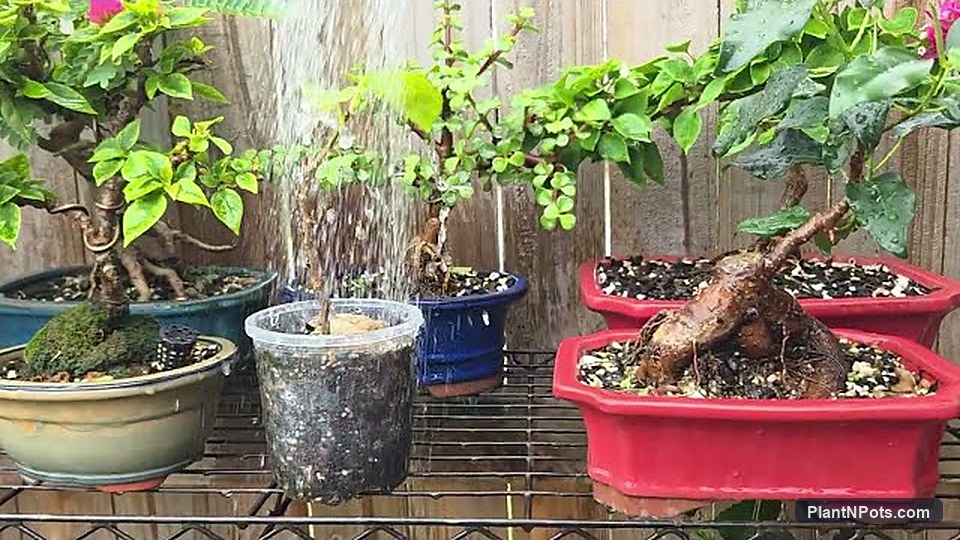
Water your freshly repotting ficus thoroughly until moisture drains freely. Deep watering settles soil particles around roots and eliminates hidden air pockets.
Empty the saucer completely after drainage stops to prevent standing water absorption. Allowing pots to sit in stagnant water invites severe fungal pathogens.
Place your ficus in bright, indirect light to encourage recovery. Avoid direct, harsh sunlight immediately following repotting procedures to reduce environmental stress.
Expect minor leaf drop as a normal reaction to transplant shock. Maintain consistent watering routines and high ambient humidity to accelerate plant recovery.
Drench the newly filled pot thoroughly with room-temperature water until liquid flows freely from the bottom drainage holes, settling the loose soil particles snugly around the trimmed root system.
Place your repotted ficus in a bright, indirect location away from harsh direct sunlight and drafty HVAC vents to minimize transplant shock during the critical initial recovery phase.
Refrain from applying synthetic liquid fertilizers for at least six to eight weeks, allowing the fragile, recovering roots adequate time to heal without chemical fertilizer burn from concentrated mineral salts.
Monitor surface soil daily, watering only when the top two inches feel completely dry to the touch, and expect mild leaf shedding as the plant adapts successfully to its container.
- Water deeply until liquid flows from drainage holes.
- Empty collection saucers immediately after drainage ceases.
- Provide bright, indirect sunlight during recovery weeks.
- Delay fertilizer applications for at least six weeks.
Managing Post-Repotting Shock
Ficus trees frequently react to root disturbance by shedding older foliage. Keep environmental conditions stable by avoiding sudden temperature drops or drafts.
Resume normal watering only when the top two inches of soil dry out. Patience ensures your recovering tree develops strong new roots.
- Expect minor leaf drop during the first week.
- Protect recovering plants from cold window drafts.
- Check soil moisture levels using a finger test.
Frequently Asked Questions
How often should I repot my indoor ficus tree?
Repot your indoor ficus every two to three years during early spring growth. Mature specimens require less frequent updates every four years.
Why is my ficus dropping leaves after repotting?
Leaf drop is a normal response to transplant shock and root disturbance. Maintain stable light conditions and proper moisture levels to help it recover.
What type of soil is best for a potted ficus?
Use a rich, well-draining potting mix amended with coarse perlite for aeration. Ensure the substrate pH remains between 6.0 and 6.5 for optimal health.
Should I fertilize my ficus immediately after repotting?
Avoid fertilizing freshly repotted plants for at least six weeks. Fresh soil contains adequate nutrients, and synthetic fertilizers can burn delicate roots.
What size pot should I choose for my ficus upgrade?
Select a new container that is only two inches wider than the previous pot. Oversized containers retain excess water and promote root rot.

