Finding the best soil mix for aloe vera is essential for keeping indoor succulents healthy and preventing root rot. Because aloe plants store water in their fleshy leaves, they require specific growing media that sheds excess moisture quickly. Standard garden soil retains too much water, which often suffocates roots and damages the plant over time. Instead, succulent owners look for specialized blends containing ingredients like coarse sand, pinebark, perlite, or lava rocks to create a loose, airy texture.
When shopping for the best soil mix for aloe vera, you will encounter various ready-to-use formulas, organic bundles, and mineral amendments. Each product offers distinct structural qualities, such as high porosity, peat-free organic matter, or decorative top dressings. Matching your potting material to your container size and watering habits helps ensure proper moisture control. This overview examines several available soil products and bundles, highlighting their practical features and design trade-offs to help you choose wisely.
The product shortlist

Professional Aloe Plant Soil Mix Large 2.2 Quarts Ready
This ready-to-use potting soil comes in a convenient pack of two, formulated specifically for aloe vera, cactus, and succulent plants. The blend combines pinebark, peat, and coarse sand to create a fast-draining environment for indoor gardening. Manufactured in the USA, it provides a balanced mix of organic matter and gritty texture designed to prevent moisture buildup around sensitive succulent roots.
- Premium Potting Soil for Aloe Vera Cactus Succulent Plants
- Fast Draining Blend Pinebark Peat Course Sand Indoor Made in USA (Pack of 2)
Dual-pack indoor succulent planting
View on Amazon (opens in a new tab)
Check current details and price
Read the detailed assessment
What stands out
- Formulated specifically for aloe vera and cacti to support healthy indoor growth habits.
- Combines pinebark, peat, and coarse sand for a pre-mixed, ready-to-use convenience.
- Supplied in a pack of two units to handle multiple small to medium pots.
What to consider
- The two-pack quantity might supply more material than needed if you are only potting a single small houseplant.
- Containing peat and pinebark means the organic components will eventually break down, requiring future repotting.
The practical verdict
This product is best for indoor gardeners who want a ready-made mixture containing coarse sand and pinebark for multiple aloe plants. Avoid it if you prefer single-bag purchases or entirely peat-free formulas. The main trade-off is receiving a two-pack quantity that offers convenience for multiple containers but may leave excess soil if your collection is small.
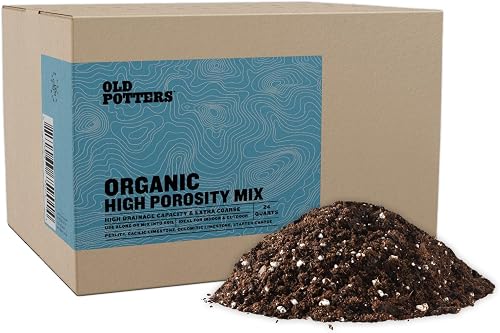
High Porosity Soil Mix, Enhanced with Peat Moss and
Designed with high porosity in mind, this soil mix is enhanced with peat moss and perlite to promote aeration and drainage. Measuring 24 quarts in total volume, it is particularly suited for smaller pots housing cacti and succulents. The inclusion of perlite helps prevent compaction, allowing air to circulate freely around delicate roots while letting surplus water escape quickly.
- Enhanced with Peat Moss and Perlite
- Perfect for Smaller Pots
- Cactus & Succulents
High-volume smaller pot planting
View on Amazon (opens in a new tab)
Check current details and price
Read the detailed assessment
What stands out
- Enhanced with perlite and peat moss to create high porosity and rapid drainage.
- Specifically tailored for smaller pots commonly used for growing indoor succulents.
- Generous 24-quart capacity provides ample volume for repotting multiple collections.
What to consider
- The large 24-quart volume requires significant storage space in a closet or shed between planting sessions.
- High perlite ratios can sometimes float to the surface or dry out very rapidly in warm rooms.
The practical verdict
This mix is best for gardeners managing numerous smaller pots who need a high-porosity blend. Avoid it if you lack storage space for a 24-quart bag. The main trade-off is securing a large volume of perlite-enhanced soil that ensures excellent drainage but demands dedicated storage room.

3lb Mix Lava Rocks for Plants in Door -Gravel
This three-pound mix of lava rocks functions as gravel pebbles suitable for bonsai, succulents, cactus potting soil, vase fillers, and fairy gardening. Serving as an effective top dressing, these stones add structural interest while helping secure plants in their containers. They can also be mixed into custom substrates to increase internal aeration and drainage capacity.
- Fairy Gardening
- Top Dressing
Decorative top dressing and aeration
View on Amazon (opens in a new tab)
Check current details and price
Read the detailed assessment
What stands out
- Weighs three pounds, offering a manageable quantity for hobbyist crafting and top dressing.
- Functions effectively as a decorative top layer or vase filler for various container types.
- Adds physical weight and stone elements that can be incorporated into custom soil mixtures.
What to consider
- As a rock mix rather than a traditional potting soil, it cannot be used on its own for growing plants.
- Weighing three pounds limits the coverage area if you plan to top-dress a large number of large pots.
The practical verdict
This product is best for adding a decorative finish and top dressing to indoor succulent arrangements. Avoid it if you are looking for a complete organic growing medium for planting roots. The main trade-off is receiving solid lava rocks that look great and improve stability but require pairing with actual soil.

Rosy Soil Indoor Plant Soil Bundle, Organic Potting Mix
This organic potting mix bundle is crafted for succulents, cacti, monstera, tropicals, and more, coming in four-quart individual packages. The peat-free formula provides an environmentally conscious alternative for indoor plant enthusiasts. Its diverse formulation supports various tropical and arid species, making it a versatile option for mixed indoor gardens.
- Organic Potting Mix for Succulents
- Tropicals and More
- 4 Qt Each
Versatile peat-free indoor gardening
View on Amazon (opens in a new tab)
Check current details and price
Read the detailed assessment
What stands out
- Peat-free organic potting mix formulation supports sustainable indoor gardening practices.
- Designed for a wide variety of plants including succulents, cacti, and tropicals.
- Bundle format features four-quart portions for easy handling and targeted application.
What to consider
- The multi-plant formulation is generalized, meaning it may require amendment for strict desert cactuses.
- Four-quart bags can run out quickly if you are potting several large-sized aloe vera specimens.
The practical verdict
This bundle is best for growers seeking a peat-free organic option that accommodates both succulents and tropical houseplants. Avoid it if you need specialized single-purpose desert soil in massive quantities. The main trade-off is receiving a versatile multi-plant mix that saves space but requires consideration for specific plant moisture preferences.
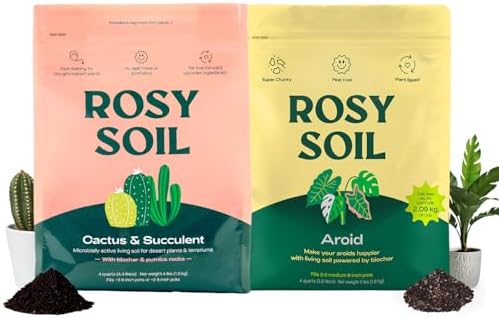
Rosy Soil Cactus and Succulent Potting Mix and Aroid
Offering a chunky and fast-draining indoor plant bundle, this product pairs a cactus and succulent potting mix with an aroid soil mix in four-quart quantities. The peat-free design focuses on creating air pockets and preventing water retention. This dual-mix approach caters to plants that demand rapid moisture runoff and high oxygen exposure at the root level.
- 4 Qt Each
- Peat-Free Chunky Fast-Draining Indoor Plant Bundle
Chunky fast-draining dual-mix needs
View on Amazon (opens in a new tab)
Check current details and price
Read the detailed assessment
What stands out
- Comprises two distinct four-quart mixes tailored for succulents and aroids respectively.
- Peat-free chunky construction encourages rapid drainage and superior root aeration.
- Targeted bundle design addresses the different needs of various indoor plant categories.
What to consider
- Divided quantities mean you get smaller amounts of each specific soil type per purchase.
- Chunky textures can sometimes feel loose in small pots until plants establish firm root systems.
The practical verdict
This bundle is best for hobbyists growing both succulents and aroids who need chunky, fast-draining media. Avoid it if you only require a single homogenous soil type in bulk. The main trade-off is gaining specialized soil textures for different plants while managing smaller individual bag capacities.
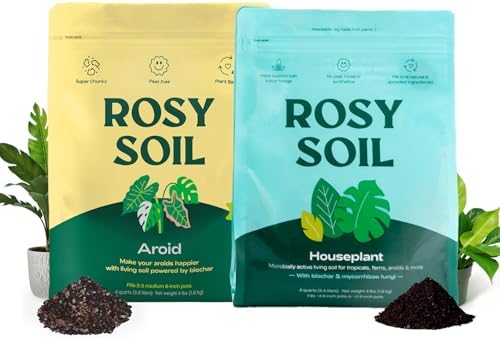
Rosy Soil Aroid Potting Mix and Houseplant Potting Soil
This bundle features an aroid potting mix and a houseplant potting mix enriched with biochar in four-quart portions. Completely peat-free, the organic indoor plant soil incorporates biochar to support microbial life and nutrient retention. The combination provides structured options for managing different indoor greenery species within a single purchase.
- Peat-Free Biochar Indoor Plant Soil
- 4 Quarts Each
Biochar-enriched multi-species repotting
View on Amazon (opens in a new tab)
Check current details and price
Read the detailed assessment
What stands out
- Incorporates biochar into peat-free organic indoor plant soil for enhanced nutrient support.
- Includes two separate four-quart mixes to accommodate diverse houseplant varieties.
- Formulated to balance moisture retention with proper aeration for indoor environments.
What to consider
- Biochar elements can alter the visual appearance of the soil, making it darker or speckled.
- Splitting the total volume between two distinct blends reduces the amount available for a single plant type.
The practical verdict
This bundle is best for plant owners interested in biochar-enhanced, peat-free soils for mixed indoor collections. Avoid it if you need a massive single-purpose bag for dozens of identical succulents. The main trade-off is receiving nutrient-supporting biochar blends split across two separate mixes rather than one large unified bag.

Rosy Soil Indoor Potting Soil and Cactus Succulent Soil
Combining an indoor potting soil and a cactus succulent potting mix, this bundle delivers a peat-free organic living soil experience. The formulation relies on natural organic components to foster a thriving subterranean ecosystem for indoor plants. It provides a balanced approach for growers who prioritize sustainable living soil practices for their prized succulents.
- Peat-Free Organic Living Soil Bundle
Sustainable living soil collection
View on Amazon (opens in a new tab)
Check current details and price
Read the detailed assessment
What stands out
- Provides a peat-free organic living soil formulation for eco-conscious indoor gardeners.
- Combines general indoor potting soil with a dedicated cactus and succulent mix.
- Supports natural soil biology to nurture potted plants without synthetic additives.
What to consider
- Living soil bundles may require specific moisture management to keep beneficial components active.
- Split bag contents mean you must select the correct half of the bundle for your specific plant.
The practical verdict
This bundle is best for indoor growers who want organic living soil options for both general houseplants and succulents. Avoid it if you prefer inert, sterile mineral-based potting sands. The main trade-off is supporting natural soil biology while needing to manage two distinct soil bags.

Rosy Soil Houseplant Potting Soil, Organic Indoor Potting Mix,
Packaged as a two-pack of four-quart bags, this organic indoor potting mix offers a straightforward solution for medium-scale repotting tasks. The organic formulation provides a safe growing medium for various indoor species. Its dual-bag configuration allows you to open one bag at a time, keeping the second portion fresh until needed.
- Organic Indoor Potting Mix
- 4 Qt
- 2 Pack
Incremental organic houseplant repotting
View on Amazon (opens in a new tab)
Check current details and price
Read the detailed assessment
What stands out
- Organic indoor potting mix supplied in two separate four-quart bags for convenience.
- Allows you to open one package at a time while keeping the second bag sealed.
- Provides a reliable organic medium for general indoor container gardening tasks.
What to consider
- Four-quart bag sizes are relatively small when dealing with large or deep container setups.
- General organic indoor formulation may lack the extreme drainage required for neglected succulents.
The practical verdict
This two-pack is best for gardeners who appreciate incremental bag opening for smaller indoor repotting jobs. Avoid it if you need massive bulk quantities or specialized ultra-gritty cactus sand. The main trade-off is enjoying convenient storage segmentation while working with smaller four-quart bag volumes.
How this comparison was prepared
We use the supplied product identities and listing details to compare intended use, stated features and practical trade-offs. Listing claims are not independent performance tests. This page does not claim laboratory testing, personal ownership or an analysis of customer-review counts. The shortlist order is not a numeric test ranking. Confirm model details, compatibility and current terms on the seller or manufacturer page before purchasing.
Buying guide
Understanding Drainage Requirements for Succulents
Aloe vera plants thrive in arid environments, meaning their root systems are unaccustomed to standing water. When shopping for planting substrates, you must prioritize mixes that feature coarse sand, perlite, pumice, or pinebark. These components create microscopic air channels that allow excess irrigation water to flow straight through the drainage hole rather than pooling around the base of the plant.
Choosing a medium with high porosity prevents root rot, which is the most common cause of decline in indoor succulents. Dense garden dirt or standard potting compost holds onto moisture for too long, suffocating the roots. Reviewing the product ingredients for coarse amendments ensures your chosen mix mimics the natural, fast-drying desert earth that aloe vera needs to stay healthy.
Evaluating Organic Versus Mineral Components
Plant soils typically combine organic matter like peat moss, coir, or compost with mineral aggregates such as lava rock, sand, or perlite. Organic materials provide essential nutrients and help anchor the plant, but they also retain moisture. Balancing these elements is crucial for succulents.
Peat-free organic soils utilize alternative biomass, such as biochar or forest products, to maintain texture without traditional peat harvesting. If you prefer sustainable gardening, look for certified peat-free bundles. However, ensure that the organic base is adequately lightened with gritty minerals so it never becomes heavy or waterlogged after watering.
Sizing Your Purchase and Managing Volume
Potting mixes are sold in various container sizes, ranging from small four-quart bags to massive 24-quart quantities. Before buying, assess how many aloe vera plants you intend to repot and measure the diameter of your pots. Buying too little soil leaves you stranded mid-project, while buying excessive bulk creates storage clutter.
Bundles featuring multiple smaller bags offer great flexibility for gardeners with diverse plant collections. You can open one bag at a time, keeping the remaining soil fresh and dry in storage. For large floor-standing aloe specimens, a single high-capacity bag or multi-pack ensures you have enough volume to fill deep containers properly.
Utilizing Amendments and Top Dressings
Sometimes standard potting soil needs extra help to achieve optimal drainage. Adding independent mineral amendments like pumice, perlite, or lava rock allows you to customize store-bought mixes. These additions increase structural integrity and prevent the soil from packing down tightly over months of watering.
Top dressings, such as decorative gravel or lava rocks, serve both aesthetic and practical functions. Placed on top of the soil surface around the aloe stem, they prevent soil from splashing out during watering and help anchor top-heavy leaves. They also accelerate surface evaporation, keeping the immediate root crown dry.
Storage and Maintenance Best Practices
Properly storing your leftover potting mix preserves its structural quality for future repotting sessions. Keep opened bags tightly sealed in a cool, dry location to prevent moisture contamination or pest intrusion. Wet soil stored in dark bags can develop mold or degrade organic ingredients prematurely.
Over time, container soil naturally compacts and loses its porosity as organic components break down. Plan to refresh or replace your aloe vera potting mix every few years. Inspecting the root system during repotting also gives you a chance to check for pests and upgrade to a slightly larger container if necessary.
Matching Soil to Your Indoor Environment
Indoor growing conditions significantly influence how fast potting soil dries out. Homes with low humidity, active heating, or bright south-facing windows cause moisture to evaporate much faster than cool, humid basements. Tailoring your soil choice to your indoor climate helps prevent accidental overwatering.
If your home environment tends to stay damp or cool, opt for the chunkiest, most porous soil mix available. Conversely, in very dry indoor climates, a slightly more moisture-retentive organic blend may reduce watering frequency. Always check the soil moisture several inches down before watering your aloe vera.
Frequently asked questions
Can I use regular garden soil for planting aloe vera indoors?
Using regular garden dirt is generally discouraged because it packs down tightly, lacks sufficient aeration, and retains too much moisture. Aloe vera requires a fast-draining medium made with ingredients like coarse sand, perlite, or pinebark to prevent fatal root rot. Standard garden earth can also introduce outdoor weed seeds and pests into your indoor living space, making specialized potting mixes a much safer choice for container-grown succulents.
How often should I repot my aloe vera plant into fresh soil?
Aloe vera plants typically benefit from being repotted every two to three years, or when they outgrow their current container. Over time, organic components in the potting mix break down and lose their airy structure, leading to compaction. Repotting provides an opportunity to refresh the soil nutrients, inspect the root system for damage, and expand into a slightly larger pot if the plant has produced numerous offsets.
What is the benefit of using a peat-free soil mix?
Peat-free soil mixes offer an environmentally sustainable alternative to traditional peat-based substrates, often utilizing renewable organic ingredients like biochar, composted bark, or forest fibers. These formulations support ecological conservation while still providing adequate structure for indoor plants. Many gardeners appreciate peat-free options because they align with eco-friendly values without sacrificing the fast-draining qualities required by succulents and tropical houseplants alike.
Why is perlite included in succulent and cactus soil blends?
Perlite is a lightweight, volcanic mineral that is heated until it pops like popcorn, creating countless tiny internal air chambers. When mixed into potting soil, perlite creates physical spaces that improve drainage and prevent the surrounding media from packing tightly together. This enhanced aeration allows oxygen to reach plant roots easily and ensures that surplus irrigation water drains away quickly from sensitive aloe vera roots.
How do decorative lava rocks function as a top dressing?
Decorative lava rocks placed on the surface of your potting soil serve both functional and aesthetic purposes for indoor plants. Physically, the stones weigh down the top layer to keep lightweight soil from splashing out when you water. They also promote quicker surface evaporation around the stem of the aloe vera, which helps prevent fungal issues at the soil line while giving your container arrangement a polished, finished appearance.
Final thoughts
Selecting the best soil mix for aloe vera comes down to balancing proper drainage, container size, and your personal gardening preferences. Whether you choose a pre-mixed bag containing coarse sand and pinebark, a high-porosity perlite blend, or an eco-friendly peat-free organic bundle, prioritizing aeration is key to succulent health. Matching the right substrate texture to your watering habits and indoor climate protects your plants from the dangers of waterlogging and root decay.
By exploring the available options, from multi-pack ready mixes to decorative lava rock amendments, you can tailor your indoor gardening setup to achieve optimal results. Remember to consider storage requirements and bag volumes so you have just the right amount of material for your repotting projects. With the appropriate fast-draining medium in place, your aloe vera plants will enjoy a stable, breathable environment for sustained growth.