Finding the right growing medium is essential when maintaining succulent greenery like aloe vera inside your home. Because these desert-adapted specimens store water within their thick leaves, they are particularly sensitive to moisture retention in standard garden dirt. Selecting a dedicated fast-draining blend helps prevent root rot and encourages steady growth over time.
When evaluating options for your indoor containers, you will encounter various formulations containing ingredients like pine bark, coarse sand, perlite, and peat moss. Each component serves a specific purpose in regulating moisture and providing structural support for your greenery. Reviewing the available mixes helps you match the proper texture and capacity to your specific container sizes.
The product shortlist

Professional Aloe Plant Soil Mix Large 2.2 Quarts Ready
This ready-to-use potting soil comes in a convenient two-pack totaling 2.2 quarts, formulated specifically for aloe vera, cacti, and succulents. The mixture combines pine bark, peat, and coarse sand to create a fast-draining indoor environment. Manufactured in the USA, it provides a balanced texture that supports root health without holding excess water.
- Premium Potting Soil for Aloe Vera Cactus Succulent Plants
- Fast Draining Blend Pinebark Peat Course Sand Indoor Made in USA (Pack of 2)
Dual-pack standard indoor planting
View on Amazon (opens in a new tab)
Check current details and price
Read the detailed assessment
What stands out
- Ready-to-use formulation saves time during repotting sessions by eliminating the need to mix individual amendments yourself.
- Incorporates coarse sand and pine bark to facilitate rapid water drainage around sensitive succulent root systems.
- Provided as a convenient pack of two, offering enough medium for multiple small or medium indoor pots.
What to consider
- The total volume of 2.2 quarts across a two-pack may prove insufficient if you are repotting several large aloe specimens simultaneously.
- The inclusion of pine bark and coarse sand creates a heavier overall container weight compared to lightweight perlite-only mixtures.
The practical verdict
This pre-mixed blend is best for gardeners seeking a ready-to-use option featuring coarse sand and pine bark for small indoor containers. Avoid if you require a high volume of soil for large floor-standing planters. The main trade-off is the limited 2.2-quart total capacity balanced against the convenience of a pre-blended formula.
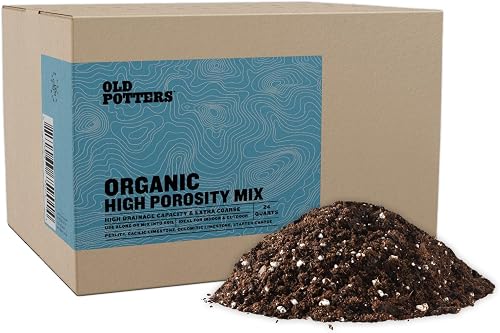
High Porosity Soil Mix, Enhanced with Peat Moss and
Designed with a high porosity profile, this soil mix is enhanced with peat moss and perlite to promote optimal drainage and aeration. Spanning 24 quarts, it is well-suited for smaller pots and various succulent varieties. The formulation focuses on preventing moisture accumulation around delicate roots through increased air space within the container.
- Enhanced with Peat Moss and Perlite
- Perfect for Smaller Pots
- Cactus & Succulents
High-volume smaller container setup
View on Amazon (opens in a new tab)
Check current details and price
Read the detailed assessment
What stands out
- Generous 24-quart capacity provides ample volume for managing multiple potting and repotting projects around the home.
- Enhanced with perlite and peat moss to maximize internal aeration and encourage healthy root expansion.
- Specifically targeted toward smaller pots, making it simple to portion out precise amounts for individual succulents.
What to consider
- The 24-quart bag size requires dedicated storage space in a closet or garage compared to smaller retail packaging.
- High porosity formulations featuring abundant perlite can occasionally float to the surface during heavy top-watering sessions.
The practical verdict
Best for indoor gardeners with numerous smaller pots who need a high-capacity, well-aerated medium. Avoid if you only have a single compact plant and lack storage space for a large bag. The main trade-off is storing a bulky 24-quart volume to gain long-term supply economy.

3lb Mix Lava Rocks for Plants in Door -Gravel
This 3-pound mix of lava rocks functions as gravel pebbles suitable for bonsai, succulents, cacti, and vase fillers, alongside fairy gardening and top dressing. The stones add a decorative element while improving surface drainage and preventing soil compaction around the base of your plants. They can be integrated into potting mixes or layered on top.
- Fairy Gardening
- Top Dressing
Decorative top dressing and drainage
View on Amazon (opens in a new tab)
Check current details and price
Read the detailed assessment
What stands out
- Weighing 3 pounds, the bag provides a manageable quantity of small stones for surface application or container layering.
- Versatile enough to serve as a decorative top dressing, vase filler, or component for fairy gardening projects.
- Helps keep the soil surface stable and reduces splashing during watering routines.
What to consider
- Lava rocks function primarily as a dressing or amendment rather than a complete standalone growing medium for root anchoring.
- A 3-pound quantity may run out quickly if you cover the surface of multiple large pots or deep containers.
The practical verdict
Best for adding decorative top dressing and improving surface drainage around established indoor plants. Avoid if you need a complete organic growing medium for unrooted cuttings. The main trade-off is utilizing a supplementary rock product that requires a separate nutrient-bearing soil base.

Rosy Soil Indoor Plant Soil Bundle, Organic Potting Mix
Offering an organic approach to indoor planting, this bundle features peat-free potting mix tailored for succulents, cacti, monstera, and tropicals. Each component in the bundle provides 4 quarts of volume, giving you flexibility across different plant types. The formulation focuses on natural organic ingredients to support diverse indoor botanical collections.
- Organic Potting Mix for Succulents
- Tropicals and More
- 4 Qt Each
Diverse organic indoor collection
View on Amazon (opens in a new tab)
Check current details and price
Read the detailed assessment
What stands out
- Peat-free formulation appeals to gardeners looking for sustainable alternatives to traditional mined peat moss products.
- Supplied in 4-quart increments, allowing you to easily manage distinct plant varieties without opening massive bulk bags.
- Versatile organic blend accommodates succulents, cacti, and tropical houseplants within the same product family.
What to consider
- The organic composition may break down differently over extended periods compared to synthetic or mineral-heavy substrates.
- A 4-quart per-bag volume might necessitate purchasing multiple bundles if you manage a large indoor jungle.
The practical verdict
Best for indoor plant enthusiasts seeking a peat-free, organic potting mix that handles multiple tropical and succulent species. Avoid if you specifically prefer traditional peat-based moisture retention profiles. The main trade-off is adopting a sustainable organic formula that requires careful monitoring of watering schedules.
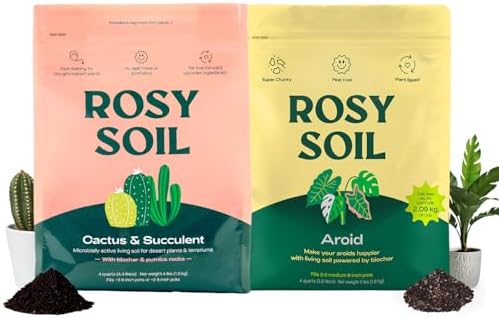
Rosy Soil Cactus and Succulent Potting Mix and Aroid
This indoor plant bundle includes a cactus and succulent potting mix paired with an aroid soil mix, with each bag offering 4 quarts of volume. The peat-free, chunky, fast-draining design promotes rapid water movement through the container. It caters to growers who house both desert-loving succulents and climbing tropical varieties requiring airy root zones.
- 4 Qt Each
- Peat-Free Chunky Fast-Draining Indoor Plant Bundle
Mixed succulent and aroid care
View on Amazon (opens in a new tab)
Check current details and price
Read the detailed assessment
What stands out
- Combines two distinct 4-quart soil types to accommodate both chunky-loving aroids and fast-draining succulents.
- Peat-free chunky structure prevents compaction and ensures high oxygen availability around underground plant structures.
- Pre-packaged bundle format simplifies shopping for households with varied indoor plant requirements.
What to consider
- Split formulation means you must match the correct soil bag to the specific plant type rather than using a single universal scoop.
- The chunky texture allows water to pass through very quickly, which may require more frequent monitoring for thirsty tropicals.
The practical verdict
Best for plant owners maintaining a collection that includes both arid succulents and chunky-soil tropicals. Avoid if you want a single homogeneous bag of soil for all household containers. The main trade-off is managing two distinct soil types within one purchase bundle.

Rosy Soil Indoor Potting Soil and Cactus Succulent Soil
This offering brings together an indoor potting soil and a dedicated cactus succulent potting mix in a peat-free organic living soil bundle. Designed to support active biological activity in the root zone, it omits traditional peat while delivering natural nutrients. The combination addresses the specific structural needs of indoor plants requiring balanced moisture and breathability.
- Peat-Free Organic Living Soil Bundle
Organic living soil maintenance
View on Amazon (opens in a new tab)
Check current details and price
Read the detailed assessment
What stands out
- Organic living soil framework fosters a thriving micro-environment around the roots of your indoor specimens.
- Completely peat-free construction aligns with eco-friendly gardening preferences and sustainable resource use.
- Bundled selection provides targeted options for general indoor planting alongside dedicated succulent care.
What to consider
- Living soil bundles can be heavier and retain distinct natural aromas due to their rich organic composition.
- Requires proper storage in a cool, dry place to maintain the integrity of the organic components over time.
The practical verdict
Best for growers prioritizing organic living soil properties and peat-free sustainability for indoor containers. Avoid if you prefer sterile, inert mineral substrates for your desert plants. The main trade-off is embracing an active organic medium that demands mindful moisture management.

Organic Potting Soil Mix for Indoor Plants & Herb
Formulated as an all-purpose natural soil, this 1-quart organic potting mix serves indoor plants and herb gardens. It focuses on delivering a nutrient-rich foundation for everyday container gardening tasks. The compact volume makes it practical for small-scale desktop planters and kitchen window herb boxes.
Small desktop and herb pots
View on Amazon (opens in a new tab)
Check current details and price
Read the detailed assessment
What stands out
- Nutrient-rich natural profile provides foundational support for small indoor greenery and culinary herbs.
- Compact 1-quart size is exceptionally easy to handle, store, and dispense into miniature containers.
- All-purpose nature accommodates various small-scale indoor planting tasks without leftover bulk bags.
What to consider
- A 1-quart total capacity is very limited and quickly exhausted when filling larger containers or multiple pots.
- Lacks specialized heavy coarse sand or chunky perlite ratios typically required for large established succulents.
The practical verdict
Best for small desktop containers, single small herbs, or minor touch-ups in indoor pots. Avoid if you are potting large, mature aloe vera plants requiring heavy drainage amendments. The main trade-off is high nutrient convenience packaged in a very small 1-quart volume.

Succulent Plant Potting Soil Mix Peat Moss & Perlite
Containing peat moss and perlite, this succulent plant potting soil mix comes in a half-gallon, 2-quart volume packaged as a twin pack. The combination balances moisture-holding peat with lightweight perlite for improved drainage. It offers a straightforward formulation designed to keep container weight manageable while preventing water stagnation.
Lightweight twin-pack succulent potting
View on Amazon (opens in a new tab)
Check current details and price
Read the detailed assessment
What stands out
- Packaged as a convenient twin pack totaling 2 quarts of succulent-specific growing medium.
- Blends peat moss and perlite to achieve a lightweight texture that reduces total container heft.
- Straightforward ingredient profile focuses on the classic combination used for container-grown succulents.
What to consider
- The 2-quart combined volume is relatively small and suited only for minor potting tasks or compact plants.
- Peat moss can become hydrophobic if allowed to dry out completely between watering intervals.
The practical verdict
Best for repotting a couple of small succulents where a lightweight perlite and peat blend is desired. Avoid if you need heavy sand-based media or large-volume bulk quantities. The main trade-off is utilizing a classic lightweight formula that requires careful re-wetting if allowed to dry completely.
How this comparison was prepared
We use the supplied product identities and listing details to compare intended use, stated features and practical trade-offs. Listing claims are not independent performance tests. This page does not claim laboratory testing, personal ownership or an analysis of customer-review counts. The shortlist order is not a numeric test ranking. Confirm model details, compatibility and current terms on the seller or manufacturer page before purchasing.
Buying guide
Understanding Drainage Requirements for Desert Plants
Aloe vera and other succulent species naturally thrive in arid environments where rainfall quickly percolates through sandy earth. Replicating this condition indoors requires a growing medium that prevents moisture from lingering around the root zone for extended periods. Dense garden dirt holds too much water, which suffocates roots and leads to decay.
When shopping for suitable substrates, look for formulations explicitly engineered to release excess liquid rapidly. Ingredients like coarse sand, perlite, and pine bark create microscopic channels within the container. These components ensure that water flows out of the drainage hole shortly after watering, keeping the root environment healthy and oxygenated.
Evaluating Organic Versus Inorganic Components
Modern potting mixes incorporate a diverse range of organic and inorganic materials to balance nutrition and drainage. Organic elements like peat moss or composted forest products provide essential structure and minor nutrient retention. However, too much organic matter can retain moisture for longer than desert plants prefer.
Inorganic amendments such as perlite, pumice, and coarse sand do not break down over time and serve strictly to improve porosity. Striking the right balance between these two categories ensures your plants receive adequate nourishment without sacrificing the fast-drying characteristics necessary for succulent vitality.
Container Size and Soil Volume Planning
Calculating the correct soil volume before starting a repotting project prevents frustrating mid-project shortages. Small desktop pots might only require a fraction of a quart, whereas deep floor containers demand several gallons of medium. Checking package capacities ensures you purchase enough material to fill your pots adequately.
Many retail options come in convenient multi-packs or modest 2-to-4 quart bags, which work well for apartment gardeners with limited storage. If you maintain an extensive collection of indoor greenery, larger bulk bags or multi-bag bundles offer better long-term value and reduce the frequency of reordering.
Weighing Soil Density and Container Stability
The physical weight of a potting mix depends heavily on its component ingredients. Mineral-heavy blends containing coarse sand, gravel, or stone amendments create a substantial anchor in the bottom of the pot. This added weight prevents top-heavy succulent specimens from tipping over easily.
Conversely, mixes relying heavily on perlite and peat moss produce a much lighter container that is simple to lift and transport around your living space. Consider the mature size of your plant and the location of your containers when deciding whether you prefer a heavy mineral substrate or a lightweight formulation.
Sustainability and Peat-Free Considerations
Environmental consciousness plays an increasingly important role in gardening product selection. Traditional potting formulas frequently rely on mined peat moss, prompting many manufacturers to develop peat-free alternatives utilizing coconut coir, bark, and composted organic matter. These sustainable options perform similarly in drainage tests.
Choosing a peat-free organic living soil bundle supports eco-friendly horticultural practices while maintaining active biological life in the root zone. Reviewing product ingredient lists helps you align your purchasing decisions with your personal environmental standards without compromising plant health.
Adapting Soil Textures for Different Indoor Microclimates
Indoor environments vary significantly in temperature, humidity, and sunlight exposure depending on your geographic location and HVAC setup. A home with dry winter heating causes potting soil to dry out much faster than a humid coastal apartment. Understanding your indoor climate helps you select a mix that retains just enough moisture.
If your home stays cool and damp, a coarser, highly porous mix prevents waterlogging. In contrast, very hot and dry rooms might benefit from a slightly higher proportion of moisture-retentive organic matter to reduce the frequency of watering while still protecting against root rot.
Frequently asked questions
Why is regular garden soil unsuitable for growing indoor aloe vera plants?
Regular garden soil is typically too dense and compacts easily inside household containers, which restricts airflow to the roots. It also tends to retain moisture for far too long, creating a soggy environment that frequently causes aloe vera roots to rot. Specially formulated succulent soils incorporate coarse sand, perlite, or pine bark to ensure rapid drainage and prevent water accumulation.
What is the primary benefit of using perlite in a succulent potting mix?
Perlite is a lightweight volcanic mineral that creates tiny air pockets within the soil structure. These air spaces improve overall aeration and facilitate rapid water drainage, preventing the growing medium from becoming compacted. This encourages healthy root expansion and reduces the likelihood of moisture-related diseases in desert-adapted houseplants.
How often should I repot my indoor aloe vera plant into fresh soil?
Aloe vera plants generally benefit from being repotted every two to three years, or when they outgrow their current container. Over time, potting soil loses its nutrient content and its physical structure breaks down, reducing drainage efficiency. Spring is typically the ideal season for repotting, as the plant enters its active growing phase and recovers quickly.
Are peat-free potting soils effective for maintaining healthy indoor succulents?
Yes, peat-free potting soils are highly effective and provide a sustainable alternative to traditional peat-based mixes. They often utilize alternative organic components like coconut coir, composted bark, and natural fibers combined with perlite or sand to achieve the necessary drainage profile. These mixes support robust root development while reducing environmental impact.
Can I use decorative lava rocks or gravel inside the potting soil?
Decorative lava rocks and gravel can be mixed into the lower layers of a container or used as a surface top dressing to improve stability and aesthetics. While mixing them directly into the soil helps with internal drainage, placing a layer of rocks solely at the bottom of a pot does not improve overall drainage physics due to perched water table effects. Using them as a top dressing also prevents soil erosion during watering.
Final thoughts
Choosing the best potting soil for your aloe vera plant involves balancing fast-drainage requirements with container stability and ingredient sustainability. Whether you prefer a ready-to-use pine bark blend, a high-porosity perlite mix, or an organic peat-free bundle, matching the medium to your watering habits and pot size ensures long-term vitality for your indoor succulent collection.
Taking time to evaluate soil density, component ratios, and volume needs will simplify your indoor gardening routine. By prioritizing blends designed specifically for cacti and succulents, you create an environment where your aloe vera can store water safely and grow steadily through every season without succumbing to root rot.