Finding the right growing medium for tropical flowers requires careful attention to root health, moisture balance, and aeration. Epiphytic plants such as Phalaenopsis and Cattleyas grow naturally on trees rather than in heavy garden soil, demanding chunky components that prevent root rot while holding sufficient moisture. Shoppers seeking alternatives to standard potting soil often compare various bark formulations, natural moss bundles, and specialized organic blends designed specifically for delicate root systems.
Evaluating these alternative potting mediums helps hobbyists match specific physical properties to their indoor watering routines and climate conditions. Whether managing multiple household orchids or starting a single repotting project, understanding the distinct characteristics of coarse bark, long-fiber moss, and multi-component bundles ensures proper physical support and adequate ventilation. The following breakdown examines available potting options to help you choose a suitable medium for your specific setup.
The product shortlist

Better-Gro Sphagnum Moss – 100% Natural, Long-Fiber Moss for
This option pairs 100 percent natural, long-fiber moss with a specialized orchid mix, providing versatility for ferns and host plants alongside typical epiphytic blooms. The natural fibers hold moisture while allowing gardeners to customize moisture retention levels during repotting sessions.
- 100% Natural
- Long-Fiber Moss for Orchids
- and Host & Better-Gro Special Orchid Mix
Moisture retention and versatility
View on Amazon (opens in a new tab)
Check current details and price
Read the detailed assessment
What stands out
- Incorporates 100 percent natural long-fiber moss suitable for moisture-loving ferns and various host plant varieties.
- Includes specialized orchid mix components to accommodate epiphytic plants during routine repotting and container refreshing.
- Provides organic natural materials that support diverse indoor gardening projects beyond standard floral displays.
What to consider
- Combining long-fiber moss with bark requires careful moisture monitoring to prevent over-saturation in dense indoor environments.
- The bundled nature of moss and bark may require extra preparation time to mix proportions correctly for specific plant types.
The practical verdict
Best suited for gardeners who want a combination of natural moss and bark for mixed indoor displays. Avoid this option if you prefer a pre-blended single-bag soil replacement without handling loose fibrous materials. The main trade-off involves managing two distinct components rather than using a uniform ready-to-pour mix.

Orchid Bark-Premium Grade Orchid Potting Medium for Potting,Repotting,Root Development,and
Supplied as a dual-pack of 4-quart bags, this premium-grade orchid bark potting medium targets root development and water retention for Phalaenopsis and tropical plants. The chunky bark chunks create the structural air spaces necessary to keep delicate root systems healthy and oxygenated inside decorative pots.
- Root Development
- and Water Retention
- Ideal for Phalaenopsis
Phalaenopsis root development
View on Amazon (opens in a new tab)
Check current details and price
Read the detailed assessment
What stands out
- Formulated as a premium-grade potting medium specifically designed to encourage healthy root development in tropical plants.
- Features water retention properties that balance moisture needs without drowning sensitive epiphytic root structures.
- Offered in a convenient pack of two 4-quart bags, providing enough material for multiple household containers.
What to consider
- The 4-quart bag size in a dual pack may require purchasing multiple sets for very large or numerous potted specimens.
- Chunky bark mediums tend to dry out faster than traditional compost, requiring more frequent watering cycles in dry rooms.
The practical verdict
Best suited for indoor growers managing several Phalaenopsis or tropical houseplants requiring balanced moisture retention. Avoid if you need massive bulk quantities in a single container. The primary trade-off is handling multiple smaller bags rather than one large bulk sack for extensive collections.

Special Orchid Mix – Premium Grade Orchid Bark Potting
This 8-quart dual pack provides a specialized orchid bark potting mix engineered for enhanced drainage, air flow, and root ventilation. It accommodates demanding tropical varieties such as Cattleyas and Dendrobiums by maintaining large interstitial gaps within the pot to prevent moisture stagnation.
- Premium Grade Orchid Bark Potting Mix for Potting
- Enhanced Drainage
- Air Flow & Root Ventilation
Cattleyas and Dendrobiums ventilation
View on Amazon (opens in a new tab)
Check current details and price
Read the detailed assessment
What stands out
- Delivers enhanced drainage capabilities that prevent water from pooling around sensitive tropical root systems.
- Promotes optimal air flow and root ventilation to mimic the natural growing conditions of epiphytic flowers.
- Supplied in an 8-quart dual-pack format to accommodate larger potting tasks across multiple mature plants.
What to consider
- The large 8-quart pack size requires adequate dry storage space if not used completely during a single potting session.
- High drainage capacity means liquid fertilizer may wash through more quickly during routine feeding schedules.
The practical verdict
Best suited for owners of mature Cattleyas and Dendrobiums requiring maximum container aeration and drainage. Avoid this choice if your indoor climate causes pots to dry out excessively fast. The main trade-off is faster water drainage requiring more attentive watering habits.

Special Orchid Mix – Premium Grade Orchid Bark Potting
Packaged in two 4-quart bags, this specialized potting mix focuses on enhanced drainage, air flow, and root ventilation for popular tropical genera including Phalaenopsis, Cattleyas, and Dendrobiums. The coarse texture supports reliable oxygen exchange around buried plant foundations.
- Premium Grade Orchid Bark Potting Mix
- Enhanced Drainage
- Air Flow & Root Ventilation
Small-scale tropical repotting
View on Amazon (opens in a new tab)
Check current details and price
Read the detailed assessment
What stands out
- Offers targeted air flow and root ventilation features to maintain healthy oxygen levels inside decorative planters.
- Provides enhanced drainage properties suitable for moisture-sensitive orchids grown in standard containers.
- Provided in two manageable 4-quart quantities for straightforward handling during small-scale repotting chores.
What to consider
- Divided into two smaller 4-quart packages, which might prove inconvenient when filling exceptionally large display vessels.
- Coarse bark particles can occasionally shift or settle, requiring periodic top-ups in long-term setups.
The practical verdict
Best suited for hobbyists repotting a few mid-sized tropical plants who prefer manageable bag sizes. Avoid if you require a single continuous volume for oversized floor containers. The trade-off is managing twin smaller bags instead of one large bulk package.

52720 Better GRO Square Cedar Basket, 8" & Better-Gro
This combination package pairs a square 8-inch cedar basket with a specialized orchid bark potting mix to support hanging or elevated plant displays. The wooden slat construction works in tandem with the bark mix to maximize overall drainage and root aeration.
- 8" & Better-Gro Special Orchid Mix
- Premium Grade Orchid Bark Potting Mix for Potting
- Enhanced Drainag
Hanging cedar basket setups
View on Amazon (opens in a new tab)
Check current details and price
Read the detailed assessment
What stands out
- Includes an 8-inch square cedar basket for authentic slatted mounting and hanging display options.
- Bundled with a specialized orchid bark potting mix designed for enhanced drainage and moisture control.
- Allows immediate assembly of traditional hanging epiphytic displays without sourcing separate hardware components.
What to consider
- Square wooden baskets allow loose bark pieces to fall through initial slat gaps until roots form a dense mat.
- Hanging cedar containers require waterproof saucers or careful indoor placement during watering routines to prevent drips.
The practical verdict
Best suited for growers wanting an all-in-one cedar basket and bark medium for elevated or hanging displays. Avoid if you exclusively use solid ceramic pots without hanging hardware. The primary trade-off is managing potential water runoff from slatted wooden sides.

Orchid Bark | 100% Pure New Zealand Pinus Radiata
Consisting of 100 percent pure New Zealand Pinus Radiata organic potting bark in a 1/2-inch to 3/4-inch grade, this dual-pack medium emphasizes extreme aeration and long-term durability. The uniform bark chunks resist rapid breakdown, maintaining structural integrity over extended growing cycles.
- 100% Pure New Zealand Pinus Radiata
- Power Plus 1/2" to 3/4" Organic Potting Bark for Aeration and Longevity (Pack of 2)
Long-lasting aeration and durability
View on Amazon (opens in a new tab)
Check current details and price
Read the detailed assessment
What stands out
- Utilizes 100 percent pure New Zealand Pinus Radiata bark known for exceptional longevity and structural stability.
- Features a consistent half-inch to three-quarter-inch organic grade that promotes superior container aeration.
- Supplied in a convenient dual-pack to support multiple repotting projects with uniform particle sizes.
What to consider
- Large half-inch to three-quarter-inch bark chunks may be too chunky for very small seedlings or miniature orchid varieties.
- Pure bark lacks moisture-retentive additives, demanding more frequent hydration checks in very hot indoor locations.
The practical verdict
Best suited for advanced growers seeking durable, uniform New Zealand bark that resists quick decomposition. Avoid if your plants need finer organic matter or water-retentive components. The main trade-off is coarser particle sizing requiring more frequent watering routines.
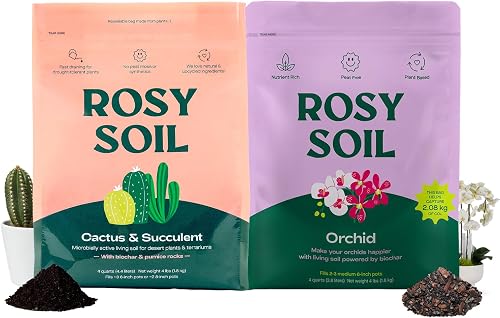
Cactus and Succulent Potting Mix and Orchid Potting Mix
This bundle combines cactus and succulent potting mix with an orchid potting mix, utilizing peat-free chunky soil enhanced with biochar and mycorrhizae. The diverse biological formulation supports beneficial root microflora while catering to varied container gardening requirements.
- Peat-Free Chunky Soil with Biochar and Mycorrhizae
- 4 Qt Each
Peat-free biological soil blending
View on Amazon (opens in a new tab)
Check current details and price
Read the detailed assessment
What stands out
- Features a peat-free chunky soil formulation blended with biochar and mycorrhizae to support root health.
- Combines specialized cactus soil and orchid mix components for versatile application across multiple plant families.
- Provided in equal 4-quart portions of each mix type to facilitate customized soil blending at home.
What to consider
- Requires active blending of the two included mix types to achieve the desired texture for specific plant varieties.
- Biochar and mycorrhizae components may behave differently than standard inert bark during initial watering phases.
The practical verdict
Best suited for gardeners seeking peat-free, microbe-enhanced soil alternatives for mixed indoor collections. Avoid if you want a single-purpose, pre-mixed bag of plain bark. The primary trade-off involves blending distinct soil types rather than using a uniform medium.

Better-Gro Orchid Bark – Premium Grade Orchid Potting Medium
Pairing a premium grade orchid potting medium with natural long-fiber moss, this combination addresses both high-drainage bark needs and moisture-retaining moss requirements. Gardeners can layer or blend the components to match diverse watering habits and plant species.
- Premium Grade Orchid Potting Medium for Potting & OSS
- 100% Natural
- Long-Fiber Moss for Orchids
Customizable bark and moss layering
View on Amazon (opens in a new tab)
Check current details and price
Read the detailed assessment
What stands out
- Combines premium grade orchid potting bark with 100 percent natural long-fiber moss in a single purchase.
- Enables users to layer moisture-retentive moss around fast-draining bark depending on specific environmental humidity.
- Supports multiple tropical plant varieties that require contrasting moisture and aeration zones within a container.
What to consider
- Managing both loose bark and long-fiber moss requires additional attention during the initial potting and layering process.
- Natural moss retains moisture significantly longer than bark, creating potential watering management challenges if over-applied.
The practical verdict
Best suited for plant owners who like to customize root moisture zones using both bark and moss. Avoid if you prefer a uniform, single-component potting material. The main trade-off is balancing two contrasting media types within the same container.
How this comparison was prepared
We use the supplied product identities and listing details to compare intended use, stated features and practical trade-offs. Listing claims are not independent performance tests. This page does not claim laboratory testing, personal ownership or an analysis of customer-review counts. The shortlist order is not a numeric test ranking. Confirm model details, compatibility and current terms on the seller or manufacturer page before purchasing.
Buying guide
Evaluating Bark Particle Size and Aeration
Container aeration remains a primary factor when selecting a potting medium for epiphytic tropical plants. Coarse bark chunks create essential air spaces within the pot, preventing the root suffocation often caused by dense, moisture-trapping garden soils. Larger bark grades allow oxygen to circulate freely around delicate root tips, mimicking natural tree-bark attachment sites. Evaluating the physical dimensions of the bark pieces ensures that oxygen reaches every part of the root ball without restriction.
Selecting the correct particle size depends directly on the maturity of your plants and container dimensions. Seedlings and miniature varieties typically require finer bark particles to maintain stable physical contact, whereas mature specimens thrive in larger chunks. Matching the bark grade to your specific watering habits prevents premature root drying while avoiding stagnant moisture pockets that lead to fungal issues over time.
Balancing Moisture Retention and Drainage
Managing water retention is crucial for maintaining healthy tropical specimens indoors. Unlike standard houseplants that require consistent moisture throughout fine potting soil, epiphytic flowers need rapid drainage to prevent root rot. High-quality bark mixes allow excess irrigation water to escape immediately through bottom drainage holes, leaving only a thin moisture film on the organic surfaces. Assessing drainage performance helps protect sensitive root systems from waterlogging during humid seasons.
Some gardeners prefer incorporating natural moss components to increase moisture retention in dry indoor environments. Long-fiber sphagnum moss holds significantly more water than rigid bark chunks, making it useful for regulating hydration levels in arid rooms. However, combining moss and bark requires careful monitoring to ensure the inner root zone does not remain overly saturated between scheduled watering intervals.
Understanding Organic Materials and Longevity
Organic potting mediums degrade over time as natural bark breaks down into finer particles. Premium-grade woods, such as New Zealand Pinus Radiata bark, offer superior durability and resist rapid decomposition compared to lesser wood grades. Selecting a long-lasting medium reduces the frequency of emergency repotting sessions, allowing plants to establish stable root systems undisturbed for multiple growing seasons.
Examining the composition of a potting medium also reveals whether it relies on renewable or peat-free resources. Many modern growers look for sustainable alternatives that incorporate biochar, mycorrhizae, or sustainably harvested bark to support beneficial soil microbes. Reviewing these material details ensures your container setup aligns with both your plant care philosophy and long-term maintenance preferences.
Matching Mix Types to Specific Plant Genera
Different tropical genera exhibit distinct root habits that influence the ideal choice of potting medium. Phalaenopsis orchids generally appreciate a balanced bark medium that retains moderate moisture while maintaining ample airflow. On the other hand, Cattleyas and Dendrobiums often prefer exceptionally chunky mixes that dry out quickly between waterings to mimic their native canopy habitats.
Considering the natural growing habits of your specific plant collection prevents common cultivation errors. If you cultivate a diverse mix of epiphytic flowers alongside terrestrial ferns, selecting multi-component bundles or paired moss-and-bark sets provides the flexibility needed to cater to each plant's unique biological requirements within a single indoor garden space.
Container Compatibility and Hardware Considerations
The physical design of your planters influences how a potting medium performs in practice. Traditional solid ceramic pots hold moisture longer, making fast-draining bark essential to prevent root saturation. Conversely, slatted wooden baskets allow rapid airflow from all sides, which can cause fine mixes to dry out too quickly unless paired with moisture-retaining moss or larger bark chunks.
Assessing container compatibility ensures that your chosen medium stays securely contained without spilling through drainage holes or side gaps. When using slatted baskets or wire frames, selecting longer-fiber materials or larger bark grades prevents the medium from falling out during initial assembly and routine handling tasks.
Planning Repotting Schedules and Maintenance
Establishing a predictable repotting routine helps prevent medium compaction and nutrient depletion. Over a period of several months, organic bark slowly compresses, reducing the internal air spaces vital for root health. Scheduling regular medium replacements ensures fresh aeration and allows you to inspect root conditions for signs of crowding or natural decay.
Maintaining your potted plants involves more than just changing the soil periodically; it requires understanding how water and fertilizers interact with the medium. Coarse bark allows liquid nutrients to wash through rapidly, meaning supplemental feeding schedules may need adjustment compared to traditional dense soil setups. Planning for these maintenance factors keeps your indoor display vibrant year-round.
Frequently asked questions
How often should I replace my orchid potting medium?
Most organic bark mediums begin to break down and compact after one to two years of regular watering. When the bark loses its chunky structure and retains too much moisture, it is time to repot the plant into fresh material. Regular replacement prevents root suffocation and ensures adequate oxygen circulation inside the container.
Can I mix sphagnum moss directly into my orchid bark?
Yes, many gardeners blend long-fiber sphagnum moss with bark to increase moisture retention, especially in dry indoor climates. However, adding moss increases water-holding capacity, so you must monitor your watering frequency carefully to avoid keeping the roots too wet for extended periods.
Why is enhanced drainage important for tropical plants?
Epiphytic flowers grow on trees in nature where their roots receive quick bursts of rain followed by rapid drying winds. Enhanced drainage in a container prevents standing water from accumulating around the root ball, which is the primary cause of root rot and fungal decay in indoor environments.
Are peat-free potting mixes better for indoor orchids?
Peat-free mixes offer a sustainable alternative that often incorporates beneficial components like biochar and mycorrhizae to support root health. Whether they are better depends on your specific watering habits and indoor humidity, as peat-free bark and chunky soils tend to drain very rapidly.
What size bark should I choose for mature Phalaenopsis?
Mature Phalaenopsis typically thrive in medium to coarse bark grades ranging from one-quarter inch to three-quarters inch in size. These larger pieces provide the necessary air gaps around thick roots while giving the plant a stable anchor within decorative pots or baskets.
Final thoughts
Selecting the right potting medium involves balancing aeration, moisture retention, and material durability to match your specific indoor environment and plant collection. Whether you prefer pure New Zealand pine bark for long-lasting structural support, versatile moss-and-bark bundles, or peat-free organic mixes, each option offers distinct practical advantages for tropical flower care. Understanding these material properties helps ensure your plants remain healthy and well-ventilated through every repotting cycle.
Take time to assess your container types, watering habits, and the natural requirements of your specific plant genera before making a final selection. By matching the physical characteristics of the medium to your indoor setup, you create an optimal growing environment that encourages robust root development and vibrant blooms. Explore the available options above to find a suitable potting solution for your home garden.