Finding the right growing medium is essential for maintaining indoor plant collections, especially when dealing with moisture-sensitive greenery. Varieties like succulents, cacti, and bonsai plants require specialized substrates that prevent excessive moisture accumulation around delicate root systems. Standard garden dirt often compacts over time, holding too much water and leading to root rot. Instead, specialized mixtures incorporating inorganic components like pumice, lava rock, and calcined clay offer the necessary porosity to keep oxygen flowing underground.
When shopping for the best bonsai jack succulent and cactus soil alternatives, understanding your specific container size and watering habits helps narrow down the choices. Some formulations feature organic elements like pine bark and peat, while others rely entirely on inorganic minerals for maximum drainage. Reviewing the available mixes allows you to match particle sizes, weights, and bag capacities to your indoor gardening needs, ensuring your plants remain properly aerated and stable in their pots.
The product shortlist

Professional Aloe Plant Soil Mix Large 2.2 Quarts Ready
This professional potting soil comes in a pack of two 2.2-quart ready-to-use bags formulated specifically for aloe vera, cacti, and succulent plants. The blend incorporates pine bark, peat, and coarse sand to create a fast-draining indoor environment. Made in the USA, it provides a balanced mix of organic and mineral components suitable for potted desert flora requiring reliable moisture control.
- Premium Potting Soil for Aloe Vera Cactus Succulent Plants
- Fast Draining Blend Pinebark Peat Course Sand Indoor Made in USA (Pack of 2)
Aloe vera and cactus pots
View on Amazon (opens in a new tab)
Check current details and price
Read the detailed assessment
What stands out
- Incorporates coarse sand and pine bark to facilitate fast drainage for moisture-sensitive desert plants.
- Comes in a convenient two-pack of ready-to-use bags for immediate indoor potting tasks.
- Manufactured domestically to support specific potting requirements for succulents and aloe plants.
What to consider
- The inclusion of peat and pine bark means organic breakdown will occur over time, requiring eventual repotting.
- The 2.2-quart volume per bag may require purchasing multiple packs for larger container collections.
The practical verdict
This ready-to-use mix is best for potting indoor aloe vera and standard cacti where quick drainage is a priority. Avoid it if you prefer completely inorganic media without organic bark or peat components. The main trade-off involves balancing moisture retention from the peat against the rapid drainage provided by the coarse sand and pine bark ingredients.

Crystal Grain Succulent & Cactus Soilless Growing Medium, Fine
Designed with patented Japanese technology, this fine-grain soilless growing medium comes in a 3-liter resealable bag suitable for small pots. It is 100 percent inorganic and odorless, featuring a visible watering indicator to help monitor moisture levels. The fine grain structure accommodates delicate root systems while maintaining a clean, organic-free environment for indoor succulents and cacti.
- Fine Grain for Small Pots
- 100% Inorganic & Odorless
- Visible Watering Indicator
Small decorative pots
View on Amazon (opens in a new tab)
Check current details and price
Read the detailed assessment
What stands out
- Features a 100 percent inorganic and odorless formulation that remains clean during indoor use.
- Includes a visible watering indicator to assist with monitoring moisture levels in small containers.
- Supplied in a resealable bag to maintain cleanliness and ease of storage between gardening sessions.
What to consider
- The fine grain size is specifically intended for small pots, making it less suitable for large container setups.
- Completely inorganic composition lacks natural organic nutrients, requiring supplemental feeding for active plant growth.
The practical verdict
This medium is best for small decorative pots housing delicate succulents where clean, odorless handling is desired. Avoid it for large-scale container gardening or plants requiring organic soil components. The trade-off centers on the convenience of a visible watering indicator and clean inorganic grains versus the lack of inherent organic nutrients found in traditional soil blends.

Bonsai Soil All Purpose Mix | Fast Draining Pre
The Bonsai Supply offers an all-purpose pre-blended mixture packaged in a two-pack of 2-quart bags. This formulation combines pumice, lava rock, calcined clay, and pine bark to create a fast-draining environment for potted specimens. It is pre-mixed for immediate application, providing a balanced combination of moisture-retentive clay and porous volcanic rock for root health.
- Fast Draining Pre Blend (2 Quart Bag) Plant
- Calcined Clay and Pine Bark ● Potting Pre Mixed Bonsai Plant Soil Mixture By The Bonsai Supply (Pack of 2)
General bonsai and succulents
View on Amazon (opens in a new tab)
Check current details and price
Read the detailed assessment
What stands out
- Combines pumice, lava rock, calcined clay, and pine bark for a balanced, porous structure.
- Pre-blended formula saves preparation time for gardeners potting bonsai plants and succulents.
- Supplied in a multi-pack configuration providing a total of four quarts of potting material.
What to consider
- Contains pine bark which introduces organic matter that will slowly decompose within the container over time.
- The 2-quart bag size requires multiple packs when potting larger or multiple established bonsai specimens.
The practical verdict
This pre-blend is best for general bonsai and succulent applications requiring a balanced mix of stone and bark. Avoid it if your maintenance routine excludes organic ingredients entirely. The primary trade-off is the convenience of a pre-mixed formulation versus the eventual decomposition of the included pine bark over multiple growing seasons.

5lb Hard Akadama Bonsai Soil 1/8-1/4 inch Small Grain
This 5-pound pack of hard Akadama bonsai soil features small 1/8 to 1/4 inch grains designed for cacti, succulents, and bonsai plants. It acts as a soil amendment to prevent overwatering by providing optimal water retention paired with fast drainage. Packaged as a two-pack, the hard grain structure resists breakdown to maintain porosity within the root zone over extended periods.
- Bonsai Plants Soil Amendment
- Prevent Over Water
- Provides Optimal Water Retention
Bonsai soil amendment
View on Amazon (opens in a new tab)
Check current details and price
Read the detailed assessment
What stands out
- Utilizes hard 1/8 to 1/4 inch Akadama grains that resist physical breakdown inside the pot.
- Provides balanced water retention while maintaining rapid drainage to prevent overwatering issues.
- Functions effectively as a targeted soil amendment for bonsai plants and heavy succulent collections.
What to consider
- Akadama is a specialized clay product that can eventually weather down into smaller particles after years of watering.
- The 5-pound weight and small grain size require careful handling to avoid spillage during mixing.
The practical verdict
This amendment is best for bonsai enthusiasts and succulent growers seeking durable, granular clay to prevent overwatering. Avoid it if you prefer standard organic potting soils without specialized mineral components. The main trade-off involves the superior root aeration provided by hard Akadama against its specialized nature and eventual weathering properties.

2.5lb Premium Horticultural Gritty Mix Lava Rock Pebbles Maifanitum
This 2.5-pound multi-pack of horticultural gritty mix combines lava rock pebbles and maifanitum to create an amended potting substrate. It is tailored for succulents, cacti, bonsai, terrariums, and fairy gardening applications. The porous pebbles enhance aeration and drainage, preventing moisture buildup in decorative and functional containers alike.
- and Fairy Gardening (Pack of 2)
Terrariums and gritty mixes
View on Amazon (opens in a new tab)
Check current details and price
Read the detailed assessment
What stands out
- Features a gritty blend of lava rock pebbles and maifanitum for superior container aeration.
- Versatile composition suits terrariums, fairy gardens, bonsai, and traditional succulent pots.
- Provided in a multi-pack format to accommodate multiple small planting projects.
What to consider
- Lacks organic components entirely, meaning plants will rely entirely on external fertilizer applications.
- The 2.5-pound quantity is primarily suited for smaller decorative setups rather than large gardening plots.
The practical verdict
This gritty mix is best for terrariums, fairy gardens, and small succulent pots needing high aeration. Avoid it if you require a nutrient-rich organic soil base. The key trade-off is excellent drainage and rock durability versus the complete absence of organic nutrients for plant growth.

2.5lb Multi-Purpose Calcined Nutrient Soil for Lithops Succulent Cactus
Offered in a 2.5-pound multi-pack, this multi-purpose calcined nutrient soil is engineered for Lithops, succulents, and cacti to promote root growth. It features a concave-convex shape designed to support healthier, stronger, and larger root systems. The calcined structure helps maintain structural integrity within the container while facilitating proper water movement.
- Concave-Convex Shape Soil for Healthier
- and Larger Roots (Pack of 2)
Lithops and root promotion
View on Amazon (opens in a new tab)
Check current details and price
Read the detailed assessment
What stands out
- Engineered with a concave-convex shape to support stronger and larger root development.
- Calcined structure maintains particle integrity and prevents soil compaction over time.
- Formulated specifically for sensitive plants like Lithops and specialized desert succulents.
What to consider
- Specialized shape and calcined material carry a higher initial cost per pound than basic garden soil.
- The 2.5-pound total weight requires careful allocation across your plant collection.
The practical verdict
This nutrient soil is best for growing Lithops and specialized succulents that demand robust root support and zero compaction. Avoid it if you are looking for an inexpensive, high-volume general garden soil. The trade-off is specialized root-health promotion against a higher cost relative to standard potting mixtures.
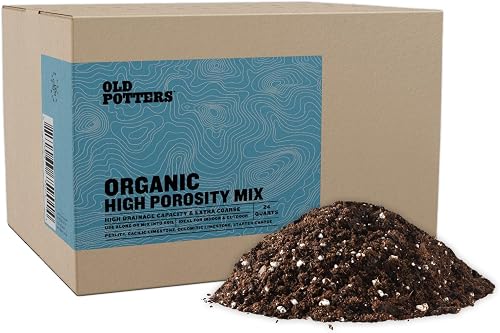
High Porosity Soil Mix, Enhanced with Peat Moss and
Providing a substantial 24 quarts of volume, this high-porosity soil mix is enhanced with peat moss and perlite. It is tailored for smaller pots containing cacti and succulents, promoting necessary drainage and aeration. The combination of lightweight perlite and moisture-retaining peat moss offers a balanced environment for root expansion in compact containers.
- Enhanced with Peat Moss and Perlite
- Perfect for Smaller Pots
- Cactus & Succulents
High-volume small pots
View on Amazon (opens in a new tab)
Check current details and price
Read the detailed assessment
What stands out
- Offers a large 24-quart total volume suitable for repotting extensive indoor plant collections.
- Enhanced with perlite and peat moss to establish a balance of aeration and moisture retention.
- Formulated specifically to support smaller pots containing cacti and moisture-sensitive succulents.
What to consider
- The large 24-quart volume requires adequate storage space when the bag is opened.
- Peat moss components can become hydrophobic if allowed to dry out completely between waterings.
The practical verdict
This high-porosity mix is best for gardeners with many small pots who need a large volume of balanced soil. Avoid it if you lack storage space for a 24-quart bag. The trade-off involves the convenience of bulk volume and perlite aeration against the storage footprint of a larger package.

3lb Mix Lava Rocks for Plants in Door -Gravel
This 3-pound mix of volcanic lava rocks serves as gravel pebbles for indoor bonsai, succulent, and cactus potting soil, as well as vase fillers and fairy gardening top dressings. The natural stones provide an attractive surface layer while assisting with top-soil stabilization. Their rough texture and porous build make them practical for both decorative finishing and structural soil amendments.
- Fairy Gardening
- Top Dressing
Top dressing and fillers
View on Amazon (opens in a new tab)
Check current details and price
Read the detailed assessment
What stands out
- Functions dinally as a decorative top dressing, vase filler, or soil amendment.
- Provides a 3-pound quantity of natural volcanic lava rock for indoor plant displays.
- Helps stabilize the top layer of potting soil in small bonsai and succulent containers.
What to consider
- Primarily composed of solid rock pieces, making it unsuitable as a standalone planting medium without finer particles.
- The 3-pound bag is limited in scope to surface dressing or minor container additions.
The practical verdict
These lava rocks are best for finishing succulent pots as a decorative top dressing or for use in fairy gardens. Avoid them if you need a nutrient-supplying growing medium for direct root planting. The main trade-off is aesthetic appeal and surface stability against the lack of moisture-retentive properties found in organic soils.
How this comparison was prepared
We use the supplied product identities and listing details to compare intended use, stated features and practical trade-offs. Listing claims are not independent performance tests. This page does not claim laboratory testing, personal ownership or an analysis of customer-review counts. The shortlist order is not a numeric test ranking. Confirm model details, compatibility and current terms on the seller or manufacturer page before purchasing.
Buying guide
Understanding Inorganic Versus Organic Components
Selecting the ideal potting substrate begins with evaluating the balance between organic matter and inorganic minerals. Organic materials like peat moss, pine bark, and compost hold moisture and supply gradual nutrients to developing plants. However, excessive organic matter retains water for too long, which can cause root rot in desert species. Balancing these elements is essential for long-term plant health.
Inorganic components such as pumice, lava rock, calcined clay, and coarse sand do not break down rapidly and provide open pathways for air and water. Succulents, cacti, and bonsai plants generally thrive in mixtures dominated by these rocky materials. When evaluating options, consider your indoor climate and watering habits to determine whether an all-inorganic medium or a blended mix fits your collection.
Evaluating Drainage and Aeration Properties
Proper drainage prevents water from pooling at the bottom of a container, protecting delicate root systems from fungal issues. Porous amendments create microscopic channels that allow excess moisture to escape quickly through drainage holes. Good aeration ensures oxygen reaches the roots, supporting healthy cellular respiration and vigorous plant growth.
When reviewing different soil mixtures, look for descriptions highlighting components like perlite, coarse sand, or volcanic rock. High-porosity blends reduce the risk of accidental overwatering, making plant maintenance much more forgiving. Matching the drainage capability of the medium to the natural habitat of your plants is a fundamental step in successful indoor gardening.
Matching Particle Size to Container Dimensions
The physical dimensions of your pots dictate the appropriate particle size for your growing medium. Fine-grain substrates fit neatly into small decorative containers, ensuring proper contact with delicate root networks without leaving large empty gaps. Using excessively large pebbles in tiny pots can prevent stable planting and disrupt root placement.
Conversely, larger containers benefit from coarser ingredients that maintain structural integrity and prevent the lower layers from compacting under weight. Selecting the correct grain size ensures that moisture distributes evenly throughout the entire root zone, preventing dry pockets from forming in deep or wide pots over time.
Assessing Package Volume and Storage Needs
Container gardeners must balance the volume of soil purchased against their available storage space and the size of their plant collection. Small pre-packaged bags ranging from two to five pounds offer convenience and easy storage for apartment gardeners with only a few potted specimens. These smaller quantities minimize clutter and remain manageable during quick repotting sessions.
Larger bags holding multiple quarts or several gallons provide better value for enthusiasts managing extensive indoor jungles or large bonsai trees. Evaluating your repotting frequency and storage capacity prevents clutter while ensuring you always have enough substrate on hand when seasonal maintenance is required.
Recognizing Maintenance and Feeding Requirements
Different soil formulations demand varying levels of ongoing maintenance and supplemental feeding from the grower. Substrates containing organic matter like peat and bark slowly decompose, altering the pH and compaction level of the pot over time. This breakdown means plants eventually require repotting into fresh medium to maintain adequate root aeration.
On the other hand, 100 percent inorganic media do not decompose, but they lack natural nutrients. Growers using purely mineral substrates must incorporate regular liquid or solid fertilizer applications into their routine to supply necessary minerals. Understanding these requirements helps you align your maintenance schedule with the specific characteristics of your chosen soil.
Determining Multi-Purpose Versatility Versus Specialized Use
Some potting mixes are engineered for specific plant varieties, such as Lithops, aloe vera, or traditional bonsai trees. These specialized formulations address unique physiological needs, providing exact particle shapes or mineral ratios to encourage robust root development. While effective, they may be less adaptable to general houseplants that prefer moisture-retentive forest soils.
Multi-purpose gritty mixes and decorative top dressings offer greater versatility across terrariums, fairy gardens, and diverse succulent collections. Assessing whether you need a targeted medium for a rare specimen or a flexible blend for various potted plants helps streamline your purchasing decisions and keeps your indoor garden thriving.
Frequently asked questions
Why do succulents and cacti require fast-draining soil mixes?
Succulents and cacti store water in their leaves and stems, adapting them to arid natural environments with infrequent rainfall. In a domestic setting, standard garden dirt holds too much moisture around the roots, leading to cellular breakdown and root rot. Fast-draining soil mixes incorporate coarse sand, pumice, or lava rock to allow excess water to escape rapidly, mimicking natural drying cycles and keeping underground structures healthy.
Can I use bonsai soil for standard indoor houseplants?
Bonsai soil typically consists of inorganic materials like calcined clay, lava rock, and pumice, which drain very quickly and retain minimal moisture. While this structure is ideal for succulents, cacti, and bonsai specimens, standard tropical houseplants generally prefer organic potting soil that retains moisture and nutrients for longer periods. Using bonsai soil for tropical plants would require extremely frequent watering and heavy fertilization to sustain growth.
What is the difference between organic and inorganic potting media?
Organic potting media contain natural decomposing components like peat moss, pine bark, and compost, which retain moisture and slowly release nutrients into the root zone. Inorganic potting media consist of non-living volcanic or mineral elements such as perlite, pumice, and akadama stone, which do not break down and provide maximum drainage and aeration. Many commercial succulent blends combine both types to balance moisture retention with structural porosity.
How often should I repot my succulents using specialized soil?
Repotting frequency depends on the soil composition and the growth rate of your specific plant. Media containing organic components like pine bark and peat gradually decompose and compact over two to three years, requiring fresh soil to restore aeration. Completely inorganic mineral mixes do not decompose chemically, but you may still need to repot when the plant outgrows its container or exhausts the available space.
Are decorative top dressings necessary for cactus pots?
Decorative top dressings, such as small lava rocks or gravel pebbles, are not strictly required for plant survival, but they offer several practical benefits. A stone layer helps stabilize the base of top-heavy succulents and bonsai trees, prevents soil from splashing out during watering, and reduces surface weed growth or algae formation. Additionally, top dressings keep the lower stem of the plant dry by preventing direct contact with damp soil.
Final thoughts
Choosing the right growing medium is a vital step in ensuring the long-term health of indoor succulents, cacti, and bonsai collections. By prioritizing fast-draining formulations and appropriate particle sizes, you protect delicate roots from excess moisture and compaction. Whether you select a ready-to-use organic blend, a durable mineral amendment, or a gritty inorganic mix, matching the substrate to your specific plant varieties makes indoor gardening more predictable and rewarding.
Take time to evaluate your watering habits, container dimensions, and available storage before purchasing potting materials. A thoughtful approach to soil selection prevents common indoor plant pitfalls like root rot and over-saturation. With the right combination of drainage, aeration, and nutrient management, your potted specimens will maintain stable root systems and steady growth throughout every season.