Finding the right growing medium for succulent species requires careful attention to drainage properties and material composition. Selecting the best aloe potting soil mix involves balancing moisture retention with rapid water escape to prevent root rot in indoor containers.
Different formulations offer distinct benefits, ranging from pre-mixed sand and pine bark blends to large-format organic bundles. Reviewing specific ingredient listings helps match soil characteristics to particular container sizes and watering habits.
The product shortlist

Professional Aloe Plant Soil Mix Large 2.2 Quarts Ready
This professional-grade formulation comes in a ready-to-use 2.2-quart pack of two, specifically blended for aloe vera, cactus, and succulent plants. It features a fast-draining combination of pine bark, peat, and coarse sand, and is made in the United States, making it practical for indoor potted greenery.
- Premium Potting Soil for Aloe Vera Cactus Succulent Plants
- Fast Draining Blend Pinebark Peat Course Sand Indoor Made in USA (Pack of 2)
Aloe and succulent containers
View on Amazon (opens in a new tab)
Check current details and price
Read the detailed assessment
What stands out
- Formulated specifically for aloe vera, cactus, and succulent plants to support proper root health.
- Includes a fast-draining blend of pine bark, peat, and coarse sand for indoor growing environments.
- Supplied as a convenient pack of two ready-to-use 2.2-quart bags manufactured in the United States.
What to consider
- The 2.2-quart volume per bag in a pack of two limits the total soil volume available for large repotting projects.
- The inclusion of coarse sand and pine bark creates a specific fast-draining texture that may require more frequent watering checks.
The practical verdict
Best for small-scale indoor aloe and succulent container planting using a pre-mixed, fast-draining formulation. Avoid if you need large volumes of soil for extensive garden beds or oversized containers. The primary trade-off is the limited 2.2-quart dual-pack capacity versus the convenience of a ready-to-use specific blend.

Plant Repotting Mat for Indoor Plants Potting Soil Mix,
This waterproof plant repotting tray provides a designated 26.8 by 26.8-inch surface for handling potting soil mix during indoor gardening tasks. It functions as a practical workspace shield for succulents, cactus, and orchid pots, keeping stray soil contained on tabletops.
- Waterproof Plant Repotting Tray
- Potting Mat Gardening Tray for Indoor Potting Succulents Cactus Orchid Pots
- Garden Gift(26.8"x26.8")
Indoor repotting workspace
View on Amazon (opens in a new tab)
Check current details and price
Read the detailed assessment
What stands out
- Provides a dedicated waterproof surface measuring 26.8 by 26.8 inches for indoor repotting tasks.
- Keeps potting soil mix and debris contained during transplanting succulents, cactus, and orchid pots.
- Serves as a convenient gardening accessory or gift for indoor plant enthusiasts managing multiple containers.
What to consider
- The fixed 26.8 by 26.8-inch dimensions may feel restrictive when attempting to work with very large pots or multiple large houseplants simultaneously.
- The flat tray design requires manual cleanup and storage after each potting session to maintain a tidy workspace.
The practical verdict
Best for keeping indoor surfaces clean while repotting small to medium houseplants, succulents, and cacti. Avoid if you require a permanent potting bench or lack floor or table space for a 26.8-inch mat. The main trade-off is the contained workspace benefit versus the need to store and clean a flexible mat.

Professional Indoor Plant Soil Mix Large 2.2 Quarts Ready
Designed for general indoor houseplants and container plants, this premium soil mix arrives ready to use in a dual-pack of 2.2-quart bags. It utilizes a blend of peat, coco coir, perlite, and dolomite, manufactured in the United States for standard indoor growing conditions.
- Premium Potting Soil for Indoor Houseplants Container Plants
- Peat Coco Coir Perlite Dolomite Blend Made in USA (Pack of 2)
General indoor houseplants
View on Amazon (opens in a new tab)
Check current details and price
Read the detailed assessment
What stands out
- Blended specifically for indoor houseplants and container plants using quality ingredients.
- Combines peat, coco coir, perlite, and dolomite to support standard indoor container gardening.
- Manufactured in the United States and packaged as a convenient ready-to-use set of two.
What to consider
- The 2.2-quart dual-pack sizing provides a relatively small total volume that is less suited for massive floor-standing planters.
- The peat and coco coir composition retains more moisture than specialized desert cactus mixes, requiring careful monitoring for moisture-sensitive species.
The practical verdict
Best for standard indoor houseplants and container varieties needing a balanced peat and perlite medium. Avoid if you are exclusively potting arid desert succulents that require ultra-fast drainage. The main trade-off is the balanced moisture retention of coco coir against the rapid drainage needed by desert cacti.
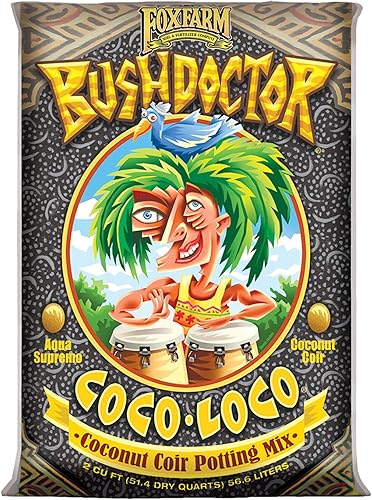
FoxFarm Bush Doctor Coco Loco Potting Mix, 2cu ft
Offering a large two-cubic-foot volume, this coco loco potting mix extends watering schedules between applications. It is triple-washed to reduce salt content, making it suitable for cultivating vigorous plants across larger containers and extensive indoor or outdoor garden setups.
- 2cu ft
- Extends Your Watering Schedule
- Triple-Washed to Reduce Salt Content
Large-volume container gardening
View on Amazon (opens in a new tab)
Check current details and price
Read the detailed assessment
What stands out
- Provides a generous two-cubic-foot capacity suitable for filling multiple large pots or extensive garden setups.
- Helps extend your watering schedule to reduce the frequency of irrigation for established plants.
- Undergoes a triple-washed process designed to reduce salt content within the growing medium.
What to consider
- The heavy two-cubic-foot volume can be bulky and difficult to maneuver or store inside compact living spaces.
- The moisture-extending properties require careful observation to avoid overwatering plants sensitive to prolonged dampness.
The practical verdict
Best for gardeners managing many large containers who need an extended watering schedule. Avoid if you live in a small apartment with limited storage for bulky two-cubic-foot bags. The primary trade-off is high soil volume and extended moisture retention versus storage footprint and handling weight.
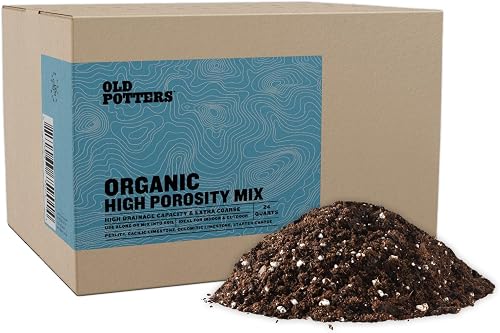
High Porosity Soil Mix, Enhanced with Peat Moss and
This high porosity soil mix comes in a 24-quart quantity enhanced with peat moss and perlite. It is tailored for smaller pots and supports cactus and succulents by promoting essential drainage and root aeration.
- Enhanced with Peat Moss and Perlite
- Perfect for Smaller Pots
- Cactus & Succulents
Small pots and cacti
View on Amazon (opens in a new tab)
Check current details and price
Read the detailed assessment
What stands out
- Enhanced with peat moss and perlite to create a high porosity environment for roots.
- Specifically proportioned for smaller pots holding cacti and various succulent species.
- Promotes enhanced drainage and aeration to help prevent standing water in confined containers.
What to consider
- The 24-quart volume is supplied in a single large format that may be heavy to lift and pour without a scoop.
- The high porosity design dries out quickly, necessitating more frequent watering checks during peak growth periods.
The practical verdict
Best for filling multiple smaller pots with a high-porosity medium tailored for cacti and succulents. Avoid if you prefer heavy soils that retain moisture for extended periods. The main trade-off is superior drainage and aeration against the need for more frequent watering intervals.

3lb Mix Lava Rocks for Plants in Door -Gravel
This three-pound mix of lava rocks serves multiple functions for indoor gardening, acting as gravel pebbles for bonsai, succulent, and cactus potting soil. It also functions effectively as vase filler, fairy garden material, and a decorative top dressing.
- Fairy Gardening
- Top Dressing
Top dressing and drainage
View on Amazon (opens in a new tab)
Check current details and price
Read the detailed assessment
What stands out
- Supplied as a three-pound mix of lava rocks suitable for indoor plant containers and bonsai.
- Functions effectively as a decorative top dressing, gravel pebbles, or base layer for drainage.
- Versatile application for fairy gardening, terrariums, and as clean vase filler materials.
What to consider
- As solid rock aggregate, it lacks organic nutrients and cannot serve as a standalone growing medium for plants.
- The three-pound quantity is primarily suited for decorative topping or small accent layers rather than filling large pots.
The practical verdict
Best for adding a decorative top dressing or drainage layer to indoor succulent and bonsai containers. Avoid if you are looking for a complete nutrient-rich organic soil mix. The primary trade-off is decorative surface appeal and structural drainage support against the complete absence of organic plant nutrients.

Rosy Soil Indoor Plant Soil Bundle, Organic Potting Mix
This organic potting mix bundle features peat-free formulations across multiple four-quart bags tailored for succulents, cacti, monstera, and tropicals. It provides an eco-conscious choice for gardeners seeking specialized blends without traditional peat components.
- Organic Potting Mix for Succulents
- Tropicals and More
- 4 Qt Each
Peat-free indoor variety
View on Amazon (opens in a new tab)
Check current details and price
Read the detailed assessment
What stands out
- Completely peat-free organic potting mix formulation designed for environmental conscious indoor gardening.
- Included in four-quart portions suitable for succulents, cacti, monstera, and tropical houseplant varieties.
- Offers versatile planting options across multiple popular indoor plant families in one bundle.
What to consider
- The four-quart bag sizes may run out quickly if you are repotting several large floor-standing tropical plants.
- Peat-free alternative materials can feature different water absorption rates that require an adjustment period during initial watering.
The practical verdict
Best for indoor gardeners seeking an organic, peat-free soil mix for mixed tropicals, cacti, and succulents. Avoid if you specifically prefer traditional peat-based moisture retention characteristics. The main trade-off is an eco-friendly peat-free formula versus potentially faster dry-down times.
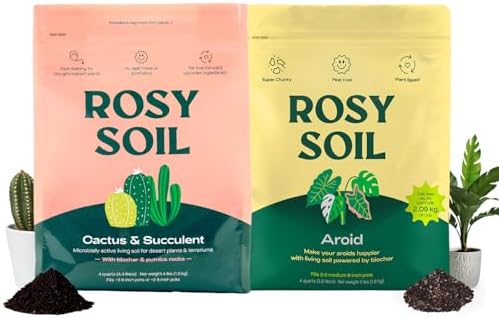
Rosy Soil Cactus and Succulent Potting Mix and Aroid
This indoor plant bundle includes four-quart portions of both a cactus and succulent potting mix and an aroid soil mix. The peat-free chunky formulation is designed to deliver fast drainage for specialized indoor plant collections.
- 4 Qt Each
- Peat-Free Chunky Fast-Draining Indoor Plant Bundle
Cactus and aroid collections
View on Amazon (opens in a new tab)
Check current details and price
Read the detailed assessment
What stands out
- Includes both cactus and succulent potting mix alongside an aroid soil mix in four-quart portions.
- Features a peat-free, chunky construction engineered to deliver fast drainage for indoor plants.
- Provides specialized media options in one bundle for mixed collections of aroids and desert plants.
What to consider
- The chunky texture and fast-draining composition may cause water to run through rapidly if pots are dry or hydrophobic.
- Divided four-quart quantities mean smaller individual amounts for each specific soil type if your collection leans heavily toward one plant family.
The practical verdict
Best for growers maintaining a diverse collection of both aroids and desert succulents who need chunky, fast-draining media. Avoid if you only grow standard foliage plants that prefer dense, moisture-holding soils. The main trade-off is specialized chunky drainage performance versus divided quantities for each plant type.
How this comparison was prepared
We use the supplied product identities and listing details to compare intended use, stated features and practical trade-offs. Listing claims are not independent performance tests. This page does not claim laboratory testing, personal ownership or an analysis of customer-review counts. The shortlist order is not a numeric test ranking. Confirm model details, compatibility and current terms on the seller or manufacturer page before purchasing.
Buying guide
Understanding drainage requirements for succulent plants
Selecting the right soil mix begins with understanding how water moves through a container. Succulents and aloes originate in arid environments where water drains rapidly away from roots. A dense garden soil retains too much moisture, leading directly to root rot and plant decline over time.
Look for formulations incorporating coarse sand, perlite, pine bark, or lava rock. These porous ingredients create microscopic air channels that allow excess irrigation water to escape quickly while maintaining just enough moisture for healthy root function.
Evaluating organic versus inorganic soil components
Indoor potting mixes combine various organic and inorganic materials to mimic natural habitats. Organic components like peat moss, coco coir, and compost provide a structure for nutrient retention and light moisture holding. However, excessive organic matter can pack down tightly and hold water too long.
Inorganic amendments such as perlite, pumice, and coarse sand prevent soil compaction. Balancing these elements ensures the medium remains airy and lightweight, preventing the heavy sogginess that stresses delicate root systems in indoor containers.
Matching soil volume to your container collection
Calculating the correct amount of soil prevents mid-project shortages or excessive storage clutter. Smaller ready-to-use bags around two to four quarts work well for desktop succulents, small aloes, and occasional single-pot transplanting tasks without leaving massive bags behind.
Conversely, larger multi-quart or cubic-foot bags suit gardeners with expansive indoor jungle displays or multiple large floor plants. Assess your pot sizes and total plant count before purchasing to ensure you have adequate volume without unmanageable storage bulk.
Exploring peat-free and eco-friendly alternatives
Many modern indoor gardeners prioritize sustainability by choosing peat-free soil blends. Traditional peat harvesting impacts natural wetlands, prompting manufacturers to utilize renewable resources like coconut coir, composted bark, and forest byproducts as organic bases.
Peat-free mixes offer comparable structural support and moisture management, though their re-wetting properties can differ. Reviewing the ingredient list helps you identify eco-conscious formulas that align with your personal gardening values and watering routines.
Utilizing top dressings and workspace accessories
Managing indoor potting tasks efficiently involves more than just the soil itself. Protective repotting mats provide a contained, waterproof surface that catches stray dirt during transplanting, keeping tabletops clean and simplifying post-gardening cleanup routines.
Additionally, adding inorganic top dressings like decorative lava rocks or gravel pebbles around the base of your aloe or cactus helps anchor the plant, reduces top soil evaporation, and prevents lower leaves from resting against damp soil surfaces.
Customizing blends for specific plant families
While general cactus mixes suit many succulents, different plant families appreciate slight variations in texture. Aroids like monsteras prefer chunky, airy bark-heavy mixes, whereas desert cacti and aloes thrive in sandier, highly porous mineral blends.
Purchasing multi-mix bundles or specialized components allows you to tailor the growing environment to each specific specimen. Matching soil texture to natural plant adaptations promotes stronger roots and healthier long-term indoor growth.
Frequently asked questions
Why is regular garden soil unsuitable for potted aloe plants?
Regular garden soil is typically too dense, heavy, and compact for potted aloes. It retains too much moisture and lacks the rapid drainage that desert succulents require. Without porous amendments like perlite, sand, or pine bark, heavy garden soil restricts airflow to roots, significantly increasing the risk of root rot and plant decline in indoor containers.
How often should I repot my indoor aloe vera plant?
Indoor aloe plants generally require repotting every two to three years, or when roots begin circling the bottom of the container or emerging from drainage holes. Repotting provides fresh nutrients and allows you to upgrade to a slightly larger pot with a fresh, fast-draining potting soil mix suited for continued healthy root expansion.
What is the benefit of using perlite or coarse sand in succulent soil?
Perlite and coarse sand act as inorganic aeration and drainage agents within potting soil mixes. They create physical space between heavier organic particles, preventing the soil from packing down tightly. This porous structure allows excess water to escape rapidly from container drainage holes while maintaining essential oxygen pockets around delicate plant roots.
Can I use peat-free soil mixes for growing desert cacti and succulents?
Yes, peat-free soil mixes can be used successfully for cacti and succulents, provided they incorporate alternative fast-draining ingredients like coco coir, pumice, perlite, or pine bark. Peat-free formulations rely on renewable organic materials while still offering the necessary porosity and moisture regulation required by arid plant species during indoor cultivation.
How do decorative lava rocks function when added to plant pots?
Decorative lava rocks placed on top of potting soil act as a top dressing that anchors the plant stem, reduces surface evaporation, and keeps lower leaves from touching damp soil. When placed at the very bottom of a pot, larger rocks or gravel can also provide a stable foundation, though proper drainage holes remain essential for water removal.
Final thoughts
Choosing the best aloe potting soil mix ensures your succulents receive the drainage, aeration, and structural support necessary for indoor longevity. By matching soil ingredients like coarse sand, perlite, and pine bark to your specific plant varieties and watering habits, you create an environment that mimics natural arid conditions.
Whether you select a ready-to-use desert blend, a large organic bag, or a peat-free alternative, prioritizing proper porosity prevents root rot and encourages vibrant growth. Combine your chosen soil with practical repotting accessories and top dressings to maintain clean workspaces and healthy, resilient indoor plants.