Finding the right foundation for desert plants involves looking closely at how water moves through a container. Unlike tropical houseplants that thrive in moisture-retaining compost, desert varieties need porous blends that dry out quickly to prevent root rot. Different plant types require specific textures, ranging from fine sand and peat combinations to chunky volcanic rock components. Matching the medium to your specific watering habits helps create a stable environment for long-term growth.
When evaluating available options, check the specific ingredients listed by the manufacturer. Some formulas arrive ready to use right out of the bag, while others serve as amendments or top dressings to improve existing earth. Reviewing the component breakdown ensures you select an option that fits your specific gardening setup. If you need a customized consistency, combining pre-made substrates with separate drainage elements offers practical flexibility for various container sizes.
The product shortlist

Professional Aloe Plant Soil Mix Large 2.2 Quarts Ready
This ready-to-use potting mix comes in a 2.2-quart dual pack designed specifically for aloe vera, cactus, and succulent plants. The formulation features a blend of pinebark, peat, and course sand to deliver fast draining characteristics. It is manufactured in the United States and intended for indoor growing environments.
Aloe and cactus pots
View on Amazon (opens in a new tab)
Check current details and price
Read the detailed assessment
What stands out
- Arrives ready to use straight from the package without requiring any additional preparation or mixing steps for the user.
- Contains pinebark, peat, and course sand components formulated specifically for aloe vera and various succulent plant varieties.
- Supplied in a convenient two-pack of large 2.2-quart bags, offering suitable volume for multiple indoor plant containers.
What to consider
- The listing here does not confirm exact volumetric ratios or individual ingredient percentages, so check the package if you need specific proportions.
- Packaged as a 2.2-quart quantity per bag, which may require multiple packs if you are repotting large floor-standing containers.
The practical verdict
The Professional Aloe Plant Soil Mix Large 2.2 Quarts Ready provides a straightforward, pre-blended option utilizing pinebark, peat, and course sand. Because it arrives ready to use, it suits gardeners looking for convenience when potting indoor aloe and cacti. If you need precise control over every individual component ratio, check the dimensions and volume requirements of your specific containers before purchasing this two-pack.

Bonsai Soil All Purpose Mix | Fast Draining Pre
The Bonsai Soil All Purpose Mix comes in a 2-quart dual pack featuring a pre-blended combination of pumice, lava, calcined clay, and pine bark. This gritty substrate is formulated to provide fast draining performance for bonsai and container plants. It serves as an all-purpose potting medium designed for specialized plant care routines.
All-purpose bonsai pots
View on Amazon (opens in a new tab)
Check current details and price
Read the detailed assessment
What stands out
- Blends pumice, lava, calcined clay, and pine bark to create a gritty, fast-draining environment for sensitive root systems.
- Provided in a pre-mixed format across two 2-quart bags, saving time compared to sourcing individual mineral components separately.
- Suitable for general bonsai care as well as other container plants requiring rapid moisture movement.
What to consider
- The listing details do not specify particle size gradations, so check the physical texture if you require ultra-fine grain media.
- A total volume of two 2-quart bags is best suited for small to medium tabletop containers rather than massive garden beds.
The practical verdict
This all-purpose pre-blend combines pumice, lava, calcined clay, and pine bark to facilitate quick water movement. It removes the hassle of mixing separate mineral components for bonsai enthusiasts and container gardeners. If your plants demand a heavy, inorganic structure to prevent moisture retention, the listed ingredients offer a solid baseline, though you should check the volume against your container sizes.

Shop Succulents Assorted Succulent Plant Pack Bulk Collection, Low
This bundle pairs an assorted bulk collection of 32 low-maintenance succulent plants featuring varied colors and textures with a 4-quart bag of Hoffman organic cactus and succulent soil mix. The brown soil mixture is designed specifically to support cacti and succulents, while the plant collection provides an immediate multi-variety display.
Bulk planting projects
View on Amazon (opens in a new tab)
Check current details and price
Read the detailed assessment
What stands out
- Includes a large bulk collection of thirty-two assorted succulent plants showcasing diverse colors and textures for immediate arrangements.
- Bundled with a 4-quart bag of organic cactus and succulent soil mix to provide a suitable growing medium right away.
- Offers a convenient combination of living plants and matching potting substrate in a single purchase.
What to consider
- A 4-quart bag of soil may be insufficient to repot all thirty-two plants into separate containers without additional substrate.
- The listing does not specify the exact individual plant varieties included in the assorted bulk collection.
The practical verdict
The Shop Succulents Assorted Succulent Plant Pack and Hoffman Organic Soil combination supplies both plant material and growing medium in one go. It works well for starting multiple small arrangements, though the included 4-quart soil quantity might run low if every plant receives a large new pot. Check the volume requirements if you plan to pot all thirty-two specimens individually.

5lb Hard Akadama Bonsai Soil 1/8-1/4 inch Small Grain
This hard Akadama bonsai soil comes in a 5-pound dual pack with a small grain size ranging from 1/8 to 1/4 inch. It functions as a soil amendment for cacti, succulents, and bonsai plants. The hard grain structure is designed to prevent over-watering while providing optimal water retention and fast drainage.
Fine grain amendments
View on Amazon (opens in a new tab)
Check current details and price
Read the detailed assessment
What stands out
- Features hard Akadama grains sized between 1/8 and 1/4 inch, ideal for precise top dressings or soil amendments.
- Designed to prevent over-watering by supporting fast drainage while maintaining balanced moisture retention capabilities.
- Supplied in a two-pack totaling 5 pounds of small-grain mineral substrate.
What to consider
- Akadama is a specialized clay product that may break down over long periods, requiring eventual replacement or repotting.
- Sold primarily as a soil amendment or grain component rather than a nutrient-rich organic compost blend.
The practical verdict
The 5lb Hard Akadama Bonsai Soil offers a specialized 1/8 to 1/4 inch small grain option for growers seeking precise root zone management. Its mineral composition helps prevent over-watering in sensitive cactus and succulent collections. If you need a purely organic base, this should be used as an amendment alongside other materials rather than a standalone planting mix.

2.5lb Multi-Purpose Calcined Nutrient Soil for Lithops Succulent Cactus
This multi-purpose calcined nutrient soil comes in a 2.5-pound dual pack tailored for Lithops, succulents, and cacti. It features a concave-convex shape designed to promote root growth and encourage healthier, stronger, and larger root systems. The mineral-based structure supports specialized arid plant cultivation.
Lithops and small roots
View on Amazon (opens in a new tab)
Check current details and price
Read the detailed assessment
What stands out
- Engineered with a distinct concave-convex shape intended to encourage robust root development for Lithops and cacti.
- Utilizes a calcined nutrient soil structure that supports healthier and stronger underground growth.
- Provided in a convenient dual pack totaling 2.5 pounds of specialized substrate.
What to consider
- The 2.5-pound total weight is relatively light, making it suitable mainly for miniature pots or specific specimen plants.
- The listing does not provide a complete chemical nutrient breakdown, so check individual plant requirements if using specialized fertilizers.
The practical verdict
This calcined nutrient soil focuses on encouraging root growth for delicate arid specimens like Lithops. Its unique shape and mineral build help maintain an open structure around the roots. For gardeners managing tiny pots or specialized mesembs, this two-pack offers targeted support, though you should verify that the weight covers your total planting volume.

High Drainage Succulent Soil Potting Mix with Coffee Compost
This high-drainage succulent potting mix incorporates coffee compost and mycorrhizal fungi in a 4 dry quart six-pack. It provides a slightly acidic, gritty soil formulation designed for edgy plants. The inclusion of biological amendments aims to support root health and nutrient uptake in fast-draining environments.
Gritty acidic containers
View on Amazon (opens in a new tab)
Check current details and price
Read the detailed assessment
What stands out
- Incorporates coffee compost and mycorrhizal fungi to support biological activity and nutrient absorption in the root zone.
- Formulated as a slightly acidic, gritty soil mixture tailored for high-drainage container requirements.
- Supplied in a multi-pack of six 4 dry quart bags for larger gardening projects or multiple repotting sessions.
What to consider
- The slightly acidic pH profile may require checking against specific succulent species that prefer neutral or alkaline conditions.
- Contains organic compost components that retain more moisture than pure mineral pumice or lava rock blends.
The practical verdict
Spike & Bloom's High Drainage Succulent Soil combines coffee compost and mycorrhizal fungi with a gritty texture. This six-pack of 4 dry quart bags suits growers who prefer amended organic media with beneficial biological additions. If you cultivate desert species that despise any trace of organic matter or acidity, check the ingredient profile against your plant collection's native habitat.
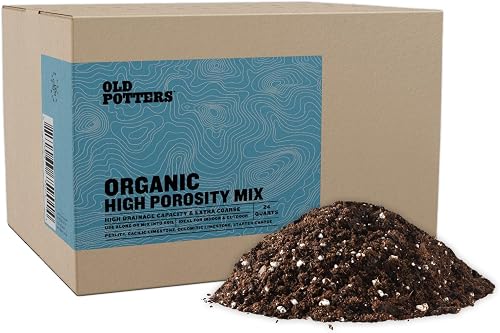
High Porosity Soil Mix, Enhanced with Peat Moss and
This high porosity soil mix is enhanced with peat moss and perlite, packaged in a substantial 24-quart volume. It is designed for smaller pots, cacti, and succulents. The formulation promotes active drainage and aeration to keep root zones from staying waterlogged.
Large volume repotting
View on Amazon (opens in a new tab)
Check current details and price
Read the detailed assessment
What stands out
- Offers a generous 24-quart volume, making it practical for repotting numerous pots or larger succulent collections.
- Enhanced with peat moss and perlite to boost overall soil aeration and encourage rapid water drainage.
- Formulated specifically with smaller containers and arid plant requirements in mind.
What to consider
- The inclusion of peat moss means the mix can become hydrophobic if allowed to dry out completely over long durations.
- A 24-quart bag is bulky to store and handle compared to smaller pre-packaged bonsai soil bags.
The practical verdict
Providing 24 quarts of medium enhanced with peat moss and perlite, this high porosity mix suits larger-scale repotting days. The perlite content ensures reliable aeration, while the peat offers a familiar moisture-holding matrix for standard succulents. If you manage dozens of small containers, this bulk volume reduces the need for constant reordering, though you should check storage space before buying.

3lb Mix Lava Rocks for Plants in Door -Gravel
This 3-pound mix of lava rocks functions as gravel pebbles for indoor plants, bonsai, succulent potting soil, vase fillers, fairy gardening, and top dressing. The stones provide an inorganic element that can be mixed into substrates or layered on top of the soil surface to finish an arrangement.
Top dressing and mixing
View on Amazon (opens in a new tab)
Check current details and price
Read the detailed assessment
What stands out
- Versatile 3-pound mix of lava rocks suitable for use as soil amendments, pot drainage layers, or surface top dressings.
- Helps anchor plants and reduce soil splashing during watering when applied as a decorative gravel layer.
- Inorganic rock material does not break down or decompose over time like organic mulch or compost.
What to consider
- Pure lava rock contains no nutrients, so it must be combined with fertile soil components to feed growing plants.
- A 3-pound quantity is best used for surface dressing or small-scale mixing rather than filling deep planters entirely.
The practical verdict
This 3-pound bag of lava rock mix offers flexible utility as a top dressing, vase filler, or gritty soil component. Its inorganic nature ensures it will not rot or degrade within the pot. While it cannot serve as a standalone growing medium due to its lack of nutrients, it provides an easy way to improve drainage or tidy up the surface of succulent displays.
How this comparison was prepared
We use the supplied product identities and listing details to compare intended use, stated features and practical trade-offs. Listing claims are not independent performance tests. This page does not claim laboratory testing, personal ownership or an analysis of customer-review counts. The shortlist order is not a numeric test ranking. Confirm model details, compatibility and current terms on the seller or manufacturer page before purchasing.
Buying guide
Understanding drainage requirements
Water management is the single most critical factor when selecting a substrate for desert plants. Soils that retain moisture for too long cause roots to suffocate and decay, leading to rapid plant decline. Fast-draining formulas prevent this by allowing excess moisture to escape through the container drainage hole almost immediately after watering.
When evaluating products, look for terms like high porosity, gritty texture, and rapid water movement. Mineral components such as pumice, perlite, lava rock, and calcined clay create microscopic air pockets that keep the root zone oxygenated. If you notice water pooling on top of your pot for more than a few seconds, the medium lacks adequate drainage capacity.
Evaluating organic versus inorganic components
Substrates generally consist of a balance between organic matter, like peat moss and pine bark, and inorganic elements, such as sand, gravel, and clay. Organic materials supply minor amounts of nutrients and hold baseline moisture, while inorganic pieces maintain structural space and encourage airflow.
Different succulent species inhabit varying native environments, meaning some prefer a purely mineral matrix while others appreciate a touch of compost. Reviewing the listed ingredients helps determine whether a blend leans toward moisture-holding compost or bone-dry rock. Matching this balance to your indoor climate prevents accidental over-watering.
Particle size and grain selection
The physical dimensions of soil particles directly influence how water behaves inside a container. Fine sands and powdery dust can pack tightly together, blocking airflow and trapping moisture against delicate roots. Coarser grains, ranging from an eighth to a quarter of an inch, maintain open pathways for water and air.
Selecting the right particle size depends largely on the dimensions of your pots and the root systems of your plants. Miniature specimens and tiny offsets benefit from small-grain amendments, while larger established plants tolerate chunkier pine bark and lava rocks. Check the grain specifications before committing to a specific bag.
Nutrient content and soil amendments
Many commercial succulent soils contain minimal initial fertilizer to replicate nutrient-poor desert soils. However, some specialized mixes incorporate slow-release nutrients, mycorrhizal fungi, or composted materials to encourage biological activity. These additions can boost early establishment but require careful monitoring.
If your chosen mix lacks active nutrients, you may need to supplement feeding during the active growing season with diluted liquid fertilizers. Conversely, if a blend features rich compost, ensure your specific plant variety does not prefer lean, barren earth. Assess your fertilizing routine alongside the bag's ingredient list.
Volume planning and container sizing
Calculating the correct volume of soil prevents mid-project shortages when repotting a collection of plants. Small pre-packaged bags work well for single tabletop containers, while bulk quantities are better suited for multiple large pots or extensive arrangement projects. Always measure your container dimensions beforehand.
Keep in mind that fluffy organic mixes can compress slightly when packed into pots, reducing the effective volume. Purchasing an extra bag ensures you have enough material to top off containers properly without having to pause your gardening work halfway through an afternoon repotting session.
Top dressing and surface finishing
Adding a layer of decorative gravel or lava rock to the surface of a pot serves both aesthetic and practical purposes. A stony top dressing holds lightweight leaves away from damp soil, preventing rot, and keeps loose substrate from washing away during watering.
When choosing top dressings, ensure the material allows air to reach the underlying soil surface rather than sealing it off completely. Inorganic stones also help anchor newly planted cuttings that have not yet developed strong root anchors. Coordinate your surface dressing choice with your overall potting mix texture.
Frequently asked questions
Why is regular potting soil bad for succulents?
Standard potting soils are formulated to retain moisture for tropical plants, vegetables, and flowers. They often contain high amounts of peat moss and compost that hold water for extended periods. Succulents store water in their leaves and roots, so sitting in damp, heavy earth starves their roots of oxygen and quickly causes rot.
Can I use regular garden dirt from my yard?
Using native dirt from the yard in containers is generally discouraged because it compacts easily, lacks proper drainage structure, and may harbor weed seeds, fungal spores, or garden pests. Container gardening requires specialized substrates that maintain porosity and allow water to drain freely through the bottom holes.
How often should I repot my succulents into fresh soil?
Most succulents benefit from fresh soil every one to two years, or when they outgrow their current containers. Over time, organic components break down, mineral salts build up from watering, and the soil loses its porous structure. Spring is typically the preferred season for repotting as active growth resumes.
Do I need to add fertilizer to succulent soil?
Most succulent soils contain very little fertilizer because these plants thrive in lean, nutrient-poor conditions in nature. Over-fertilizing can cause weak, stretched growth. If you choose to feed your plants, use a diluted, low-nitrogen liquid fertilizer strictly during the spring and summer growing season.
What is the best way to improve drainage in existing soil?
You can improve drainage in existing soil by mixing in inorganic amendments such as coarse sand, perlite, pumice, calcined clay, or small lava rocks. These gritty components create air channels that prevent the mixture from compacting and help water pass through the container quickly.
Final thoughts
Selecting the right substrate involves balancing drainage speed, particle size, and organic content to match your specific plants. Whether you choose a ready-to-use blend, a mineral-heavy bonsai mix, or individual amendments like lava rock, prioritizing root health prevents common moisture issues. Reviewing product ingredients and bag volumes helps ensure your repotting project goes smoothly.
Take time to assess your watering habits and indoor climate before purchasing. Combining the right physical structure with sensible care routines provides a stable foundation for desert plants to thrive. Check container dimensions, evaluate your specific plant collection's needs, and choose a substrate that keeps water moving freely away from delicate roots.