Understanding exact grow bag measurements ensures proper soil volume and root health. This guide details standard sizing, material behavior, and filling methods for container gardens.
Key Takeaway:
Standard 5 gallon grow bags typically measure 12 inches in diameter and 10 inches in height. Maintaining proper soil volume ensures adequate moisture retention and strong root development for your plants.
Quick-Reference Guide
| Factor / Scenario | Recommended Target | Why It Matters |
|---|---|---|
| Nominal Diameter | 12 to 13 Inches | Provides adequate lateral root spread. |
| Nominal Height | 10 to 11 Inches | Accommodates medium taproots without crowding. |
| Soil Capacity | 0.67 Cubic Feet | Ensures correct nutrient and moisture retention. |
| Wet Weight | 35 to 45 Pounds | Allows manageable movement on patios or decks. |
| Material Weight | 260 to 300 GSM | Balances durability with proper breathability. |
| Spacing | 18 Inches Apart | Maximizes light penetration and air circulation. |
Standard Fabric Pot Measurements
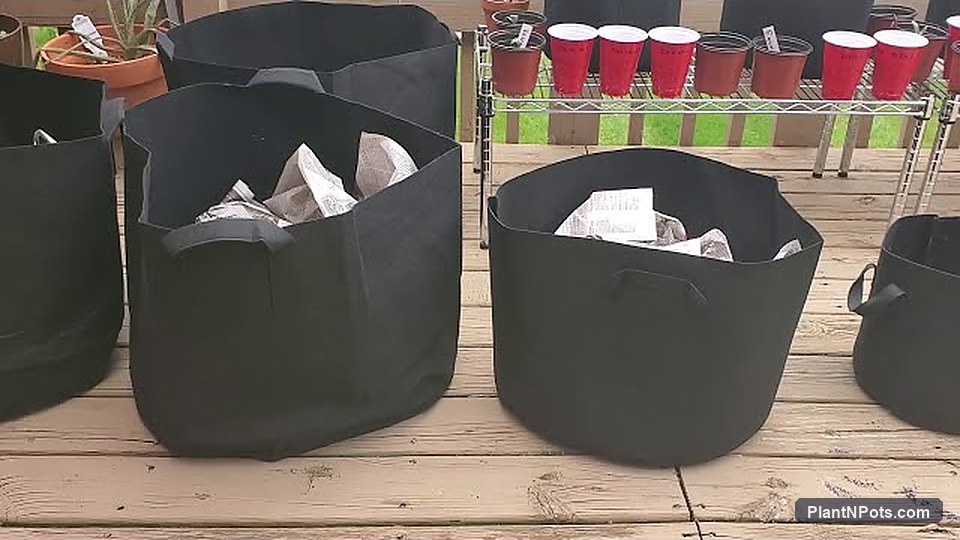
Selecting the correct container starts by reviewing standard 5 gallon grow bag dimensions. Choosing a proper [best 5 gallon grow pot](https://plantnpots.com/?p=5640) guarantees adequate lateral space and proper depth ratios for healthy root systems.
A typical standard round fabric pot features a diameter of 12 inches paired with a height of 10 inches. These specific proportions provide ample lateral space while accommodating deep-rooting vegetable crops effectively.
Variations exist across different brands due to manufacturing tolerances and fabric stiffness. Some heavy-duty variants feature a 13 inch diameter with a slightly shallower 9.5 inch height to enhance stability.
Handles attached to the exterior walls do not alter the internal growing capacity. However, reinforced stitching along the upper rim ensures the bag maintains its circular profile under heavy soil loads.
- Verify base diameter before arranging layout grids.
- Check manufacturer height specifications when empty.
- Account for slight bulging once moist soil is added.
- Ensure handle placement does not restrict rim folding.
Measuring Diameter Versus Height Under Soil Load
Empty fabric pots often appear distorted or flat before filling. Once filled with moist potting mix, lateral pressure naturally expands the non-woven material into a uniform cylinder matching stated specifications.
Measuring your containers accurately requires placing a rigid tape measure across the filled base. Always measure from seam to seam rather than relying on unreinforced top rims for true dimensions.
- Use a flat surface for precise baseline measurements.
- Measure seam-to-seam across the filled container base.
Physical Footprint and Space Planning
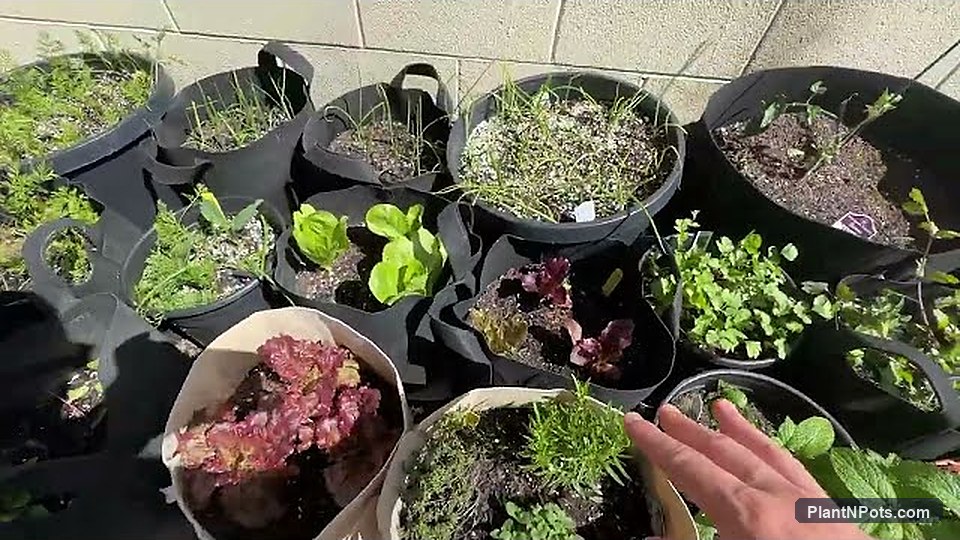
Calculating your garden layout requires knowing the exact exterior footprint of your containers. A standard round 5 gallon container occupies roughly one square foot of surface area on patio pavers or benches.
Square fabric variations offer distinct space-saving advantages over traditional round pots. These squared configurations allow growers to pack containers tightly together without wasting precious gaps between adjacent growing bags.
Row spacing must account for foliage expansion as plants mature through the season. Leaving 18 inches of clearance between individual bags prevents canopy overlapping and reduces fungal disease risks significantly.
Elevating fabric pots off cold concrete surfaces improves bottom drainage and airflow. Using plant feet or wire grids prevents moisture pooling beneath the breathable fabric base during heavy summer rainstorms.
- Calculate square footage requirements prior to planting day.
- Leave adequate walking paths between intense block plantings.
- Elevate bags on grates to enhance bottom drainage rates.
- Factor in mature foliage width for optimal plant spacing.
Video Walkthrough: 5 Gallon vs 15 Gallon Mesh Fabric Pots Bags | What Size Do You Need?
Material Thickness and Structural Rigidity
The physical integrity of fabric containers relies heavily on textile density measured in grams per square meter. Standard 300 GSM non-woven polypropylene provides optimal durability without sacrificing vital root aeration.
Thinner fabrics tend to slouch or collapse outward when watered heavily. Selecting dense materials ensures your container retains its specified circular dimensions throughout multiple consecutive growing seasons outdoors.
UV-resistant threads prevent premature degradation when exposed to intense summer sunlight. Quality stitching along stress points protects against tearing when lifting heavy, damp containers across the garden.
Porous fabric walls naturally prune roots through air exposure, operating differently than a rigid best hanging watering can planter. This physical process eliminates circling and encourages a fibrous network throughout the entire 0.67 cubic foot volume.
- Choose high GSM fabrics for multi-year container durability.
- Inspect side seams for reinforced X-stitch construction patterns.
- Ensure UV stabilization is rated for outdoor sunlight exposure.
- Avoid overly thin materials that collapse under watering pressure.
Soil Volume and Substrate Requirements
Filling a standard five-gallon vessel requires precise calculation of growing media. You will need approximately 0.7 cubic feet of lightweight potting mix to fill each bag to the recommended rim line.
Garden soil packs down too densely inside flexible fabric containers. Always formulate a custom blend using peat moss, compost, and perlite to maintain optimal aeration and moisture retention properties.
Leaving a two-inch headspace at the top prevents soil overflow during heavy irrigation. This empty margin also simplifies top-dressing with organic fertilizers and applying protective mulch layers effectively.
Settling naturally occurs after the first few deep watering cycles. Top off your containers with fresh potting mix after initial watering sessions to maintain the correct soil level relative to the rim.
- Calculate total cubic footage before purchasing bulk soil components.
- Incorporate perlite or pumice to maximize internal oxygen levels.
- Leave sufficient headspace near the rim for effective mulching.
- Top off settled soil after initial heavy watering cycles.
Root Pruning and Aeration Dynamics
Breathable fabric walls fundamentally transform root architecture compared to heavy terracotta vessels. When roots reach the container edge, dry air exposure naturally stops elongation and triggers branching similar to extra large terracotta pots.
This natural air pruning prevents plants from becoming root-bound in confined spaces. The resulting dense root mass absorbs nutrients and moisture far more efficiently than circling root systems do.
Oxygen exchange through the porous textile walls supports beneficial aerobic soil microbes. These microscopic organisms break down organic amendments into accessible nutrients for your developing vegetable crops.
Maintaining adequate spacing between multiple bags ensures optimal airflow around the fabric walls. Good exterior ventilation maximizes the cooling effect and enhances overall root zone health during heatwaves.
- Understand how air pruning prevents root circling entirely.
- Promote beneficial microbe activity via constant wall aeration.
- Maintain adequate exterior air circulation around all bags.
- Monitor interior moisture levels as air pruning increases drying.
Crop Selection for Medium Containers
A five-gallon capacity serves as an ideal intermediate size for numerous garden vegetables. Compact determinate tomato varieties thrive within these dimensions when supplied with adequate sunlight and consistent moisture.
Root crops like carrots and beets grow successfully in these specific dimensions. Ensure your potting mix remains loose and sandy to allow proper taproot elongation without physical restriction.
Pepper plants, eggplants, and herbs produce abundant harvests in medium fabric containers. The balanced proportions provide ample legroom for robust root systems without requiring excessive quantities of soil.
Avoid planting massive indeterminate vine crops in medium containers. Large species quickly outgrow the restricted soil volume, leading to frequent drought stress and severe nutrient deficiencies mid-season.
- Select compact or determinate vegetable varieties for best results.
- Utilize loose soil blends for uninhibited root crop growth.
- Pair herb varieties together to maximize limited container space.
- Avoid large indeterminate crops that outgrow medium volumes.
Seasonal Maintenance and Storage Practices
End-of-season maintenance extends the lifespan of your fabric containers significantly. Empty spent potting mix and brush away residual soil particles before washing the fabric thoroughly with clean water.
Sanitize empty containers using a mild horticultural disinfectant solution. This important step eliminates lingering fungal spores and pest eggs from clinging to the porous woven fibers over winter.
Allow cleaned bags to dry completely in direct sunlight before folding. Storing damp fabric pots in enclosed sheds invites mold growth and fabric degradation during cold winter months.
Fold dry containers flat and store them in a cool, dark location. Proper off-season storage prevents UV breakdown and keeps your gardening equipment ready for the upcoming spring planting cycle.
- Empty and wash containers thoroughly at season end.
- Sanitize fabric to eliminate overwintering pests and fungi.
- Dry bags completely under direct sunlight before storage.
- Fold flat and store in dry, frost-free indoor spaces.
Frequently Asked Questions
What are the exact dimensions of a standard 5 gallon grow bag?
A standard 5 gallon grow bag typically measures 12 inches in diameter and 10 inches in height. These dimensions provide optimal space for medium-sized garden vegetables.
How much soil is required to fill a 5 gallon fabric pot?
Filling a standard five-gallon container requires approximately 0.67 cubic feet of potting mix. Always leave a two-inch headspace at the top for effective watering and mulching.
Do grow bag handles affect the measured container capacity?
Stitched exterior handles do not alter the internal growing volume or stated dimensions. However, reinforced handles provide essential structural support when lifting heavy, damp soil mixtures.
Why do fabric grow bags promote healthier plant roots?
Porous fabric walls allow air pruning, which stops root circling and encourages branching. This natural process creates a dense, fibrous root mass capable of superior nutrient absorption.
How should I clean and store fabric pots after the growing season?
Empty spent soil, wash the fabric with clean water, and let it dry completely in the sun. Fold flat and store in a dry indoor space for next year.

