Master the exact techniques for sizing planters and nursery pots. Accurate dimensions ensure healthy root systems.
Key Takeaway:
Always measure the top inside diameter rather than the exterior lip. This guarantees your root ball fits safely without cramping.
Quick-Reference Guide
| Factor / Scenario | Recommended Target | Why It Matters |
|---|---|---|
| Standard Nursery Pot | 4 to 6 inches | Fits small tabletop species |
| Medium Houseplant Pot | 8 to 10 inches | Accommodates developing root masses |
| Large Floor Planter | 12 to 16 inches | Provides structural stability outdoors |
| Deep Root Container | 14+ inches vertical | Ideal for long taproots |
| Square Plastic Planter | Equal width and length | Maximizes tight spatial layouts |
| Shallow Bowl Planter | 3 to 5 inches depth | Perfect for shallow succulents |
Understanding Standard Pot Dimension Terminology
Sizing modern planters requires understanding manufacturing conventions. Retailers typically categorize vessels by their top inside diameter rather than total volume or exterior rim measurements.
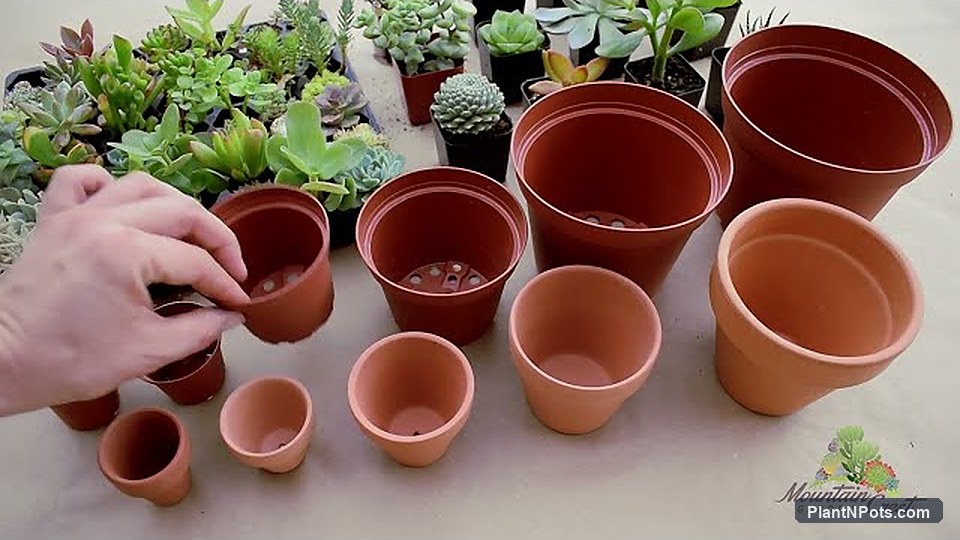
Standard sizing ensures you select matching saucers and replacement liners. Ignoring internal structural tolerances often leaves your beloved houseplants struggling inside cramped physical boundaries.
Manufacturers stamp trade sizes that differ slightly from actual physical dimensions. A standard eight-inch pot might actually measure seven and a half inches across.
Familiarizing yourself with these subtle manufacturing variations prevents costly purchasing mistakes. Always verify physical measurements with a trusty metal tape measure before buying wholesale containers.
Plant pot measurements rely on specific industry terminology that prevents costly sizing mistakes. Knowing these standard terms ensures your houseplants receive proper root space during every single repotting session.
The rim diameter represents the widest horizontal span across the top opening. Manufacturers always list this dimension first because it determines whether a drop-in nursery container will fit properly.
Base diameter measures the stable bottom surface touching your saucer, especially when using the [best bottom watering fabric pots](https://plantnpots.com/?p=4260). A narrow base creates a top-heavy center that easily tips during heavy watering.
Internal depth differs from outer height due to raised drainage wells or thick walls. Always verify this clearance to prevent root systems from hitting solid obstructions at the bottom.
- Measure inner rims, not exterior lips.
- Account for tapering wall thickness.
- Verify trade size versus true inches.
- Check bottom footprint dimensions carefully.
Decoding Trade Pot Designations
Trade designations rarely match physical ruler dimensions. A standard horticultural trade gallon actually holds significantly less volume than a true liquid US gallon.
Commercial growers rely heavily on these standardized industry terms for bulk purchasing tasks. Knowing the difference stops you from buying dangerously oversized replacement vessels.
- Trade gallons equal roughly 0.73 actual gallons.
- Numbers refer to top rim widths.
Step-by-Step Guide to Measuring Pot Diameter
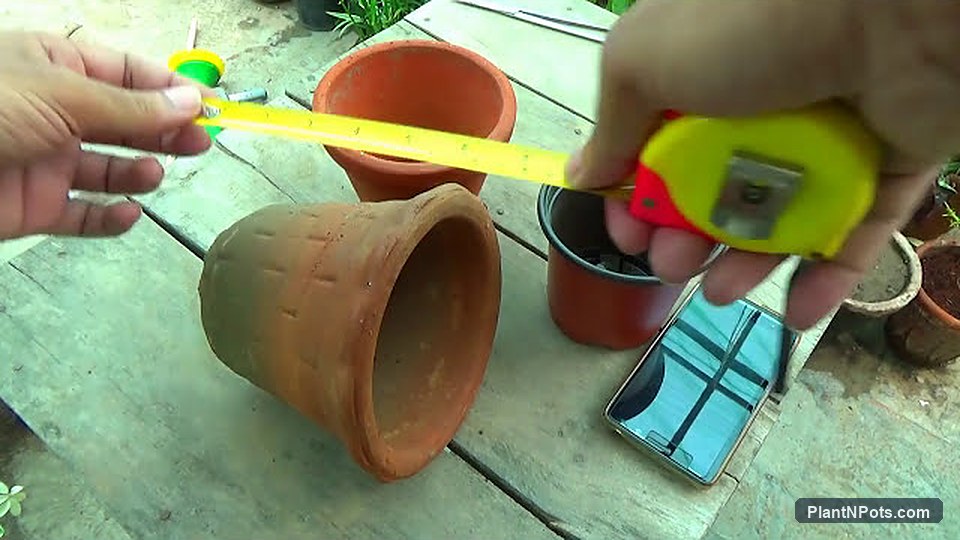
Finding the true top diameter requires laying your ruler flat across the opening. Measure from the inside edge to the opposing inside edge, avoiding lips.
Never measure across the decorative outer rim or exterior handles. Doing so adds false inches that leave your root ball unsupported inside the new vessel.
For square or rectangular containers, measure both width and length independently. Uneven geometric proportions require careful calculation to maintain proper structural plant symmetry.
Circular containers occasionally warp during the manufacturing process, especially thin plastics. Take measurements from multiple opposing angles to find the true average width.
Accurate diameter measurements require a rigid metal tape measure rather than a flexible fabric sewing tape. Place the hook firmly against the outer rim edge to begin your assessment.
Stretch the tape directly across the exact center point to the opposite outer rim edge. Read the ruler at eye level to capture the true maximum span without any parallax distortion.
For square or rectangular planters, measure the longest diagonal span as well as the straight sides. This prevents your root ball from jamming into corners during the transition.
Always measure pottery before purchasing cachepots to guarantee a proper clearance gap. A minimum one-inch gap allows for adequate air circulation around the inner nursery container.
- Lay a rigid ruler across the widest top span.
- Measure interior walls rather than exterior lips.
- Record both minimum and maximum warp widths.
- Double-check dimensions twice for absolute accuracy.
Video Walkthrough: Measuring the opening
Determining Vertical Depth and Inner Clearance
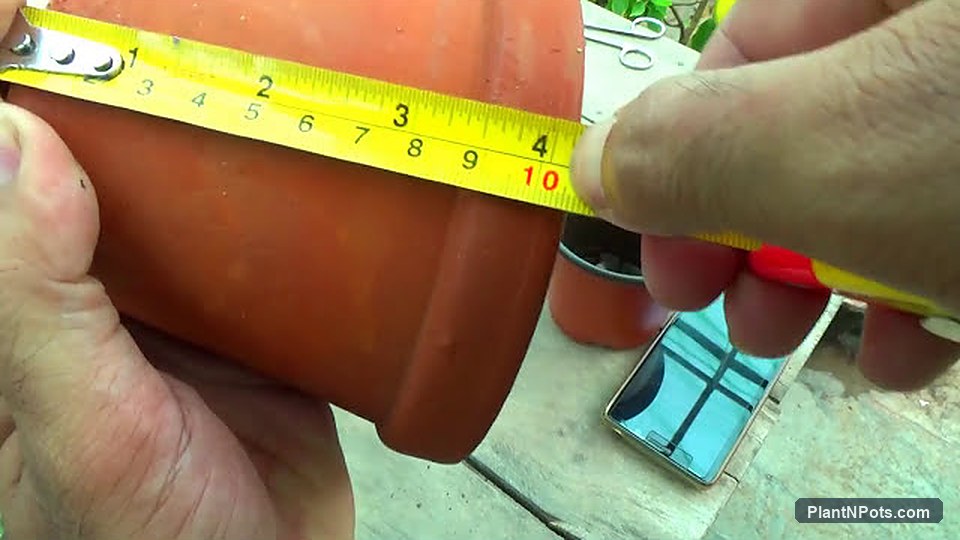
Vertical depth is vital for tall species, making a specialized best indoor planter for palm tree essential. Measure vertically from the top inside rim down to the base to confirm proper clearance.
Account for elevated drainage platforms or internal feet built into modern planters. These hidden structural features reduce the usable vertical soil depth significantly.
Deep taproots demand extra vertical clearance to prevent premature root circling issues. Short shallow bowl planters will restrict these sensitive species almost immediately.
Always leave at least one inch of empty clearance below the top rim. This vital headspace prevents irrigation water from overflowing during routine watering sessions.
Vertical depth defines the total soil column available for root development and moisture retention. Measure from the inside rim down to the deepest drainage level to gauge capacity.
Many decorative pots feature raised interior ledges designed to support inner plastic liners. Measuring past these hidden ledges reveals the true usable depth for root anchoring and growth.
Deep containers hold moisture longer because gravity pulls water down through a larger column. Monitor drying rates closely when upgrading to pots with increased vertical depth.
Shallow bowl planters require careful depth checks to ensure enough room for spreading root systems. Shallow soils dry out rapidly under warm indoor temperatures and bright sunlight.
- Measure from inside rim to base.
- Subtract internal drainage platform heights.
- Ensure adequate depth for taproots.
- Leave soil headspace for watering.
Navigating Nursery Sizes Versus Decorative Cachepots
Cachepots serve purely decorative purposes and rarely feature direct drainage holes. You must measure both the inner cachepot and the nursery liner carefully.
A nursery pot must sit comfortably inside the outer decorative shell. Leave a small gap around the edges for air circulation and easy removal.
Standard plastic nursery pots measure slightly smaller than decorative ceramic equivalents. This intentional engineering allows snug nesting without jamming the containers together permanently.
Measure the depth of the outer cachepot to prevent hidden pooling. If the inner pot bottoms out too early, roots will sit in stagnant water.
Nursery pots use a standard trade gallon system rather than literal liquid measurements. A standard trade gallon actually equals roughly eighty percent of a true US liquid gallon.
Decorative cachepots are sold by their literal physical dimensions in inches or centimeters. Matching these two different sizing standards requires understanding the actual volumetric difference between them.
Always check the inside diameter of your cachepot against the outside rim of your nursery pot. A successful pairing leaves enough space for easy removal during watering days.
Avoid forcing a tight nursery container into a restrictive decorative pot without drainage holes. Trapped water creates stagnant conditions that quickly lead to root rot failure.
- Measure inner cachepot diameter and depth.
- Match nursery pot size down one inch.
- Check for bottom clearance gaps.
- Prevent perched water table accumulation.
Assessing Drainage Capacity and Structural Weight
Heavy planters provide excellent stability for tall indoor statement plants. However, thick terracotta and poured concrete add immense weight that complicates indoor relocation tasks.
Inspect the drainage hole dimensions at the base of your container. Severely undersized holes trap excess moisture and lead directly to fatal root rot conditions.
Modern fiberglass resin containers offer a lightweight alternative without sacrificing structural integrity. Always check that bottom drainage holes can be drilled if missing.
Balance heavy top-heavy plants by selecting broad, heavy-bottomed ceramic vessels. This clever strategy prevents accidental tipping hazards in high-traffic residential or commercial spaces.
Drainage holes are critical for preventing waterlogged soil and subsequent root suffocation. Inspect the bottom of your container to ensure the drainage surface area is sufficiently large.
Heavy options like the best extra large terracotta pots provide excellent stability for large plants. However, their substantial structural weight makes them difficult to transport for routine cleaning or seasonal shifts.
Lightweight fiberglass and plastic alternatives reduce lifting strain during seasonal indoor moves. Always balance your desire for easy handling against the risk of tipping over outdoors.
Check that drainage holes feature raised feet or matching saucers to maintain proper airflow. Blocked drainage ports trap excess moisture and invite harmful fungal pathogens into the root zone.
- Evaluate material weight before filling.
- Confirm adequate drainage hole sizing.
- Drill extra holes in resin safely.
- Balance tall plants in wide pots.
Avoiding Common Measuring Traps During Repotting
The most common measuring mistake involves sizing up too drastically. Moving a plant into a pot that is too large retains excessive soil moisture.
Stick to stepping up your container diameter by just two inches. This gradual transition encourages healthy root expansion without drowning your sensitive green specimens.
Never rely on casual eyeball estimates when buying replacement pots online. Always use a physical measuring tape to verify exact millimeter or inch specifications.
Account for the root ball dimensions after gently shaking away old soil. Measuring bare roots gives you the truest baseline for selecting ideal vessels.
Measuring only the outside rim without accounting for wall thickness causes sizing errors. Thick ceramic walls dramatically reduce the internal planting volume available for expanding root systems.
Never estimate pot sizes visually when upgrading from a cramped nursery container. Always step up incrementally by two inches in diameter to prevent shock from excess soil.
Ignoring the shape of the root ball leads to mismatched container selections. Tapered pots require different volumetric calculations compared to straight-sided cylindrical containers of identical height.
Double-check all measurements before ordering expensive custom planters online. Accurate record-keeping ensures your houseplants transition smoothly into environments optimized for long-term health.
- Limit pot increases to two inches.
- Measure actual bare root balls.
- Avoid oversized soil retention risks.
- Trust physical tape over labels.
Frequently Asked Questions
How do you measure a pot if it has a wide decorative rim?
Always measure across the top inside diameter rather than the outer rim edge to get true usable dimensions.
This precise technique ensures your root ball fits securely inside the vessel without unexpected spatial restrictions caused by decorative flares or wide exterior lips.
Should I include the drainage tray when measuring pot height?
Never include attached or detached saucers when calculating the overall vertical depth of your plant container. You must measure exclusively from the interior base up to the top rim to determine true soil volume needed for healthy growth.
What is a trade gallon and how does it relate to pot size?
A trade gallon is an industry standard used by commercial nurseries that actually equals roughly three-quarters of a true liquid gallon. Always check physical inch measurements rather than relying solely on confusing trade gallon labels when shopping online or locally.
How much bigger should a new pot be during repotting?
You should generally select a new container that increases the diameter by precisely two inches for most standard houseplants. Gradual container upgrades maintain optimal moisture balance and strongly encourage vigorous root development throughout the active growing season.
How do you measure square or rectangular planter boxes?
Measure both the full width and the total length independently across the interior walls to calculate square footage. Multiplying these exact interior dimensions gives you a remarkably clear picture of available growing space for dense floral arrangements or container gardens.

