
Tomatoes require specific pot depths depending on their root architecture, varying from twelve to twenty inches or more for robust cultivars. Adequate depth ensures the taproot can extend downward without encountering physical barriers that stunt overall plant development.
Choosing the correct container depth directly influences moisture regulation, nutrient availability, and structural stability throughout the growing season. Shallower pots dry out rapidly and risk toppling, while appropriately deep containers support sustained fruit production on balconies and patios.
Balancing pot depth with width creates a stable root zone capable of supporting heavy foliage and abundant yields. Understanding these foundational dimensions helps home growers avoid common container gardening pitfalls related to restricted root growth and frequent water stress.
Root System Architecture and Growth Habits
Taproot Development and Vertical Space
Tomato plants develop a strong primary root that naturally tends to grow straight downward when completely unobstructed by container walls. Providing sufficient vertical pot depth allows this primary root to anchor the entire plant securely into the surrounding potting mix.
Restricted vertical space forces the primary root to bend, circle, or stall against the bottom surface, potentially causing premature stress and reduced vigor. Selecting adequately deep containers accommodates this natural vertical growth habit effectively over time.
Lateral Root Spread in Containers
Alongside the vertical taproot, tomatoes produce an extensive network of lateral roots that absorb water and vital nutrients. These secondary roots require adequate horizontal space matching the container depth to function at maximum efficiency.
A balanced container width and depth ratio prevents root overcrowding and supports steady nutrient uptake. When lateral roots expand freely, the plant maintains better overall health during peak summer fruiting periods.
Determinate Versus Indeterminate Root Demands
Root system volume often correlates directly with the final size and growth habit of the chosen tomato cultivar. Determinate varieties generally produce compact root systems suited for moderate depths.
Indeterminate varieties continue growing and producing fruit for months, requiring significantly larger root volumes. Matching pot depth to these distinct genetic traits ensures optimal performance in small-space gardening setups.
You might also enjoy experimenting with growing yellow pear tomatoes in pots to add unique flavor and vibrant color to your patio space.
Container Size Selection by Variety
Dwarf and Micro Varieties for Small Pots
Dwarf and micro tomato cultivars possess smaller genetic frames and naturally restricted root systems. These compact plants thrive in containers with a depth of eight to twelve inches.
Utilizing excessively deep pots for micro varieties wastes valuable soil volume and increases moisture retention risks. Matching small plants to appropriately scaled shallow containers yields excellent balcony growing results.
Standard Bush and Determinate Cultivars
Standard bush and determinate tomatoes produce medium-sized canopies that require robust root foundations. A container depth of fourteen to eighteen inches provides the necessary soil volume.
This intermediate depth supports steady vegetative growth while accommodating the substantial root mass typical of patio tomato types. Proper sizing prevents premature wilting during warm weather spells.
Large Indeterminate Vining Tomatoes
Indeterminate vining tomatoes demand the largest containers available to sustain their extended growing seasons. Pot depths ranging from eighteen to twenty-four inches are generally recommended for these vigorous plants.
Deep vessels supply the sustained moisture and nutrient reserves required by large, high-yielding vines. Providing ample depth prevents root restriction from limiting overall fruit production on balconies.
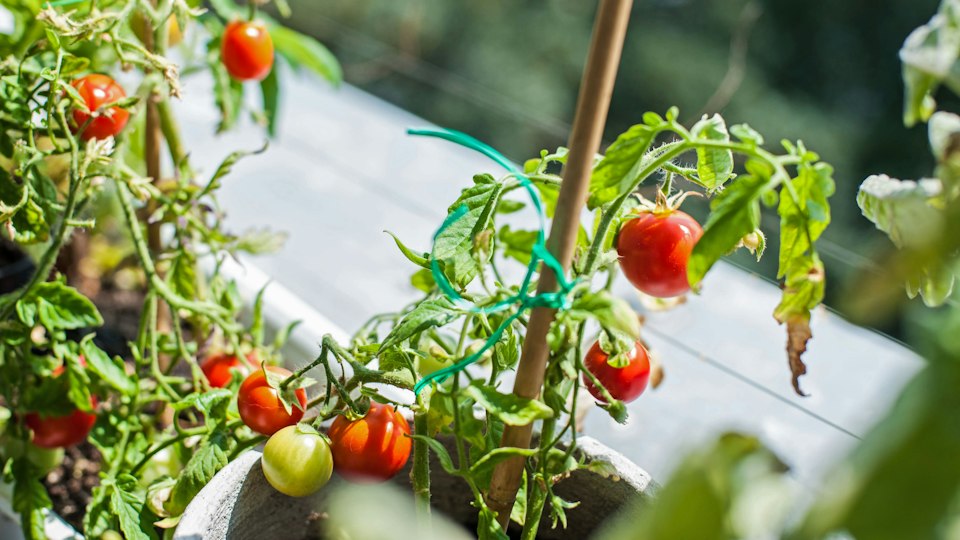
When choosing containers for different cultivars, you might also want to read about yellow pear tomatoes in pots to understand how smaller indeterminate types perform.
When planting your garden, considering the depth of container for tomatoes ensures healthier root development and better overall yields.
Soil Volume and Moisture Dynamics
Water Retention and Root Hydration
Deeper pots contain a larger volume of potting mix, which retains moisture longer than shallow layers. This extended retention protects delicate feeder roots from rapid drying during hot summer days.
Maintaining consistent moisture levels reduces the incidence of physiological disorders like blossom end rot. Adequate soil depth acts as a buffer against extreme fluctuations in daily watering schedules.
Preventing Saturated Lower Soil Layers
While depth is beneficial, excessively tall containers can create a perched water table at the base. Choosing well-aerated potting mixes prevents lower soil layers from becoming permanently waterlogged and anoxic.
Drainage holes remain critical regardless of pot depth to allow excess irrigation water to escape freely. Balancing depth with appropriate media texture keeps root zones healthy and oxygenated.
Nutrient Buffering in Restricted Volumes
Restricted root volumes deplete available nutrients much faster than large garden beds. Deep pots hold more fertilizer reserves and organic matter to feed active tomato roots over time.
This larger nutrient buffer minimizes the risk of sudden deficiencies during heavy fruit set. Regular feeding combined with deep potting sustains continuous growth throughout the warm growing season.
Managing moisture effectively requires attention to substrate quality, especially if you encounter issues like soil not draining in pot during heavy watering cycles.
Structural Stability and Anchorage
Preventing Top-Heavy Container Tip-Over
Mature tomato plants develop heavy canopies filled with dense foliage and ripening fruit clusters. Without sufficient pot depth and weight at the base, containers easily tip over in winds.
Deep pots filled with dense potting mix provide a lower center of gravity that anchors top-heavy plants. This physical stability protects stems from snapping during unpredictable balcony gusts.
Integrating Stakes and Cages Securely
Supporting tall tomato vines requires pushing stakes or cylindrical cages deep into the container. Shallow pots lack the vertical soil depth needed to hold support structures firmly in place.
Deep containers allow stakes to anchor securely in the lower soil layers without shifting under heavy loads. This firm foundation keeps the entire growing assembly upright and structurally sound.
Wind Resistance on Balconies and Patios
Elevated balcony environments often experience stronger wind currents than ground-level gardens. Deep, heavy pots resist lateral wind forces far better than light, shallow containers.
Securing tomatoes in deep vessels prevents plants from rocking continuously, which can damage delicate root hairs. Protecting the root zone from mechanical stress promotes uninterrupted water and nutrient uptake.
Frequently Asked Questions
Can I plant multiple tomato plants in one deep pot?
Planting multiple tomatoes in a single deep pot is generally discouraged unless using specific micro varieties. Crowding plants leads to intense root competition for water, nutrients, and available space.
Most standard and indeterminate tomatoes require an individual deep container to reach their full potential. Overcrowding typically results in reduced yields, increased disease susceptibility, and premature decline.
What happens if a tomato pot is too shallow?
Pots that are too shallow restrict the vertical expansion of the primary taproot. This limitation stunts overall plant growth and forces frequent, sometimes daily, watering interventions during hot weather.
Shallow containers also reduce structural stability, making the plants prone to tipping over. Fruit production often suffers due to chronic moisture stress and inadequate nutrient storage capacity.
Should I layer gravel at the bottom of a deep tomato pot for drainage?
Adding gravel or rocks to the bottom of a container does not improve drainage due to physical soil physics principles. Instead, it raises the perched water table closer to the roots.
Using a uniform, high-quality potting mix throughout the entire deep container ensures superior moisture movement. Reliable drainage depends entirely on having unobstructed drainage holes at the pot base.
Does container material change the ideal depth of pot for tomatoes?
Container material heavily influences root zone behavior, although the baseline depth of pot for tomatoes remains physically consistent across styles. Fabric pots encourage natural air pruning, which stops roots from circling and helps slightly shallower containers perform efficiently.
Rigid plastic or ceramic containers lack air-pruning properties, requiring adequate physical vertical depth so the taproot can extend downward without heavy deflection. Selecting fabric bags can sometimes let you utilize the lower end of depth ranges.
How does the depth of pot for tomatoes impact fertilizer leaching?
Deep containers hold larger volumes of potting mix, which directly alters how water-soluble nutrients move through the root zone. Frequent heavy irrigation in tall pots can wash essential nitrates and micronutrients out through drainage holes rapidly.
To counter nutrient leaching without compromising the necessary depth of pot for tomatoes, use slow-release amendments or apply consistent, dilute liquid feeds. This practice maintains stable nutrient reserves throughout the long fruiting season.
Can I start a tomato seedling directly in its final deep pot?
Sowing seeds directly into the ultimate depth of pot for tomatoes is possible, but it creates distinct moisture management hurdles. Tiny seedlings possess minimal root mass, meaning they cannot absorb water from a massive soil volume efficiently.
This imbalance drastically increases the risk of waterlogged soil and root rot. Gradual repotting allows developing roots to colonize media progressively as the plant canopy grows larger and more capable of handling moisture.
Does balcony wind exposure change the required depth of pot for tomatoes?
Elevated balcony locations experience turbulent wind currents that exert heavy lateral leverage on tall, leafy plants. While biological root requirements establish the minimum depth of pot for tomatoes, wind loads often demand larger, heavier containers.
Selecting vessels near the upper limit of recommended depth ranges provides crucial ballast weight at the base. This heavy foundation stops high winds from rocking the root system and causing mechanical damage.
How do I diagnose root restriction if my deep pot for tomatoes is too small?
Root restriction within an insufficient depth of pot for tomatoes typically appears as rapid soil drying, premature lower leaf yellowing, and stunted growth. Inspecting the drainage holes often reveals thick roots circling or protruding outward.
When soil volume is completely exhausted, standard liquid fertilizers yield minimal improvement because physical space is fully occupied. Catching this constraint early allows you to transition determinate plants before yield drops severely.