Finding the right growing medium for indoor houseplants requires looking beyond standard garden dirt to options that balance moisture and air circulation. Different plant varieties thrive in specialized mixes, whether they need extra perlite for drainage or organic amendments like earthworm castings for nutrients.
This overview explores several soil and planting mix alternatives suited for containers, herbs, and flowers. Each option brings specific physical attributes and natural ingredients to help you match your potting choice to your specific indoor gardening setup.
The product shortlist

BushDoctor Coco Loco Soil Potting Mix, Triple-Washed for Reduced
This 12-quart two-pack of BushDoctor Coco Loco Soil features a triple-washed coco coir base designed to reduce salt content while retaining moisture effectively. The mix includes organic amendments such as bat guano and earthworm castings, providing a nutrient-rich environment suited for general garden and container growing.
- Triple-Washed for Reduced Salt
- Retains Water
- Includes Bat Guano & Earthworm Castings
Moisture-retaining container gardening
View on Amazon (opens in a new tab)
Check current details and price
Read the detailed assessment
What stands out
- The triple-washed coco coir helps reduce salt content for sensitive root systems during regular watering schedules.
- Integrated bat guano and earthworm castings supply organic nutrient components directly into the container medium.
- The 12-quart capacity across a two-pack offers enough volume for repotting multiple medium-sized houseplants around the home.
What to consider
- The moisture-retaining nature of coco coir means this mix might hold onto water longer than standard perlite-heavy cactus blends, requiring careful monitoring to prevent over-watering in low-light indoor spaces.
- The two-pack format delivers a larger total volume that requires dedicated storage space if you only need to repot a single small houseplant.
The practical verdict
Best for moisture-loving tropical houseplants and general container setups. Avoid this option if your indoor plants require rapid-drying soil or have very low water tolerances, as the coco coir retains significant moisture. The primary trade-off is higher moisture retention versus the need for careful watering frequency control.

Plant Food (4 qts) + Indoor Potting Soil (8
Combining four quarts of plant food with eight quarts of peat-free potting soil, this microbially active fertilizer and soil bundle supports houseplants, herbs, and flowers. The peat-free formulation offers an alternative for gardeners seeking to avoid traditional peat moss while providing active biological components for indoor pots.
- Microbially Active Fertilizer for Houseplants
- Peat Free Potting Soil Mix for Indoor Plants
Peat-free indoor herb growing
View on Amazon (opens in a new tab)
Check current details and price
Read the detailed assessment
What stands out
- The peat-free formula provides an alternative growing medium structure for indoor gardeners who prefer avoiding traditional sphagnum moss components.
- Included plant food and microbially active fertilizer components supply direct nutrition alongside the base soil mix.
- The 8-quart soil quantity paired with 4 quarts of plant food makes a balanced kit for starting fresh herb or flower containers.
What to consider
- The combined volume of eight quarts of soil and four quarts of plant food may run out quickly if you are managing a large collection of mature indoor floor plants.
- Peat-free soil compositions can have different texture and drainage dynamics compared to standard peat-based commercial potting soils, necessitating a brief adjustment period.
The practical verdict
Best for gardeners seeking peat-free options for indoor herbs and flowering plants. Avoid if you require large bulk quantities of a single homogenous soil type without separate fertilizer add-ons. The main trade-off is the eco-conscious peat-free formulation balanced against a smaller total soil volume.
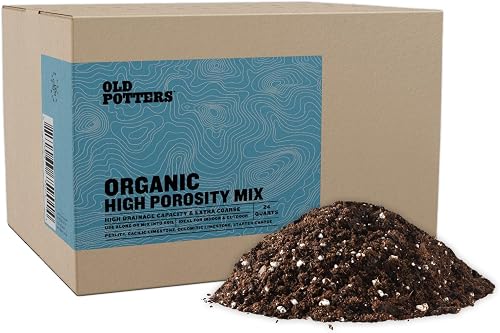
High Porosity Soil Mix, Enhanced with Peat Moss and
This 24-quart high-porosity soil mix is enhanced with peat moss and perlite, making it suited for smaller pots, cacti, and succulents. The formulation promotes drainage and aeration, preventing water from pooling around delicate root systems that require fast-drying conditions.
- Enhanced with Peat Moss and Perlite
- Perfect for Smaller Pots
- Cactus & Succulents
Fast-draining cactus and succulent pots
View on Amazon (opens in a new tab)
Check current details and price
Read the detailed assessment
What stands out
- The high-porosity design enhanced with perlite promotes rapid drainage and essential root aeration for drought-tolerant plants.
- A generous 24-quart total capacity provides plenty of volume for repotting numerous smaller pots, cacti, and succulent arrangements.
- The specialized texture prevents soil compaction over time in containers that receive infrequent watering.
What to consider
- The high porosity and rapid drainage design can cause water to run straight through too quickly for tropical houseplants that prefer sustained moisture retention.
- The 24-quart bag size is bulky and takes up substantial storage room in apartments or homes with limited utility spaces.
The practical verdict
Best for cacti, succulents, and small pots requiring high porosity and fast drainage. Avoid this mix if you are growing moisture-loving ferns or tropical foliage that demands prolonged soil dampness. The primary trade-off is exceptional drainage capability balanced against a lack of heavy moisture retention.

Moisture Control Potting Mix 8 qt., 2-Pack + Bonnie
Featuring an 8-quart two-pack of moisture control potting mix bundled with four live Bonnie Plants rosemary aromatic herb plants, this kit combines growing medium with live starter plants. The moisture control soil attributes help regulate water availability for the included herbs.
- 2-Pack + Bonnie Plants Rosemary Live Edible Aromatic Herb Plant
- 4 Pack
Herbal container gardening bundles
View on Amazon (opens in a new tab)
Check current details and price
Read the detailed assessment
What stands out
- The bundle includes four live rosemary aromatic herb plants, letting you start an indoor herb garden immediately upon arrival.
- The moisture control potting mix helps balance watering intervals for the included live plants in home environments.
- The two-pack soil format provides enough growing medium volume to pot all four included starter plants comfortably.
What to consider
- Including live plants means you must plant and care for them immediately, rather than storing the soil indefinitely on a shelf like dry-bagged mixes.
- The specific moisture control formula may not match the specialized drainage needs of non-herb houseplants like succulents or orchids.
The practical verdict
Best for users wanting an all-in-one kit with live rosemary herbs and matching potting soil. Avoid if you only need dry soil bags without perishable live plants. The main trade-off is the convenience of an included plant bundle versus the immediate responsibility of planting live specimens.

Planting Mix, .33 cu. ft., 2-Pack | Concentrated |
Supplied as a two-pack of 0.33 cubic foot concentrated blocks that expand to a full cubic foot of volume, this planting mix is designed for both containers and in-ground use. The concentration allows for compact shipping and storage before expansion with water.
- 33 cu. ft
- Expands to 1 cu. ft
- For Containers
Space-saving concentrated soil expansion
View on Amazon (opens in a new tab)
Check current details and price
Read the detailed assessment
What stands out
- The concentrated format expands from 0.33 cubic feet to a full cubic foot, saving significant storage space prior to use.
- The dual-purpose formulation is suitable for both container gardening and direct in-ground garden applications.
- The two-pack configuration provides ample expanded volume for larger planting projects around the yard or patio.
What to consider
- The need to hydrate and expand the concentrated blocks before use adds an extra preparation step compared to pre-moistened bagged soils.
- The expanded cubic foot volume may be excessive if you only need a tiny handful of soil for a single small houseplant.
The practical verdict
Best for gardeners needing high-volume soil that stores compactly before use. Avoid if you want a ready-to-use soil mix that requires no water activation or expansion steps. The primary trade-off is space-saving concentrated storage versus the initial physical preparation required to expand the mix.

Organic Potting Soil Mix for Indoor Plants & Herb
This 1-quart bag of organic potting soil mix is formulated as an all-purpose, nutrient-rich natural growing medium for indoor plants and small herb gardens. Its modest size suits minor repotting tasks and small desktop containers.
Single small houseplant repotting
View on Amazon (opens in a new tab)
Check current details and price
Read the detailed assessment
What stands out
- The compact 1-quart size is ideal for small desktop containers and minor houseplant repotting tasks without creating bag storage clutter.
- The nutrient-rich natural formula supports general indoor plant growth across various common houseplant varieties.
- The organic composition provides a natural growing environment for kitchen herb gardens and small decorative pots.
What to consider
- The minimal 1-quart quantity is insufficient if you have multiple large floor plants or extensive container gardening projects.
- Buying soil in a 1-quart bag often costs more per unit volume compared to purchasing larger multi-quart or cubic-foot bulk bags.
The practical verdict
Best for quick touch-ups, single small houseplants, and tiny desktop herb pots. Avoid if you need enough soil to fill multiple large planters or deep pots. The main trade-off is ultimate convenience and minimal storage needs versus a higher cost per quart.

Black Gold Potting Soil – Organic, Indoor/Outdoor, Enriched with
Black Gold Potting Soil comes in a 16-quart bag suitable for organic indoor and outdoor container gardening. Enriched with earthworm castings, this formulation provides a balanced organic structure for nourishing potted plants.
- Enriched with Earthworm Castings
- 16 Qt Bag
Standard indoor-outdoor organic potting
View on Amazon (opens in a new tab)
Check current details and price
Read the detailed assessment
What stands out
- The 16-quart bag offers a substantial volume of soil, suitable for repotting several medium-sized houseplants or multiple patio containers.
- Earthworm castings enrich the organic mix, providing slow-release natural nutrition for developing root systems.
- The versatile formulation functions effectively for both indoor potted plants and outdoor container gardening setups.
What to consider
- The 16-quart bag is relatively heavy and large, which can make indoor handling and storage cumbersome in tight living quarters.
- The standard organic formula lacks specialized extreme-drainage properties, making it less suitable for desert cacti that rot in dense moisture.
The practical verdict
Best for general indoor and outdoor container gardening requiring a trusted organic nutrient-enriched medium. Avoid if you need specialized heavy perlite mixes for desert succulents or micro-quantities for a single tiny pot. The main trade-off is versatile medium-bag capacity versus increased weight and storage footprint.

01999 Agromin Organic Recycled Green Material Potting Mix, 4
This Agromin organic potting mix comes in a 4-quart natural two-pack made from recycled green materials. The blend provides an eco-friendly growing medium option for small-scale indoor plant maintenance and container growing.
- 4 Quart
- Natural (Pack of 2)
Eco-friendly small container planting
View on Amazon (opens in a new tab)
Check current details and price
Read the detailed assessment
What stands out
- The formulation utilizes recycled green materials, offering an eco-friendly choice for environmentally conscious indoor gardeners.
- The 4-quart split across a two-pack allows you to open one bag at a time while keeping the second clean and sealed.
- The modest volume is well-suited for small indoor pots, window boxes, and minor propagation projects.
What to consider
- The 4-quart total volume across two bags is relatively small and will be exhausted quickly if you tackle large repotting sessions.
- Recycled green material textures can vary, occasionally requiring additional perlite or amendments depending on specific plant preferences.
The practical verdict
Best for small-scale indoor container planting using recycled organic materials. Avoid if you require large bulk quantities of soil for extensive houseplant collections. The primary trade-off is sustainable recycled composition balanced against a relatively modest total volume.
How this comparison was prepared
We use the supplied product identities and listing details to compare intended use, stated features and practical trade-offs. Listing claims are not independent performance tests. This page does not claim laboratory testing, personal ownership or an analysis of customer-review counts. The shortlist order is not a numeric test ranking. Confirm model details, compatibility and current terms on the seller or manufacturer page before purchasing.
Buying guide
Understanding Soil Composition and Texture
Selecting an indoor potting mix starts with examining the physical texture and structural ingredients. Unlike outdoor garden dirt, indoor mixes are formulated to remain light and porous inside enclosed containers. Ingredients like peat moss, coco coir, and compost create the base framework that holds moisture while allowing excess water to escape through drainage holes.
When evaluating options, check whether the mix relies on organic amendments such as earthworm castings or bat guano. These natural additions provide slow-release nutrition without requiring immediate synthetic fertilizer applications. Matching the texture to your plant's natural habitat prevents root rot and ensures proper oxygen flow around the root ball.
Drainage and Aeration Requirements
Proper drainage is critical for container plants because excess water has nowhere to go if the soil packs down too tightly. Mixes enhanced with perlite, pumice, or coarse sand create tiny air channels that prevent compaction over months of watering. Houseplants like pothos and philodendrons appreciate moderate aeration, while desert succulents demand exceptionally high porosity.
If a soil retains too much water, roots can suffocate and develop fungal issues. Conversely, soils with extreme drainage dry out almost instantly, forcing you to water more frequently. Assess your watering habits and your home's indoor humidity before choosing between moisture-retentive coco blends and fast-draining perlite-heavy formulas.
Moisture Retention vs Fast-Drying Needs
Indoor environments often feature dry air from heating and air conditioning systems, which can cause potted soil to dry out rapidly. Moisture-control soils incorporate specialized ingredients that absorb extra water during watering and release it gradually as the root zone dries. This helps maintain a stable moisture balance for thirsty tropical plants.
However, not all plants tolerate damp soil conditions equally. Herbs, Mediterranean plants, and succulents prefer their growing medium to dry out completely between watering sessions. Choosing a blend with built-in moisture control can harm these species by holding water around their roots for too long, leading to decline.
Bag Size, Volume, and Storage Considerations
Container soils are sold in various quantities, ranging from small 1-quart bags for desktop plants to large 16-quart or 24-quart bags for extensive indoor jungles. Before purchasing, estimate the total volume of your pots by measuring their diameter and depth. Buying too little soil leaves plants half-potted, while buying oversized bags creates clutter in closets.
Storage is another practical factor for apartment dwellers. Concentrated expanding blocks offer a space-saving alternative by remaining compact until hydrated with water. Traditional pre-mixed bagged soils take up more permanent storage room but offer immediate readiness without any preparation steps.
Organic Certification and Natural Amendments
Many indoor gardeners prefer organic potting soils to avoid synthetic chemicals inside living spaces. Organic mixes rely on natural components like composted forest humus, earthworm castings, and recycled green materials to nourish plants safely. These ingredients support beneficial microbial activity in the root zone.
Check product labels for specific organic claims and listed amendments. While organic soils promote natural plant growth, they may also attract fungus gnats if they remain overly damp in low-light indoor corners. Proper surface drying and bottom-watering techniques help mitigate pest issues in organic media.
Matching Soil to Specific Plant Varieties
Different botanical families have distinct root structures and water requirements that rule out a universal one-size-fits-all approach. Tropical foliage thrives in moisture-retentive coco coir blends, whereas herbs and flowering annuals prefer balanced, nutrient-rich compost mixtures. Cacti and succulents require coarse, fast-draining perlite structures.
Researching your specific houseplant's native environment guides your soil selection. Utilizing a specialized formulation minimizes transplant shock and gives your indoor greenery the foundational support needed for long-term health and steady leaf development.
Frequently asked questions
Can I use regular outdoor garden dirt for my indoor houseplants?
Using outdoor garden dirt indoors is generally discouraged because native soil is too heavy and dense for containers. Without natural earthworms and weather cycles, outdoor dirt packs down tightly in pots, suffocating roots and preventing proper drainage. Commercial potting mixes are specifically engineered to remain light, porous, and free of weed seeds or soil-borne pests.
How often should I repot my indoor houseplants with fresh soil?
Most indoor houseplants benefit from fresh potting soil every 12 to 18 months, or when you notice roots growing out of the container's drainage holes. Over time, potting soil breaks down, loses its structural aeration, and depletes its available nutrients. Spring and early summer are typically the best seasons for repotting because plants are actively growing.
What causes tiny flies around my indoor potting soil, and how do I stop them?
Tiny flying insects around indoor plants are usually fungus gnats, which thrive in damp, organic-rich soil surfaces. To reduce gnat populations, let the top couple of inches of soil dry out completely between watering sessions, as larvae cannot survive in dry media. You can also use yellow sticky traps near the base of the plant to catch adult flies.
Is coco coir better than peat moss in indoor potting mixes?
Coco coir and peat moss both retain moisture effectively, but they have distinct environmental and physical properties. Coco coir is a sustainable byproduct of the coconut industry with a neutral pH, and it rewets easily even after drying out completely. Peat moss is slightly acidic and can become hydrophobic if allowed to dry out entirely, though it remains a traditional standard in horticulture.
How do I know if my potting mix drains well enough?
You can test your potting mix drainage by watering a potted plant thoroughly and observing how quickly water runs out of the bottom drainage holes. If water sits on top of the soil for a long time or takes hours to drain through, the mix is likely too dense and compact. Adding perlite or coarse sand helps increase porosity and improve overall water flow.
Final thoughts
Choosing the right potting mix for your indoor plants involves balancing moisture retention, drainage speed, and organic nutrient content. Whether you need a fast-draining blend for succulents or a moisture-retentive coco coir mix for tropical foliage, matching the soil attributes to your specific plants ensures healthy root development.
By evaluating bag sizes, organic amendments, and unique plant requirements, you can build a thriving indoor garden. Take time to assess your watering habits and home environment before making your final soil selection for your containers.