Finding the right growing medium for hardy indoor greenery requires balancing moisture retention with proper drainage to prevent root rot in containers. Growers often look for specialized blends featuring organic ingredients like earthworm castings, bat guano, peat moss, or perlite to support steady development without heavy maintenance.
This selection highlights various pre-mixed soils, soil-free blends, and amendment rocks suited for indoor tropicals, allowing you to match bag sizes and material compositions directly to your specific container gardening routines and interior aesthetic preferences.
The product shortlist

FoxFarm BushDoctor Coco Loco Soil Potting Mix, Triple-Washed for
This 12-quart two-pack features a triple-washed coco coir base designed for reduced salt content while retaining moisture effectively. The formulation incorporates bat guano and earthworm castings, making it suitable for all indoor and outdoor garden containers needing sustained nutrient availability and balanced hydration.
- Triple-Washed for Reduced Salt
- Retains Water
- Includes Bat Guano & Earthworm Castings
Moisture retention for indoor pots
View on Amazon (opens in a new tab)
Check current details and price
Read the detailed assessment
What stands out
- Triple-washed coco coir construction helps reduce excess salt content for sensitive root systems during regular watering routines.
- Includes bat guano and earthworm castings to supply natural nutrients for sustained green plant growth in containers.
- Supplied in a convenient two-pack of 12-quart bags to handle multiple medium-to-large indoor potted arrangements easily.
What to consider
- The 12-quart two-pack size may prove excessive for a single small houseplant setup, requiring dedicated storage space for the remaining material.
- Coco-based moisture retention requires careful monitoring in low-light indoor spaces to prevent over-saturation of drought-tolerant root systems.
The practical verdict
This mix suits gardeners managing multiple containers who want pre-enriched coco coir with added guano and castings. Avoid it if you only need a tiny volume for a single tabletop container or prefer strictly mineral-based soil-free alternatives.

Mother Earth Products Mother Earth Terracraft Potting Soil with
This large two-cubic-foot bag combines peat moss, perlite, and earthworm castings into a versatile potting medium. Designed for both indoor and outdoor plant applications, it provides substantial volume for repotting large floor plants or multiple household containers simultaneously.
- and Earthworm Castings
- For Outdoor and Indoor Plants
- 2 cu. ft
Large scale indoor repotting
View on Amazon (opens in a new tab)
Check current details and price
Read the detailed assessment
What stands out
- Generous two-cubic-foot bag capacity accommodates extensive repotting sessions for large houseplants and outdoor containers.
- Formulated with peat moss and perlite to maintain an open structure and adequate aeration within deep pots.
- Enriched with earthworm castings to support ongoing plant nourishment without requiring immediate fertilizer additions.
What to consider
- The heavy two-cubic-foot bag format can be cumbersome to lift, pour, and store inside compact apartment utility spaces.
- The high peat and perlite content may retain more moisture than desired if used exclusively for drought-resistant species without additional grit.
The practical verdict
Best for houseplant enthusiasts with numerous large containers requiring a bulky peat and perlite medium. Avoid this option if you live in tight quarters with limited storage space for large bags.

3lb Mix Lava Rocks for Plants in Door -Gravel
This three-pound mix of lava rocks and gravel pebbles serves multiple decorative and functional roles for indoor containers. Suitable for bonsai, succulents, cacti, and fairy gardening, it functions effectively as a top dressing or drainage layer beneath potting soil.
- Fairy Gardening
- Top Dressing
Top dressing and container drainage
View on Amazon (opens in a new tab)
Check current details and price
Read the detailed assessment
What stands out
- Functions as a functional top dressing to stabilize potting soil surfaces and deter pests in indoor containers.
- Versatile three-pound quantity works well for vase fillers, bonsai projects, fairy gardens, and succulent arrangements.
- Porous lava rock and gravel texture aids in physical decoration and surface moisture management.
What to consider
- Lava rock mix lacks organic nutrients, meaning it cannot serve as a standalone growing medium for standard foliage plants.
- The three-pound bag covers limited surface area, making it less practical as a deep drainage layer across many large pots.
The practical verdict
Best for finishing indoor succulent pots, bonsai displays, and terrariums with a decorative gravel layer. Avoid using this product by itself as a primary planting medium for foliage plants that require nutrient-rich organic soil.

Rosy Soil Indoor Plant Soil Bundle, Organic Potting Mix
This organic potting mix bundle comes in four-quart bags tailored for succulents, cacti, monsteras, and tropical houseplants. The formulation is completely peat-free, relying on sustainable organic ingredients to support diverse indoor plant collections.
- Organic Potting Mix for Succulents
- Tropicals and More
- 4 Qt Each
Organic tropical houseplant care
View on Amazon (opens in a new tab)
Check current details and price
Read the detailed assessment
What stands out
- Peat-free organic formulation supports sustainable gardening practices for environmentally conscious indoor plant collectors.
- Split into manageable four-quart individual bag sizes to minimize waste when potting smaller single specimens.
- Tailored specifically for diverse indoor varieties including tropicals, monsteras, succulents, and cacti.
What to consider
- The four-quart bag size offers limited total volume, requiring multiple bundles for larger floor-standing plants or bulk repotting projects.
- Peat-free organic matrices may dry out differently than traditional peat mixes, requiring adjusted watering habits.
The practical verdict
Best for indoor gardeners seeking organic, peat-free blends across various tropical and succulent varieties. Avoid if you require massive bulk volume for multiple large floor plants in a single purchase.

Premium Aroid Potting Mix – Soil Free Blend for
This soil-free growing medium comes in a three-quart bag formulated specifically for aroids and other specialty house plants. The specialized texture eliminates traditional earth to prioritize maximum aeration and root breathability in containers.
- Soil Free Blend for Aroids
- Growing Medium for House Plants by Gardenera
- (3 Quart Bag)
Airy aroid root aeration
View on Amazon (opens in a new tab)
Check current details and price
Read the detailed assessment
What stands out
- Soil-free blend structure prevents heavy compaction around delicate roots of tropical aroid house plants.
- Supplied in a compact three-quart bag that stores easily in small closets or gardening supply bins.
- Engineered specifically to provide the loose, chunky consistency required by epipytic and climbing indoor species.
What to consider
- The three-quart bag provides a relatively small quantity, restricting use to miniature or single-pot aroid repotting tasks.
- Soil-free composition lacks standard garden soil weight, which can leave top-heavy plants unstable in lightweight pots.
The practical verdict
Best for growers cultivating climbing aroids that demand loose, chunky, soil-free aeration. Avoid if you prefer heavy, traditional earth-based potting soils for your containers.
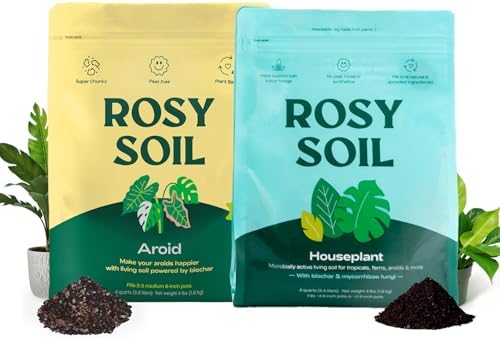
Rosy Soil Aroid Potting Mix and Houseplant Potting Soil
This bundle includes two four-quart bags featuring a peat-free biochar indoor plant soil alongside an aroid-specific potting mix. The combination addresses diverse houseplant needs while utilizing sustainable biochar amendments to enhance indoor container environments.
- Peat-Free Biochar Indoor Plant Soil
- 4 Quarts Each
Sustainable biochar container gardening
View on Amazon (opens in a new tab)
Check current details and price
Read the detailed assessment
What stands out
- Peat-free biochar formulation provides a sustainable alternative to traditional mined moss products for indoor cultivation.
- Dual-bag bundle offers both general houseplant soil and specialized aroid mix for varied collection needs.
- Provided in four-quart portions for convenient handling and minimal storage clutter in home environments.
What to consider
- The total eight-quart combined volume is modest, making it less suited for large-scale indoor jungles or multiple big floor pots.
- Biochar and aroid textures require attentive watering routines to ensure uniform hydration across different pot sizes.
The practical verdict
Best for indoor gardeners seeking a peat-free biochar bundle to handle both standard and aroid houseplants. Avoid this pairing if you need heavy-duty bulk soil for large outdoor garden beds.

Black Gold Potting Soil – Organic, Indoor/Outdoor, Enriched with
This 16-quart bag of organic potting soil is enriched with earthworm castings to support both indoor and outdoor container plants. The balanced composition provides a traditional soil feel with added organic nourishment for steady root development.
- Enriched with Earthworm Castings
- 16 Qt Bag
General indoor and outdoor potting
View on Amazon (opens in a new tab)
Check current details and price
Read the detailed assessment
What stands out
- Enriched with earthworm castings to deliver steady organic nutrients for growing indoor and outdoor container plants.
- Substantial 16-quart bag provides ample volume for repotting several medium-sized houseplants in one session.
- Organic formulation supports versatile planting tasks across balconies, patios, and indoor living spaces.
What to consider
- The 16-quart weight requires moderate lifting effort when transporting the full bag into indoor living areas.
- Traditional organic composition may require added perlite or bark if used exclusively for plants demanding extreme drainage.
The practical verdict
Best for general indoor and outdoor container gardening tasks needing a reliable 16-quart organic bag. Avoid if you require specialized chunky aroid bark or a completely soil-free medium.

Rosy Soil Houseplant Potting Soil, Organic Indoor Potting Mix,
This two-pack of four-quart organic indoor potting mix bags provides a manageable quantity for everyday houseplant maintenance. The organic formulation is proportioned for small-to-medium indoor containers without generating excessive leftover waste.
- Organic Indoor Potting Mix
- 4 Qt
- 2 Pack
Compact indoor houseplant maintenance
View on Amazon (opens in a new tab)
Check current details and price
Read the detailed assessment
What stands out
- Convenient two-pack of four-quart bags allows you to open one container at a time while keeping the other fresh.
- Organic indoor potting mix formulation supports healthy root systems in typical household container environments.
- Compact bag size simplifies pouring and cleanup during indoor repotting tasks on tabletops or counters.
What to consider
- The four-quart per bag volume restricts extensive repotting of large tropical specimens or deep floor planters.
- Standard organic texture lacks specialized chunky bark elements needed by large climbing epiphytes.
The practical verdict
Best for houseplant owners who pot small-to-medium indoor specimens in batches and value easy bag storage. Avoid if you need high-capacity soil for large floor-standing houseplants.
How this comparison was prepared
We use the supplied product identities and listing details to compare intended use, stated features and practical trade-offs. Listing claims are not independent performance tests. This page does not claim laboratory testing, personal ownership or an analysis of customer-review counts. The shortlist order is not a numeric test ranking. Confirm model details, compatibility and current terms on the seller or manufacturer page before purchasing.
Buying guide
Understanding Container Drainage Needs
Selecting a proper container growing medium requires examining how well water moves through the root zone. Dense garden dirt often compacts inside pots, suffocating roots and trapping moisture for too long. Indoor plants flourish when excess water drains freely out of the container base rather than pooling around the root ball. Incorporating amendments like perlite, pumice, or chunky bark prevents compaction and maintains essential air pockets.
Evaluating your watering habits helps determine whether you need a fast-draining soil-free blend or a more moisture-retentive coco-based mix. Plants kept in low-light rooms dry out slowly, making high-drainage media critical. Conversely, bright sunlit spaces can dry pots rapidly, requiring materials that hold hydration longer without becoming waterlogged or heavy over time.
Evaluating Organic Ingredients and Amendments
High-quality potting mixes frequently incorporate organic amendments like earthworm castings, bat guano, or biochar to supply steady nutrients. Earthworm castings offer a gentle, natural source of nutrition that supports root health without burning sensitive foliage. Peat-free formulations often utilize coconut coir or composted bark to replicate natural forest floor conditions while supporting sustainable harvesting practices across the industry.
When reviewing product options, check the ingredient list for components that match your specific botanical collection. Aroids and epiphytic tropicals demand chunky, airy components, while standard foliage varieties tolerate richer, finer organic soils. Matching the ingredient profile to your plant type prevents nutrient lockout and promotes consistent, healthy growth in indoor containers.
Bag Size and Volume Planning
Calculating the volume of soil needed for your container collection prevents running short during repotting or accumulating unnecessary heavy bags. Smaller four-quart to three-quart bags work well for single tabletop houseplants, succulents, or minor propagation projects. These compact sizes store easily on closet shelves and reduce mess during indoor repotting sessions on kitchen counters.
Larger 12-quart, 16-quart, and two-cubic-foot options suit extensive collections or large floor-standing tropical plants that require deep root space. While larger bags offer better value per quart, they demand dedicated storage space and more physical effort to lift and pour. Assessing your available storage and plant pot dimensions ensures you purchase the correct amount of material.
Soil-Free Versus Traditional Earth Mixes
Container gardening often distinguishes between traditional soil-based mixes and soil-free blends crafted from peat, coir, bark, and perlite. Soil-free media provide superior aeration and eliminate the heavy weight and potential pest issues associated with native field dirt. These blends are especially popular for tropical houseplants, monsteras, and delicate aroids that require loose, breathable root environments.
Traditional organic potting soils retain more natural weight, which can help anchor taller, top-heavy plants in lightweight plastic or ceramic pots. When deciding between these styles, consider the physical stability of your planter and the natural habitat of the plant. Epiphytes prefer soil-free aeration, whereas many standard indoor foliage plants adapt comfortably to enriched organic earth blends.
Storage and Handling Considerations
Managing opened bags of potting mix involves keeping the material dry and properly sealed to preserve its texture and nutrient balance. Damp soil left in torn packaging can attract pests or develop mold before you finish repotting your plants. Opting for multi-packs of smaller bags allows you to open fresh portions gradually while keeping unused media sealed in storage bins.
The physical texture of the mix also influences how easily you can clean up after repotting sessions indoors. Chunky bark and large lava rocks sweep up quickly from hard flooring, whereas fine peat dust may require damp wiping. Choosing a blend texture that matches your indoor workspace cleanliness preferences makes routine plant maintenance much simpler and more enjoyable.
Matching Soil to Specific Plant Varieties
Different indoor plant families have evolved distinct root adaptations that dictate their preferred growing medium. Succulents and cacti require gritty, fast-draining mineral mixes that dry out rapidly to prevent stem rot. Tropical foliage plants often prefer moisture-retentive organic matter enriched with castings or guano to support continuous leaf expansion in warm indoor environments.
Before purchasing a potting mix, verify its advertised suitability for your specific indoor plant types. Using a specialized aroid blend for climbing tropicals or a moisture-retaining coco mix for thirsty ferns ensures the medium supports natural root functions. Careful matching reduces transplant shock and helps maintain vibrant indoor greenery throughout changing seasonal conditions.
Frequently asked questions
What is the difference between soil-free mixes and traditional potting soil?
Soil-free mixes typically rely on ingredients like coconut coir, peat moss, perlite, and bark rather than traditional field dirt. This formulation provides superior aeration and prevents heavy compaction in indoor containers. Traditional potting soil often includes organic compost and earthworm castings, offering a heavier texture that helps anchor tall or top-heavy houseplants inside lightweight decorative pots.
How do I choose the correct bag size for repotting my houseplants?
Choosing the right bag size depends on the volume of your container and the number of plants you plan to repot. Small four-quart or three-quart bags suit individual tabletop pots and succulents without leaving excess storage clutter. Larger 12-quart, 16-quart, and two-cubic-foot options accommodate extensive houseplant collections or large floor-standing tropical specimens requiring deep root space.
Why are earthworm castings and bat guano included in potting soils?
Earthworm castings and bat guano are natural organic amendments added to potting mixes to supply slow-release nutrients for plant roots. They enrich the growing medium without relying strictly on synthetic fertilizers, supporting steady foliage development and microbial activity within indoor containers over time.
Can I use decorative lava rocks or gravel as a standalone potting medium?
Decorative lava rocks and gravel lack the organic nutrients and moisture-retention capabilities required to serve as a standalone growing medium for foliage plants. They function best as a surface top dressing to deter pests and stabilize soil, or as a physical drainage layer placed at the bottom of deep containers.
How should I store leftover potting soil after repotting indoor plants?
Leftover potting soil should be stored in a sealed container or tightly closed bag to maintain its moisture balance and prevent contamination from pests or mold. Keeping the material in a cool, dry indoor storage space ensures it remains fresh and ready for your next container gardening or repotting session.
Final thoughts
Selecting the appropriate growing medium for indoor greenery involves balancing moisture retention, aeration, and nutrient content to match your specific container environment. Whether you choose a soil-free aroid blend, an organic coco coir mix, or a large-volume terracraft formulation, matching the material properties to your plant collection ensures healthy root development.
Reviewing bag sizes, organic amendments, and drainage characteristics helps you maintain an organized indoor gardening routine without unnecessary waste. By evaluating your storage space and plant watering needs, you can invest in the right soil products to support vibrant, thriving houseplants year-round.